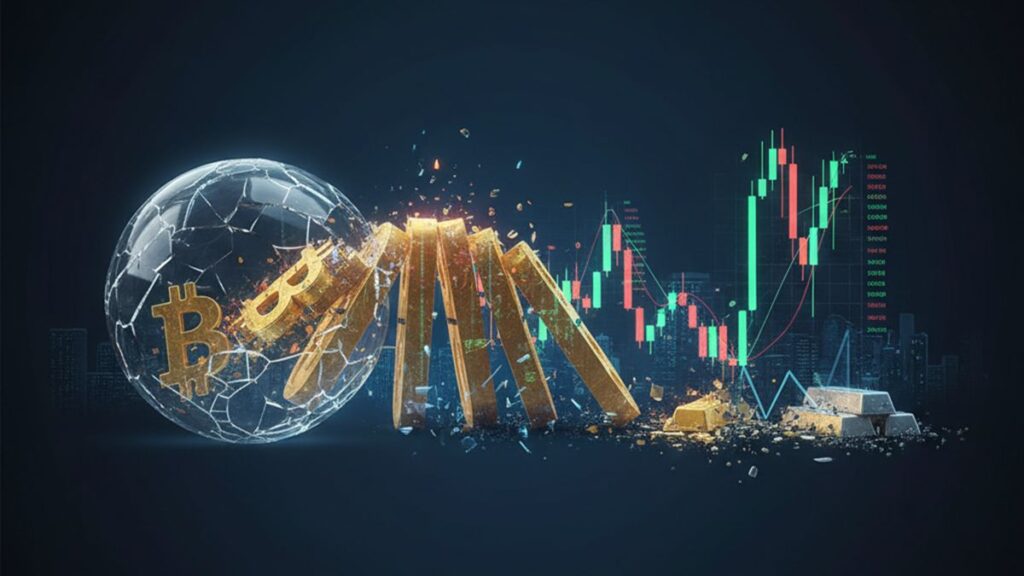
Bitcoin and the wider crypto market faced fresh pressure after UBS, one of the world’s largest banks, said that “crypto is not an asset.” This statement came at a time when Bitcoin whales and Bitcoin ETFs were already showing signs of slowing down or pulling back from the market.
The comment quickly caught attention across the crypto world. For many investors, it raised concerns about how traditional financial institutions still view cryptocurrencies and what this could mean for Bitcoin’s future price.
At the same time, data showed that large Bitcoin holders and ETF inflows were weakening. Together, these developments created uncertainty and renewed debate about Bitcoin’s role in the global financial system.
What Exactly Did UBS Say?
UBS made it clear that it does not see cryptocurrencies like Bitcoin as a true asset class. According to the bank, crypto does not fit into traditional categories such as stocks, bonds, or real assets.
From UBS’s point of view:
-
Crypto does not produce income like stocks or bonds
-
It has no clear cash flow
-
Its value depends heavily on market sentiment
Because of this, UBS warned investors to be careful and avoid treating crypto as a long-term investment asset.
This statement was not completely new, but its timing made it more impactful, especially with the market already feeling weak.
Why UBS’s View Matters
UBS is not a small voice in finance. It manages money for wealthy individuals, institutions, and governments around the world.
When a major bank like UBS speaks negatively about crypto:
-
It can influence investor confidence
-
It can affect how big money thinks about Bitcoin
-
It can slow down new institutional adoption
Even though crypto supporters strongly disagree with UBS, traditional investors often listen closely to such opinions.
Bitcoin Whales Start to Pull Back
At the same time as UBS’s comments, blockchain data showed that Bitcoin whales were becoming less active.
Whales are investors or institutions that hold large amounts of Bitcoin. Their behavior often gives clues about where the market may be heading.
Recently:
-
Some whales reduced their Bitcoin holdings
-
Large transactions slowed down
-
Accumulation paused after earlier buying
This does not mean whales are fully exiting Bitcoin, but it does suggest caution. Many large holders appear to be waiting for clearer market signals before making their next move.
ETF Inflows Begin to Slow
Bitcoin exchange-traded funds (ETFs) have been one of the biggest drivers of Bitcoin’s growth. ETFs made it easier for traditional investors to gain exposure to Bitcoin without directly owning it.
However, recent data showed:
-
ETF inflows slowed
-
Some days even saw small outflows
-
Demand became less consistent
This slowdown raised concerns because ETF buying had helped support Bitcoin prices during earlier rallies. When ETF demand weakens, Bitcoin loses an important source of steady buying.
Why Are Whales and ETFs Pulling Back?
There are several reasons why big investors may be stepping back for now.
Market Uncertainty
Global markets remain uncertain. Interest rates are still high, and economic growth is uneven. When uncertainty rises, large investors often reduce risk.
Profit Taking
Some whales and ETF investors bought Bitcoin at much lower prices. Pulling back now could simply mean locking in profits after strong gains.
Waiting for Better Prices
Big investors usually prefer clear trends. When the market becomes choppy, they often wait on the sidelines instead of making aggressive moves.
How the Market Reacted
After UBS’s statement and reports of reduced whale and ETF activity:
-
Bitcoin faced selling pressure
-
Prices struggled to move higher
-
Market sentiment became cautious
Social media and trading forums showed mixed reactions. Some investors feared that big money was losing interest. Others saw the pullback as temporary.
Crypto Community Pushes Back Against UBS
The crypto community strongly disagreed with UBS’s view.
Supporters argue that:
-
Bitcoin is a store of value
-
It is digital property, not a traditional asset
-
Its fixed supply makes it unique
Many pointed out that Bitcoin does not need to behave like stocks or bonds to have value. Instead, they see it as a new type of asset that does not fit old definitions.
Some also criticized UBS for ignoring Bitcoin’s strong performance over the past decade.
Bitcoin’s History of Being Doubted
This is not the first time Bitcoin has been dismissed by major institutions.
In the past, Bitcoin was called:
-
A bubble
-
A scam
-
Worthless
-
A passing trend
Yet, despite years of criticism, Bitcoin continued to grow, attract users, and gain recognition.
Many crypto supporters believe UBS’s statement will age the same way as earlier negative comments from banks that later changed their stance.
Is Crypto Really “Not an Asset”?
This question depends on how someone defines an asset.
Traditional finance defines assets as things that:
-
Produce income
-
Have measurable cash flow
-
Fit into known categories
Bitcoin does not meet these rules, but supporters argue that:
-
Gold also does not produce income
-
Art and collectibles are assets
-
Scarcity itself can create value
From this view, Bitcoin is an asset, just a different one.
Short-Term Impact on Bitcoin Price
In the short term, negative comments from big banks and reduced whale activity can hurt prices.
When confidence drops:
-
Buyers hesitate
-
Sellers gain control
-
Prices move sideways or lower
Bitcoin may remain volatile as investors react to headlines and shifting sentiment.
Long-Term Outlook Remains Debated
Long-term views remain divided.
Bearish View
Critics say:
-
Bitcoin is too volatile
-
It has no intrinsic value
-
Institutional support is fragile
From this angle, UBS’s comment reflects reality.
Bullish View
Supporters believe:
-
Bitcoin adoption is still growing
-
ETFs are only at an early stage
-
Pullbacks are normal in long-term trends
They argue that temporary slowdowns do not change Bitcoin’s core value.
The Role of Regulation
Regulation continues to shape how institutions interact with crypto.
Clear rules could:
-
Encourage more institutional participation
-
Increase trust
-
Reduce uncertainty
Unclear or harsh regulations could:
-
Push institutions away
-
Limit growth
-
Increase volatility
This regulatory balance will play a major role in Bitcoin’s future.
Retail Investors Remain Cautious
Small investors are watching whales and ETFs closely.
When big players slow down:
-
Retail investors often hesitate
-
Trading volumes drop
-
Price momentum weakens
Many retail investors are choosing to wait rather than rush into trades during uncertain conditions.
Bitcoin Still Trades on Belief and Adoption
Bitcoin’s value is driven by:
-
Belief in its future
-
Network usage
-
Adoption by users and companies
As long as people continue to use, hold, and trust Bitcoin, it maintains relevance, regardless of what banks say.
What Investors Should Keep in Mind
For everyday investors:
-
Headlines can move markets short term
-
Big banks often think differently than crypto users
-
Volatility is normal in crypto
Making emotional decisions based on fear often leads to losses.
Final Thoughts
UBS saying “crypto is not an asset” added pressure to an already cautious market. At the same time, Bitcoin whales and ETFs pulling back increased uncertainty.
However, Bitcoin has faced skepticism from traditional finance many times before. While short-term price action may remain unstable, the long-term debate about Bitcoin’s value is far from over.
Whether Bitcoin is an asset or something entirely new depends on perspective. What is clear is that crypto continues to challenge old financial ideas, even as institutions struggle to fully accept it.
For now, investors are watching closely to see whether whales and ETFs return — or if caution will continue to dominate the market.
Read Also: Keep your face towards the sunshine and shadows will fall behind you
Watch Also: https://www.youtube.com/@TravelsofTheWorld24