
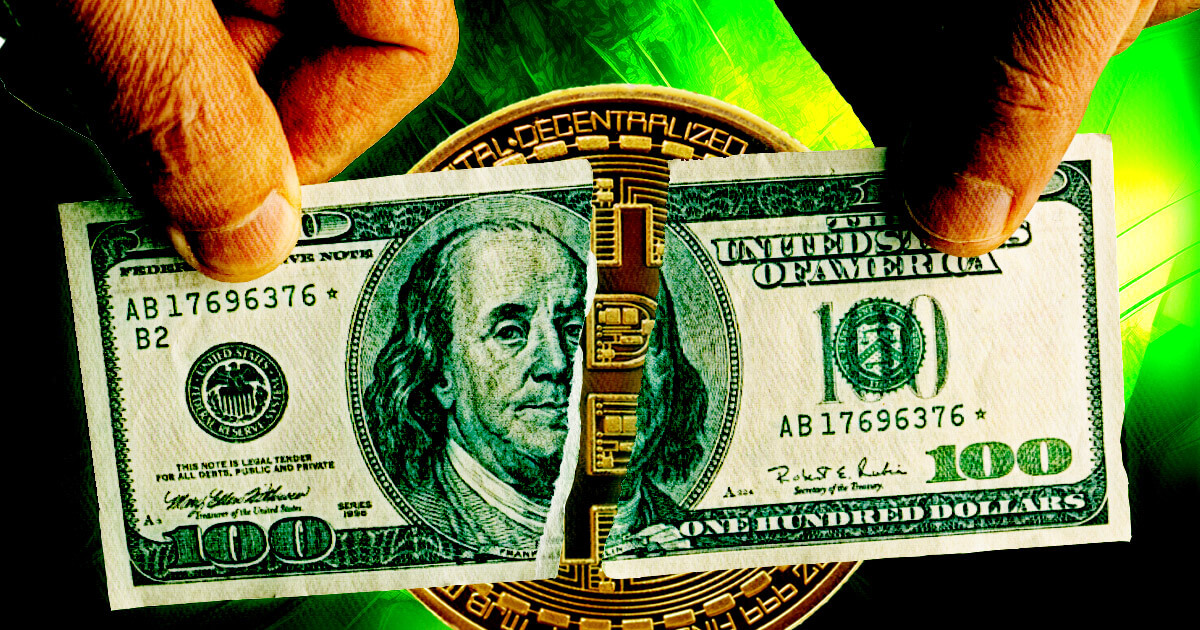
For the past several decades, the U.S. dollar has dominated the global financial system as the world’s primary reserve currency. From international trade and central bank reserves to global debt markets and commodity pricing, the dollar’s influence has been pervasive. However, the early 21st century has witnessed growing momentum toward de‑dollarization—a deliberate attempt by nations and institutions to reduce dependency on the U.S. dollar. Simultaneously, the rise of Bitcoin and decentralized digital assets has sparked debates about whether the world might eventually transition to a new monetary paradigm. This essay analyses the concept of de‑dollarization, the forces driving it, and whether Bitcoin could realistically emerge as its ultimate destination.
1. Understanding De‑dollarization
De‑dollarization refers to reducing reliance on the U.S. dollar in international finance and trade. Traditionally, the dollar’s dominance stems from several advantages:
-
Liquidity: Deep and liquid markets for U.S. Treasury securities.
-
Stability: Relative political and economic stability of the United States.
-
Network Effects: Widespread use reinforces continued preference.
-
Invoicing and Pricing: Many global commodities (e.g., oil) are priced in dollars.
However, persistent trade imbalances, geopolitical tensions, and concerns over U.S. monetary policy independence have motivated a search for alternatives.
2. Drivers of De‑dollarization
Several key forces explain why countries pursue de‑dollarization:
a. Geopolitical Frictions
Sanctions imposed by the United States on countries like Iran, Russia, and Venezuela have revealed vulnerabilities for nations reliant on the dollar. Faced with economic restrictions and freezing of foreign exchange reserves, these countries seek alternatives that can insulate them from U.S. financial leverage.
b. Diversification of Foreign Reserves
Central banks historically hold reserves in U.S. dollars. But recent years have seen diversification into:
-
Euros
-
Yen
-
Gold
-
Other currencies or assets
Diversification is a risk‑management strategy, motivated by fears of dollar depreciation and geopolitical risk.
c. China’s Growing Economic Influence
China, the world’s second‑largest economy, has promoted the internationalization of the renminbi (RMB). Initiatives such as the Belt and Road Initiative, RMB‑denominated oil contracts, and the establishment of alternative financial institutions like the Asian Infrastructure Investment Bank (AIIB) reflect efforts to shift economic influence away from dollar‑centric systems.
d. Technological Advancements
The adoption of digital payment systems and central bank digital currencies (CBDCs) could reduce friction in international transactions. These technologies may challenge dollar dominance by offering faster, cheaper, and more transparent alternatives.
3. Traditional Alternatives to the Dollar
Before evaluating Bitcoin, it’s important to consider traditional alternatives:
a. Multipolar Currency System
In this scenario, several major currencies share global influence—e.g., the USD, Euro, and RMB. The advantages are:
-
Reduced concentration risk
-
Broader base for global financial stability
However, this model still relies on fiat mechanisms and requires deep, trusted markets.
b. Special Drawing Rights (SDRs)
The International Monetary Fund (IMF) created SDRs to supplement reserve assets. While SDRs have grown modestly in importance, they haven’t replaced the dollar due to:
-
Limited liquidity
-
Dependence on IMF membership
4. Bitcoin: A Possible Endpoint?
Bitcoin proponents argue that de‑dollarization naturally leads to digital scarcity—specifically Bitcoin. Let’s explore the logic and challenges.
a. Bitcoin’s Core Value Proposition
Bitcoin has unique attributes that distinguish it from fiat currencies:
-
Decentralization: No single government or institution controls it.
-
Limited Supply: Maximum of 21 million coins—creates scarcity.
-
Censorship Resistance: Transactions cannot easily be blocked or controlled.
-
Digital Native: Easy cross‑border transfer without traditional intermediaries.
These characteristics attract supporters who see Bitcoin as:
-
A store of value (similar to digital gold)
-
A hedge against inflation and monetary debasement
-
An alternative to centralized banking systems
b. Bitcoin as a Reserve Asset
For Bitcoin to replace the dollar in global finance, central banks and institutions must accept it as a reserve asset. Interest has grown:
-
Some central banks research or hold Bitcoin for diversification.
-
Certain corporations add Bitcoin to corporate treasuries.
However, this acceptance remains limited and experimental.
c. Store of Value vs. Medium of Exchange
Bitcoin currently functions more as a store of value rather than a widely used medium of exchange. Challenges include:
-
Volatility: Price swings make daily transactions risky.
-
Scalability: While improvements like the Lightning Network aim to enhance transaction capacity, Bitcoin still lags behind traditional payment systems.
-
Regulatory Barriers: Governments worry about financial stability, taxation, and illicit use.
5. Systemic Challenges and Economic Realities
Even if Bitcoin has theoretical appeal, multiple practical hurdles make a full transition unlikely in the near future.
a. Geopolitical Control and Monetary Policy
Nation‑states exercise monetary policy to manage inflation, employment, and economic growth. Bitcoin’s fixed supply eliminates this flexibility, meaning governments would lose a key tool for economic management.
b. Corporate and Consumer Adoption
Everyday businesses and consumers need reliable, stable mediums of exchange. Most currently prefer established currencies due to:
-
Predictability
-
Acceptance in contracts and legal systems
-
Integration with banking and credit systems
c. Technological Risks
Bitcoin and its broader ecosystem face technical risks:
-
Cybersecurity threats
-
Protocol disputes and forks
-
Dependence on digital infrastructure
Central banks may prefer CBDCs or digital currencies they control over decentralized alternatives.
6. Hybrid Scenarios: Bitcoin as Part of a New Monetary Ecosystem
Rather than a binary outcome—dollar or Bitcoin—the future may see hybrid monetary frameworks:
a. Multi‑Asset Reserve Systems
Countries could hold diversified reserves, including:
-
USD
-
Euros
-
Gold
-
Bitcoin and other digital assets
This approach balances stability and innovation.
b. Digital Currency Coexistence
A future global financial system might include:
-
CBDCs for everyday transactions
-
Stablecoins for cross‑border settlement
-
Bitcoin as a digital store of value
Such coexistence mirrors physical financial diversification in current systems.
Read Also: Keep your face towards the sunshine and shadows will fall behind you
7. Geopolitical Implications of Bitcoin Adoption
Bitcoin’s rise has implications beyond economics:
a. Challenge to Dollar Hegemony
If nations accumulate Bitcoin, the dollar’s dominance may diminish—not necessarily replaced by Bitcoin but weakened by competition from multiple store‑of‑value assets.
b. Power Distribution
Decentralized systems like Bitcoin transfer power from centralized financial institutions to global network participants. This redistribution could disrupt traditional geopolitical influence.
c. Regulatory Battles
Countries may respond differently:
-
Pro‑crypto jurisdictions could attract capital and innovation.
-
Restrictive regimes might clamp down to maintain control over monetary systems.
The outcome depends on global policy coordination.
8. Critics’ Perspectives
Critics argue Bitcoin is unlikely to become a primary global currency for several reasons:
a. Energy Consumption Concerns
Bitcoin mining uses substantial energy, raising sustainability issues.
b. Speculative Nature
Much of Bitcoin’s demand is driven by speculation rather than transactional use, which undermines its role as a stable medium of exchange.
c. Alternative Cryptocurrencies
Other digital assets and blockchain platforms may offer superior utility, programmability, or efficiency, fragmenting adoption rather than concentrating it solely on Bitcoin.
9. Why De‑dollarization Doesn’t Guarantee Bitcoin Dominance
Even if the world moves away from dollar dominance, Bitcoin isn’t the only or inevitable outcome. Reasons include:
a. National Digital Currencies
Many major economies are researching or piloting CBDCs (e.g., China’s digital yuan), which governments fully control.
b. Regional Currency Blocs
Economic unions could expand shared currencies, similar to the eurozone.
c. Stablecoins and Financial Institutions
Banks and fintech companies may issue stablecoins backed by baskets of assets, providing alternatives to both fiat and Bitcoin.
10. The Middle Path: Integration Rather Than Replacement
Rather than a wholesale replacement of the dollar with Bitcoin, a more plausible future includes:
-
Partial de‑dollarization: Multiple reserve assets share global financial prominence.
-
Digital innovation: CBDCs, stablecoins, and Bitcoin all participate in a layered monetary ecosystem.
-
Role specialization: Bitcoin as digital gold; CBDCs for transactional money; fiat currencies for policy flexibility.
This complementary model aligns with economic incentives and technological trends.
Conclusion: Do All Roads Lead to Bitcoin?
The debate over de‑dollarization and Bitcoin touches on economics, technology, and geopolitics. The U.S. dollar’s dominance is undeniably facing pressure from diversification, geopolitical tensions, and digital innovation. However, while Bitcoin offers compelling attributes as a decentralized, scarce digital asset, significant barriers—volatility, regulatory resistance, and the need for monetary policy tools—make it unlikely to fully replace the dollar in the foreseeable future.
Instead, the world may shift toward a multipolar monetary ecosystem, in which Bitcoin plays an important—but not exclusive—role. Bitcoin may emerge as a global store of value alongside gold, digital currencies, and diversified reserve assets. Thus, the journey of de‑dollarization could lead to many roads, one of which includes Bitcoin—but not necessarily as the single destination.
Watch Also: https://www.youtube.com/@TravelsofTheWorld24







Leave a Reply