

The tragic death of Sushant Singh Rajput in June 2020 shook the nation and left a lasting impact on Indian society, the film industry, and media ethics. What followed was not just an investigation into a young actor’s death, but a prolonged public trial played out on television screens, social media platforms, and news portals. At the center of this storm was Rhea Chakraborty, Sushant’s partner at the time, who faced relentless scrutiny, vilification, and character assassination.
When the Central Bureau of Investigation (CBI) eventually gave Rhea Chakraborty a clean chit, stating that no criminal conspiracy was found against her, it marked a crucial turning point in the narrative. Among the voices that spoke up strongly after the development was actress and activist Dia Mirza, who openly asked the media to apologise to Rhea Chakraborty for the treatment she endured.
Dia Mirza’s statement reignited discussions around media responsibility, gender bias, mental health, and the consequences of sensationalism in high-profile cases.
The Sushant Singh Rajput Case: A Brief Recap
Sushant Singh Rajput was found dead at his Mumbai residence on June 14, 2020. The initial investigation by Mumbai Police concluded that it was a case of suicide, but the absence of closure and the emotional outpouring from fans led to widespread speculation.
Soon, the case snowballed into a national debate involving multiple agencies—the Mumbai Police, Enforcement Directorate (ED), Narcotics Control Bureau (NCB), and finally the CBI. Television debates, social media campaigns, and unverified claims took center stage, often overshadowing facts.
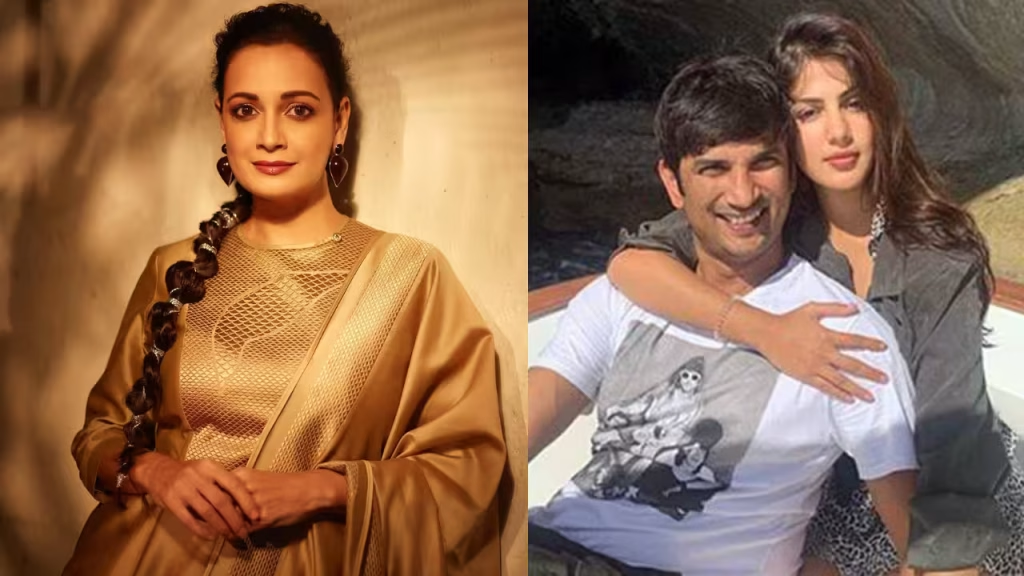
Rhea Chakraborty: From Actor to Accused in Public Eye
Rhea Chakraborty, a young actor with a modest career in Bollywood, became the focal point of the media narrative. She was portrayed by several news outlets as manipulative, greedy, and even criminal—long before any agency filed formal charges.
Her personal messages, financial records, and private life were dissected publicly. Prime-time debates labeled her with derogatory terms, while paparazzi followed her relentlessly. The distinction between investigation and judgment was blurred, and the presumption of innocence was largely ignored.
The CBI Clean Chit: A Turning Point
After years of investigation, the CBI concluded that there was no evidence to suggest that Rhea Chakraborty abetted or conspired in Sushant Singh Rajput’s death. The agency reportedly ruled out foul play and confirmed that no criminal angle could be established against her.
This development, while not erasing the trauma Rhea endured, legally cleared her name and raised serious questions about how narratives were built and amplified in the absence of verified facts.
Dia Mirza Speaks Out: A Call for Accountability
Following the CBI’s clean chit, Dia Mirza took to social media to express her thoughts. Known for her outspoken views on social justice, environmental issues, and women’s rights, Dia did not mince her words.
She stated that the media owed Rhea Chakraborty a public apology, emphasizing that the damage done to her reputation, mental health, and dignity could not simply be undone by silence.
Dia Mirza’s statement was not just about one individual—it was a critique of a system that thrives on sensationalism at the cost of truth.
Why Dia Mirza’s Voice Matters
Dia Mirza has long been respected as one of Bollywood’s more socially conscious voices. A former Miss Asia Pacific and UN Environment Goodwill Ambassador, she has consistently used her platform to speak on issues that go beyond cinema.
Her support for Rhea Chakraborty carried weight because it challenged a dominant narrative that many were hesitant to question at the height of public outrage. By demanding accountability, Dia reminded audiences that justice is incomplete without acknowledgment of wrongdoing—especially when that wrongdoing comes from powerful institutions like mainstream media.
Media Trial vs Judicial Process
The Sushant Singh Rajput case became one of the most glaring examples of media trial in recent Indian history. News channels competed for TRPs, often presenting conjecture as fact and emotions as evidence.
Panel discussions replaced courtrooms, hashtags replaced investigations, and character judgments replaced legal procedures. Rhea Chakraborty was declared guilty in public discourse long before any legal conclusion was reached.
Dia Mirza’s call for an apology highlights the dangerous gap between responsible journalism and sensational broadcasting.
Gender Bias and Misogyny in Coverage
Many critics pointed out that Rhea Chakraborty’s treatment was deeply rooted in gender bias. She was portrayed as a “gold digger,” “witch,” or “femme fatale”—tropes historically used to vilify women associated with powerful or successful men.
Dia Mirza’s statement implicitly addressed this misogyny, questioning whether a male partner would have faced similar scrutiny under the same circumstances.
Mental Health: The Forgotten Conversation
Ironically, while Sushant Singh Rajput’s death initially opened discussions around mental health, the narrative quickly shifted toward blame and conspiracy.
Rhea Chakraborty had spoken openly about Sushant’s struggles with mental health and her attempts to support him. Instead of encouraging empathetic dialogue, her statements were weaponized against her.
Dia Mirza and other supporters emphasized that mental health conversations must be grounded in compassion—not sensationalism.
The Impact on Rhea Chakraborty’s Life
Even after legal clearance, the scars of public humiliation remain. Rhea faced professional setbacks, emotional trauma, and social isolation. Her family was dragged into the controversy, and her career came to a standstill.
Dia Mirza’s demand for an apology acknowledged that legal justice does not automatically translate into social healing.
Bollywood’s Silence—and Selective Support
During the peak of the controversy, many in Bollywood chose silence, fearing backlash or public misinterpretation. A few, including Dia Mirza, Vidya Balan, and Taapsee Pannu, eventually spoke out in defense of fairness and due process.
The silence of many industry insiders later became a subject of self-reflection, with questions about collective responsibility and moral courage.

Social Media’s Role in Shaping Narratives
Social media amplified misinformation at unprecedented speed. Hashtags calling for justice often morphed into tools for harassment. Troll armies targeted Rhea Chakraborty relentlessly, sometimes crossing into threats and abuse.
Dia Mirza’s statement indirectly called out not just traditional media, but also the toxic ecosystem that thrives on outrage without accountability.
Apology as Accountability, Not Sympathy
Dia Mirza did not ask for sympathy for Rhea Chakraborty—she asked for accountability. An apology, in this context, would acknowledge mistakes, misinformation, and ethical failures.
Such a gesture could set a precedent for responsible journalism and rebuild public trust.
Can Media Apologies Heal Damage?
While an apology cannot erase years of harassment, it can mark the beginning of introspection. It can open space for reforms in media ethics, guidelines on reporting sensitive cases, and accountability mechanisms.
Dia Mirza’s appeal forces the question: if media can influence public opinion so powerfully, shouldn’t it also bear responsibility when it gets things wrong?
Lessons from the Case
The Sushant Singh Rajput case leaves behind several lessons:
-
Presumption of innocence must be respected
-
Mental health discussions require sensitivity
-
Media freedom comes with ethical responsibility
-
Women should not be scapegoated for systemic failures
Dia Mirza’s voice served as a reminder of these principles.
Public Reaction to Dia Mirza’s Statement
Public opinion was divided. Many praised Dia Mirza for her courage and clarity, calling her stance long overdue. Others accused her of reopening old wounds or defending the “wrong person.”
The polarized reaction itself reflected how deeply the case had influenced public consciousness.
Moving Forward: A Chance for Reflection
As the dust settles, the focus must shift from blame to reflection. How can media do better? How can society prevent such public vilification in the future? And how can conversations around mental health be protected from sensational misuse?
Dia Mirza’s call for an apology is not about the past—it’s about preventing repetition.
Conclusion: Truth, Time, and Responsibility
The CBI’s clean chit to Rhea Chakraborty closed a legal chapter, but it opened a moral one. Dia Mirza’s demand for a media apology highlighted the cost of unchecked sensationalism and the human lives affected by it.
In remembering Sushant Singh Rajput, justice should also mean protecting the dignity of those left behind. Accountability, empathy, and ethical responsibility are not optional—they are essential.
As India reflects on one of its most controversial media chapters, Dia Mirza’s words stand as a powerful reminder: truth may take time, but responsibility should never be delayed.
Read Also: Keep your face towards the sunshine and shadows will fall behind you
Watch Also: https://www.youtube.com/@TravelsofTheWorld24







Leave a Reply