
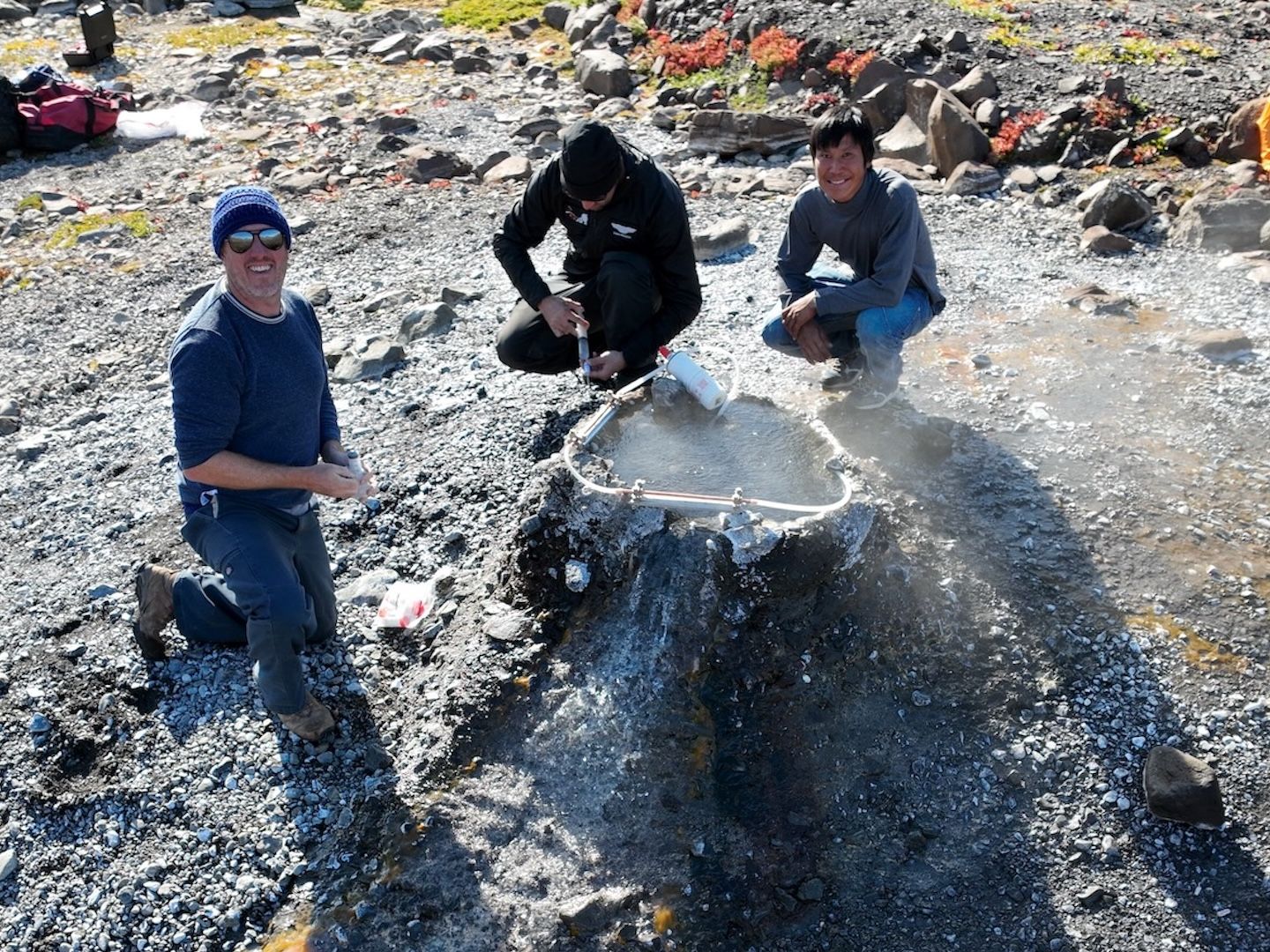
Helium is one of the most unusual and irreplaceable elements on Earth. It makes balloons float, cools powerful MRI scanners, enables space exploration, and plays a critical role in advanced scientific research. Yet despite its importance, the world is facing a growing and potentially severe helium shortage—one that could disrupt medicine, technology, and industry worldwide.
Now, scientists believe they may have found a partial solution hidden deep within ancient rocks in Earth’s crust. New research suggests that massive, previously overlooked helium reservoirs could exist underground, formed over billions of years and trapped by geological processes. If these reserves can be located and extracted, they could fundamentally reshape the global helium supply.
Why Helium Is So Important
Helium is the second-lightest and second-most abundant element in the universe, yet it is surprisingly rare on Earth. Unlike oxygen or nitrogen, helium is not renewable on human timescales. Once released into the atmosphere, it escapes into space, lost forever.
Despite this scarcity, helium is essential for many critical applications:
-
Medical imaging: MRI machines rely on liquid helium to cool superconducting magnets
-
Scientific research: Particle accelerators and low-temperature physics require helium
-
Space exploration: Helium is used in rocket fuel systems and pressurization
-
Electronics and manufacturing: Semiconductor production depends on ultra-pure helium
-
Defense and aerospace: Helium is used in guidance systems and leak detection
Without a reliable helium supply, many of these technologies simply cannot function.
The Growing Helium Crisis
For decades, helium was relatively cheap and abundant, largely due to government stockpiles and production tied to natural gas extraction. However, that era is ending.
Several factors are contributing to the looming shortage:
-
Depletion of known reserves
Most commercial helium comes from natural gas fields where helium accumulated accidentally over millions of years. Many of these fields are being exhausted. -
Closure of major stockpiles
The U.S. Federal Helium Reserve, once the world’s largest helium supplier, has been steadily selling off its reserves and winding down operations. -
Rising global demand
Medical imaging, quantum computing, and space technology are expanding rapidly, driving helium consumption upward. -
Supply chain instability
Helium production is geographically limited, making it vulnerable to political, economic, and logistical disruptions.
As a result, helium prices have spiked multiple times in recent years, and shortages have forced hospitals and research facilities to ration supplies.
Why Helium Is So Hard to Replace
Helium is chemically inert, meaning it does not easily form compounds. This makes it incredibly useful—but also impossible to synthesize economically.
Key challenges include:
-
No substitutes for many applications
-
Cannot be manufactured at scale
-
Escapes Earth’s gravity once released
-
Extremely difficult to recycle, especially in medical and industrial settings
In short, once helium is gone, it’s gone.
How Helium Forms Inside the Earth
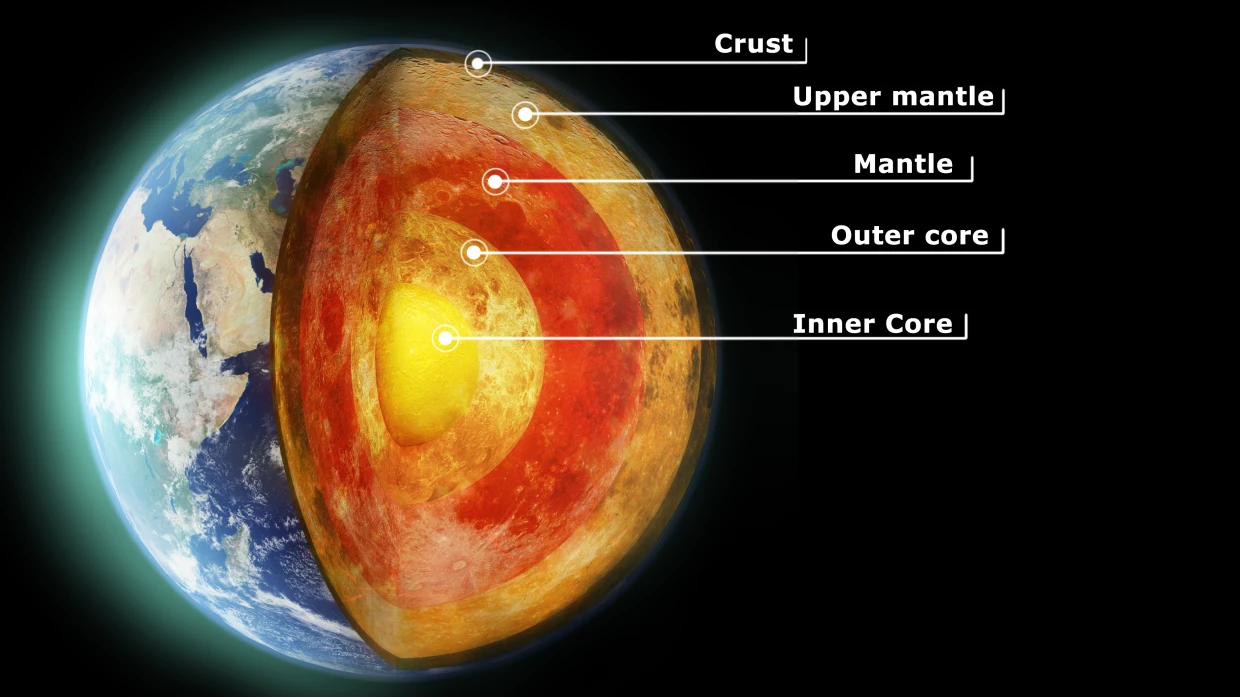
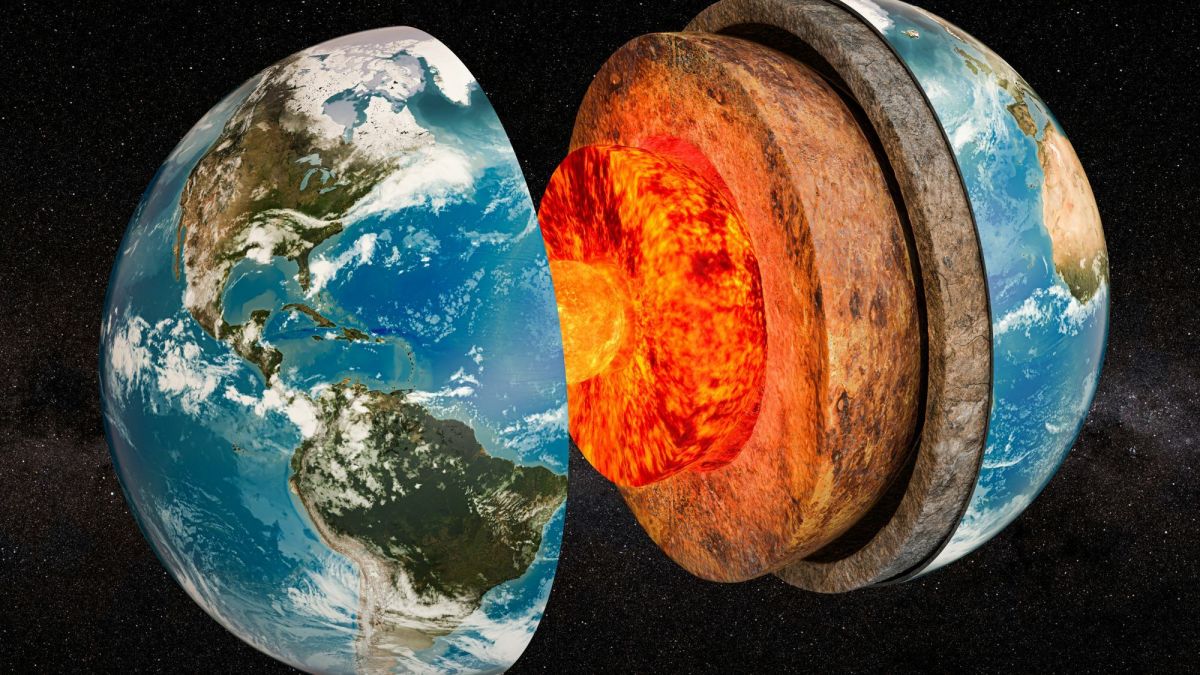
Unlike most gases, Earth’s helium does not come from the atmosphere. Instead, it is produced deep underground through radioactive decay.
Over billions of years, elements such as uranium and thorium inside Earth’s crust slowly decay, releasing alpha particles. These particles eventually capture electrons and become helium atoms.
This process is extremely slow, but Earth has had 4.5 billion years to accumulate helium.
The problem is that helium is very light and mobile. Unless it becomes trapped underground, it migrates upward through rocks and eventually escapes into space.
The Role of Ancient Rocks
Recent studies suggest that ancient continental crust, particularly rocks billions of years old, may be far better at trapping helium than previously believed.
These rocks often possess:
-
Low permeability, preventing gas escape
-
Thick, stable geological structures
-
Natural seals formed by salt layers, clays, or dense minerals
-
Long-term tectonic stability
Such conditions allow helium to accumulate slowly over immense spans of time, potentially forming large, concentrated reservoirs.
Some of these rocks date back more than 2.5 billion years, meaning they have had ample time to generate and trap helium continuously.
A New Way to Find Helium
Traditionally, helium exploration has been tied to natural gas drilling. If helium was present, it was captured as a byproduct. But scientists now believe helium deserves direct exploration of its own.
New exploration strategies include:
-
Studying ancient cratons (the oldest parts of continents)
-
Mapping uranium- and thorium-rich rock formations
-
Analyzing fault systems that could trap gases
-
Using isotopic signatures to identify helium-rich regions
Several promising helium-rich sites have already been identified in places such as Africa, North America, and parts of Asia.
Evidence of Hidden Helium Reservoirs
In recent years, exploratory drilling has uncovered unexpectedly high concentrations of helium in locations previously not associated with natural gas production.
Some of these sites contain helium levels many times higher than what is considered commercially viable. This strongly suggests that helium can accumulate independently, given the right geological conditions.
Importantly, these discoveries indicate that Earth’s crust may contain far more helium than once assumed, simply locked away in the right rocks.
Why This Discovery Matters
If large-scale helium reservoirs can be reliably located and extracted, the implications are enormous.
1. Medical Stability
Hospitals rely on a steady helium supply to operate MRI machines. New reserves could prevent future disruptions and protect patient care.
2. Scientific Progress
Research into superconductivity, fusion energy, and quantum computing depends heavily on helium. A stable supply ensures continued innovation.
3. Space and Defense Applications
Helium is vital for space missions, satellite systems, and national security infrastructure.
4. Price Stability
Expanding supply would reduce extreme price volatility, making helium more affordable and accessible worldwide.
Environmental Considerations
Helium extraction is not without environmental concerns. However, it may be less harmful than traditional fossil fuel extraction.
Key points include:
-
Helium itself is non-toxic and non-reactive
-
Extraction often requires smaller drilling operations
-
No carbon emissions from helium use
-
Can be extracted without burning fossil fuels
With proper regulation, helium mining could become one of the cleanest forms of resource extraction.
The Risk of Waiting Too Long
Despite its importance, helium has historically been undervalued. Balloons and novelty uses have trivialized a resource that is, in reality, irreplaceable.
If new reserves are not developed in time:
-
Medical systems may face critical shortages
-
Research facilities could shut down experiments
-
Technological innovation could slow
-
Prices could rise beyond affordability
Once existing reserves are depleted, recovery may be impossible.
Rethinking Helium as a Strategic Resource
Many scientists now argue that helium should be treated as a strategic global resource, similar to rare earth elements or critical minerals.
This would involve:
-
Government-backed exploration programs
-
Long-term storage and conservation
-
Investment in recycling technologies
-
Restrictions on non-essential uses
Ancient helium reservoirs could play a central role in such a strategy.
A Resource Billions of Years in the Making
The idea that helium—formed by radioactive decay over billions of years—has been quietly accumulating beneath our feet is both humbling and hopeful.
These hidden reservoirs represent a deep-time gift, created long before humans existed and preserved by the slow, patient processes of geology.
Tapping into them responsibly could ensure that future generations have access to one of Earth’s most valuable elements.
The Future of Helium Supply
While ancient crustal helium will not solve every supply problem overnight, it offers a powerful new direction for research and investment.
The challenge now is to:
-
Locate these reservoirs accurately
-
Develop efficient extraction methods
-
Balance economic needs with environmental protection
-
Treat helium as the precious resource it truly is
If successful, Earth’s oldest rocks may help secure one of humanity’s most essential elements—just in time.
Conclusion
A global helium shortage is no longer a distant possibility—it is an approaching reality. Yet hidden within the ancient foundations of Earth’s crust may lie vast reserves, silently accumulating over billions of years.
By recognizing helium’s true value and exploring these ancient geological vaults, humanity has a rare opportunity: not just to avoid crisis, but to rethink how we manage irreplaceable resources in a finite world.
The solution to the helium shortage may not come from the skies—but from the deepest, oldest rocks beneath our feet.
Read Also: Keep your face towards the sunshine and shadows will fall behind you
Watch Also: https://www.youtube.com/@TravelsofTheWorld24







Leave a Reply