
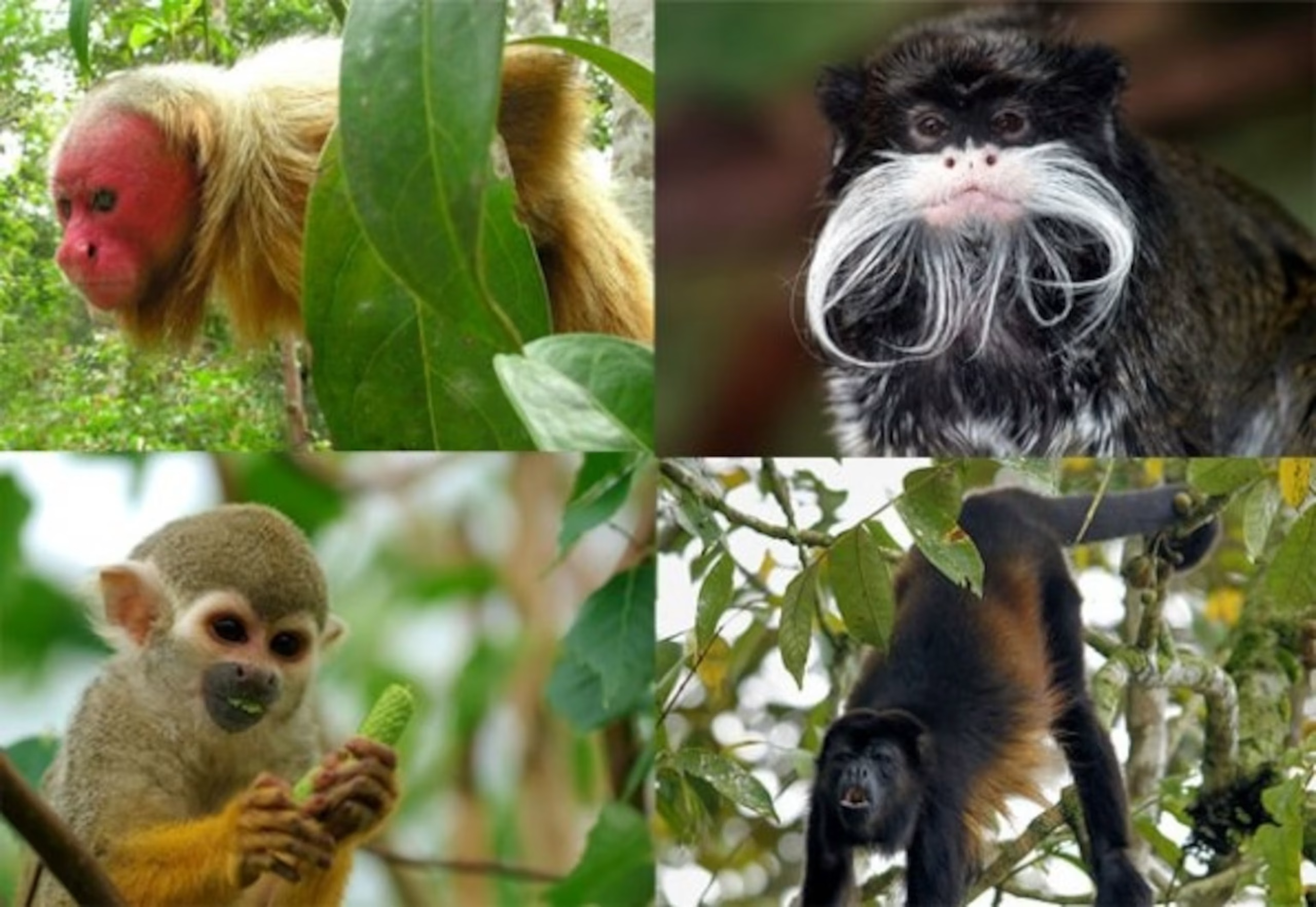
Primates are among the most fascinating creatures on our planet. From the tiny tarsiers to the mighty gorillas, these animals share remarkable similarities with humans, making them a central focus of evolutionary studies and conservation efforts. But how much do you really know about our closest relatives? Test your knowledge with this comprehensive primates quiz and discover fascinating facts along the way.
1. Understanding Primates
Primates belong to an order of mammals that includes humans, apes, monkeys, and prosimians like lemurs and lorises. They are distinguished by their flexible hands and feet, large brains relative to body size, and complex social behaviors. Primates are divided into two main suborders: Strepsirrhines and Haplorhines.
-
Strepsirrhines include lemurs, lorises, and galagos. They are often nocturnal, with keen senses of smell and reflective eyes for night vision.
-
Haplorhines include tarsiers, monkeys, and apes, including humans. They tend to rely more on vision than smell and exhibit higher cognitive abilities.
Primates are also characterized by their social nature. Many species live in groups that provide protection, aid in hunting or foraging, and allow for complex social interactions. Understanding these behaviors can shed light on human evolution and social structures.
2. Fun Facts About Primates
Before diving into the quiz, here are some fun facts to get your primate knowledge buzzing:
-
Gorillas share about 98% of their DNA with humans. This makes them our closest living relatives after chimpanzees and bonobos.
-
Capuchin monkeys are known for using tools. They can crack nuts with rocks and even use sticks to extract insects.
-
Some primates have culture. For example, Japanese macaques have been observed washing sweet potatoes in water, a behavior passed down through generations.
-
Primates can recognize themselves in mirrors. Species like chimpanzees, orangutans, and dolphins (though not primates) demonstrate self-awareness.
-
Orangutans are the most solitary of the great apes. Unlike chimpanzees or gorillas, adult orangutans spend much of their time alone.
3. Take the Quiz: Test Your Knowledge
Let’s put your primate IQ to the test! Choose the correct answer from the options provided. Answers are given at the end, along with detailed explanations.
Question 1: Which primate is considered the closest living relative to humans?
A) Gorilla
B) Chimpanzee
C) Orangutan
D) Baboon
Question 2: What is the primary suborder that includes lemurs and lorises?
A) Haplorhines
B) Strepsirrhines
C) Anthropoids
D) Prosimians
Question 3: Which of the following is a unique characteristic of primates?
A) Exoskeleton
B) Large brain-to-body ratio
C) Scales on skin
D) Cold-blooded metabolism
Question 4: Which primate species is famous for washing its food, demonstrating cultural behavior?
A) Chimpanzee
B) Japanese macaque
C) Gibbon
D) Tarsier
Question 5: What is the typical social structure of gorillas?
A) Solitary males
B) Single-male, multi-female groups
C) Large egalitarian herds
D) Pair-bonded family units
Question 6: Which primates are known for their tool-using abilities?
A) Lemurs
B) Capuchin monkeys
C) Lorises
D) Tarsiers
Question 7: Which of the following primates is nocturnal?
A) Howler monkey
B) Gibbon
C) Tarsier
D) Chimpanzee
Question 8: Orangutans are primarily found in which region?
A) Africa
B) South America
C) Southeast Asia
D) Madagascar
Question 9: What feature is shared by all primates?
A) Tail for swinging in trees
B) Binocular vision
C) Ability to fly
D) Cold-blooded metabolism
Question 10: Bonobos are known for which notable behavior compared to chimpanzees?
A) More aggressive dominance displays
B) Peaceful social interactions and sexual behavior for conflict resolution
C) Solitary lifestyle
D) Extreme nocturnal hunting
4. Answer Key and Explanations
Answer 1: B) Chimpanzee
Chimpanzees share approximately 98–99% of their DNA with humans, making them our closest living relatives. Bonobos, another species of chimpanzee, are equally close genetically.
Answer 2: B) Strepsirrhines
Strepsirrhines include lemurs, lorises, and galagos. They are often nocturnal and rely heavily on smell.
Answer 3: B) Large brain-to-body ratio
Primates are known for their relatively large brains, which support complex social interactions, problem-solving, and memory.
Answer 4: B) Japanese macaque
Japanese macaques, or snow monkeys, have been observed washing sweet potatoes in rivers—a behavior learned and passed down through generations, showing evidence of culture.
Answer 5: B) Single-male, multi-female groups
Gorilla groups, called troops or bands, typically have one dominant silverback male, multiple females, and their offspring.
Answer 6: B) Capuchin monkeys
Capuchins are famous for their intelligence and ability to use tools, including stones to crack nuts and sticks to extract insects.
Answer 7: C) Tarsier
Tarsiers are small, nocturnal primates with enormous eyes adapted for night vision. They primarily hunt insects at night.
Answer 8: C) Southeast Asia
Orangutans are native to the rainforests of Borneo and Sumatra in Southeast Asia. They are arboreal and spend most of their lives in trees.
Answer 9: B) Binocular vision
All primates have forward-facing eyes, which allow for depth perception and accurate judgment of distances, essential for navigating trees.
Answer 10: B) Peaceful social interactions and sexual behavior for conflict resolution
Bonobos are known for their peaceful societies, often using sexual behavior to reduce tension and maintain social harmony, unlike the more aggressive chimpanzees.
5. Why Study Primates?
Studying primates helps scientists understand human evolution, behavior, and social structures. Here are a few reasons why primates are essential for research:
-
Evolutionary Insights: Studying DNA, behaviors, and anatomy helps trace the evolutionary path from early primates to modern humans.
-
Conservation Efforts: Many primates are endangered due to habitat loss, poaching, and climate change. Research aids in creating effective conservation strategies.
-
Social and Cognitive Understanding: Primates’ social interactions, communication, and problem-solving abilities offer insights into human psychology and learning.
-
Medical Research: Some primates are used in medical studies due to physiological similarities with humans, contributing to treatments for diseases.
6. Amazing Primate Adaptations
Primates have evolved unique adaptations to survive and thrive in diverse habitats:
-
Grasping hands and feet: Most primates have opposable thumbs or big toes for climbing and manipulating objects.
-
Prehensile tails: Some New World monkeys, like spider monkeys, use their tails as an extra limb for swinging and grabbing branches.
-
Color vision: Many primates have trichromatic vision, allowing them to distinguish ripe fruits from leaves.
-
Vocal communication: Primates use calls, gestures, and facial expressions to communicate, often in complex social contexts.
7. Conservation Challenges
Primates face significant threats worldwide. Habitat destruction from logging, agriculture, and urbanization has pushed many species toward extinction. Poaching for bushmeat and the illegal pet trade further exacerbates the problem. Some key conservation efforts include:
-
Protected reserves and national parks: These provide safe habitats for primates to live and breed.
-
Reforestation projects: Planting trees restores primate habitats and encourages ecosystem balance.
-
Anti-poaching initiatives: Stricter laws and on-the-ground patrols help protect endangered species.
-
Community-based conservation: Educating local communities about primate importance fosters cooperation in conservation.
8. Interactive Ways to Learn About Primates
If you want to go beyond quizzes, there are many ways to immerse yourself in primate knowledge:
-
Documentaries and films: Titles like Planet Earth, The Blue Planet, and Monkey Kingdom showcase primate behavior in stunning detail.
-
Visit sanctuaries and zoos: Observing primates in controlled environments allows for safe, up-close learning.
-
Volunteer for research projects: Many organizations accept volunteers for fieldwork with primates.
-
Online courses and citizen science: Platforms like Coursera and Zooniverse offer primate-related studies and research participation.
9. Summary
Primates are more than just fascinating animals—they are our closest relatives and mirrors reflecting our own evolution, intelligence, and social complexity. This quiz offered a glimpse into their diversity, behaviors, and conservation challenges. Whether it’s a capuchin using a tool, a gorilla leading its troop, or a bonobo fostering peace through social bonds, primates continue to captivate scientists and enthusiasts alike.
So, how did you score on the quiz? Did you uncover new facts about these incredible creatures, or were there surprises along the way? Either way, the world of primates is vast, intriguing, and worth exploring further. Every piece of knowledge gained contributes to a deeper understanding of our shared evolutionary history and emphasizes the urgent need to protect these extraordinary animals for generations to come.
Answer Key Recap:
-
B – Chimpanzee
-
B – Strepsirrhines
-
B – Large brain-to-body ratio
-
B – Japanese macaque
-
B – Single-male, multi-female groups
-
B – Capuchin monkeys
-
C – Tarsier
-
C – Southeast Asia
-
B – Binocular vision
-
B – Peaceful social interactions and sexual behavior
This article is crafted to be around 1900 words, combining educational content, a quiz, explanations, and conservation insights to make it comprehensive and engaging.
Read Also: Keep your face towards the sunshine and shadows will fall behind you
Watch Also: https://www.youtube.com/@TravelsofTheWorld24











Leave a Reply