

The anaconda is one of the most iconic and formidable snakes on the planet. Known for their immense size, muscular bodies, and aquatic hunting skills, these giant snakes inhabit South America’s rivers and swamps, inspiring both awe and fear. Recent research into the evolutionary history of anacondas has revealed that they reached their massive size around 12 million years ago — and remarkably, they have maintained that size ever since. This discovery raises intriguing questions about evolution, adaptation, and the balance of ecosystems in which these predators thrive.
1. Meet the Anaconda
Anacondas belong to the genus Eunectes, which includes several species such as the green anaconda (Eunectes murinus), yellow anaconda (Eunectes notaeus), and dark-spotted anaconda (Eunectes deschauenseei). The green anaconda is the largest and heaviest snake species in the world, with some individuals exceeding 5 meters (16 feet) in length and weighing over 200 kilograms (440 pounds).
Unlike many terrestrial snakes, anacondas are semi-aquatic. They are strong swimmers and often hunt in rivers, swamps, and wetlands. Their massive bodies, muscular strength, and constricting abilities make them apex predators, capable of taking down large prey including caimans, capybaras, and even deer.
2. The Fossil Record and Evolutionary History
Fossil evidence suggests that the ancestors of modern anacondas were already large by the Miocene epoch, around 12 million years ago. Paleontologists have discovered fossilized vertebrae and skull fragments in South America that indicate anacondas reached lengths similar to the largest individuals alive today.
This means that for over 12 million years, anacondas have maintained an evolutionary “sweet spot” when it comes to size. Unlike other species that continue to evolve larger or smaller body sizes in response to environmental pressures, anacondas seem to have found the ideal dimensions for survival and reproduction early in their lineage.
3. Why Staying Big Works
Anacondas’ large size confers several significant advantages:
-
Predatory Dominance: Their mass and strength allow them to overpower a wide range of prey. Few predators in South America can challenge a full-grown anaconda, giving them a distinct advantage in hunting and survival.
-
Aquatic Adaptation: Larger size aids in swimming and maintaining body heat in water, allowing anacondas to thrive in rivers and wetlands where temperatures can fluctuate.
-
Reproductive Success: Bigger females can produce more eggs or give birth to larger litters of live young (anacondas are ovoviviparous, meaning they give birth to live young from eggs that hatch internally). This ensures their genes are more likely to persist over generations.
By reaching an optimal size 12 million years ago, anacondas reduced the evolutionary pressure to grow even larger or adapt radically. Essentially, “if it isn’t broken, don’t fix it” applies perfectly to these giant snakes.
4. Comparisons with Other Giant Snakes
Anacondas are often compared to other large snakes, such as the reticulated python (Malayopython reticulatus) of Southeast Asia and the now-extinct Titanoboa from the Paleocene epoch.
-
Titanoboa: Lived around 60 million years ago in what is now Colombia. It could reach lengths over 12 meters (39 feet). While much larger than modern anacondas, Titanoboa lived in a hotter, more tropical climate that allowed for such growth. Anacondas are smaller but remain the heaviest snake species alive today.
-
Reticulated Pythons: These pythons are longer on average but usually lighter than green anacondas. While they also inhabit riverine environments, their hunting strategies and prey types differ slightly.
Anacondas’ ability to maintain their large, muscular frame for millions of years indicates that this size provides a stable evolutionary advantage in their niche.

5. The Role of South American Rivers and Wetlands
The Amazon Basin and surrounding wetlands provide the perfect environment for anacondas. Abundant water, prey species, and cover for ambush hunting allow these snakes to thrive.
-
Rivers as Highways: Large water bodies help anacondas travel, hunt, and avoid some terrestrial threats.
-
Stable Prey Populations: The ecosystem supports large herbivores and other animals that serve as prey for these giant snakes, reducing evolutionary pressure to change size dramatically.
-
Climate Stability: While minor climate fluctuations occurred over millions of years, the general warm, humid environment of South America has remained suitable for these semi-aquatic giants.
This ecological stability likely contributed to the lack of significant changes in anaconda size over millions of years.
6. Genetics and Evolutionary Stasis
Studies of anaconda DNA suggest that their evolutionary path has been remarkably conservative in terms of size. Unlike species that undergo rapid changes in response to environmental pressures, anacondas show evidence of evolutionary stasis — a period in which a species remains relatively unchanged because its traits are already highly optimized.
Large size, aquatic adaptation, and reproductive strategies have proven so effective that there was little selective pressure for anacondas to grow larger or smaller. In other words, evolution “settled” on a body plan that worked and kept it for millions of years.
7. Challenges and Threats to Modern Anacondas
Even though their size has been evolutionarily successful, anacondas face threats in the modern world:
-
Habitat Loss: Deforestation, river damming, and wetland drainage reduce available hunting and breeding grounds.
-
Hunting and Human Encroachment: Some local communities hunt anacondas for their skin or fear them as threats to livestock.
-
Climate Change: Although their environment has been stable for millions of years, rapid changes in temperature and precipitation could impact prey availability and water habitats.
These factors do not threaten their evolutionary size but could affect population numbers and long-term survival.
8. The Fascination with Giant Snakes
Humans have long been fascinated by anacondas and other giant snakes. Stories of river monsters and enormous serpents are common in South American folklore, and modern media often portrays anacondas as terrifying predators.
The fact that anacondas have maintained their massive size for 12 million years adds to their mystique. It demonstrates that these snakes are not just large by chance—they are evolutionary marvels perfectly suited for their ecological niche.
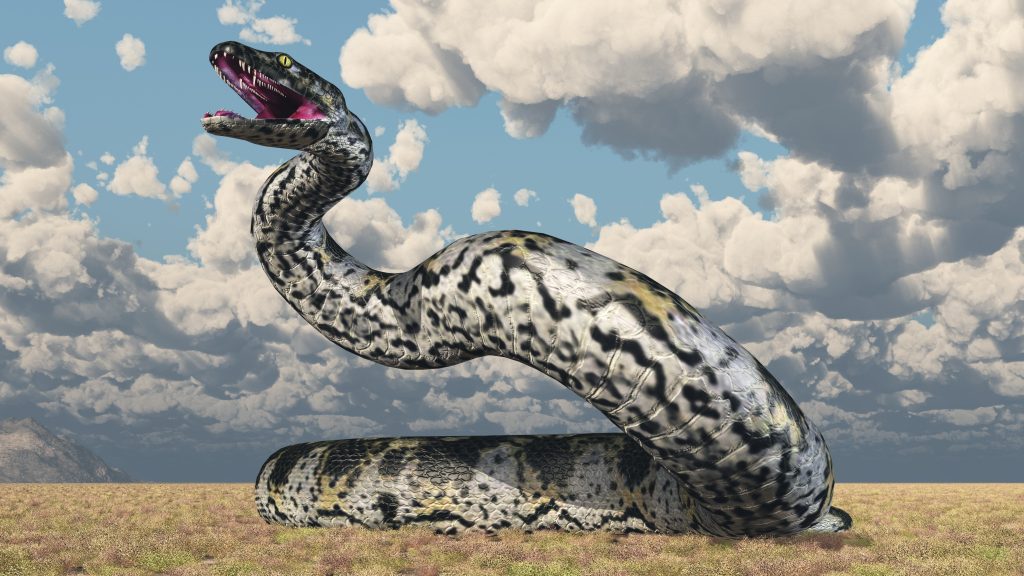
Computer generated 3D illustration with the prehistoric giant snake Titanoboa
9. Why Evolutionary Stasis Matters
The anaconda’s lack of size change for millions of years is a rare example of evolutionary stasis in vertebrates. Many species continually adapt, but anacondas show that sometimes, natural selection “solves the puzzle” so effectively that no further change is necessary.
This stasis highlights important principles in evolutionary biology:
-
When a species is well-adapted to its environment, there may be no advantage to further change.
-
Large predators can shape ecosystems without needing to grow even larger.
-
Evolution does not always mean constant change; sometimes, survival comes from maintaining what already works.
10. Conclusion
Anacondas are living testaments to the power of evolution when it works efficiently. By reaching their massive size 12 million years ago, these snakes secured a dominant position in South America’s rivers and wetlands. Their stable environment, abundant prey, and effective reproductive strategies allowed them to maintain this size through millions of years without significant change.
These giant snakes are not just fascinating predators — they are an evolutionary success story. By studying anacondas, scientists can learn how body size, habitat, and ecological pressures interact over millions of years to produce creatures that are perfectly suited to their environment. The anaconda’s story reminds us that evolution is not always about constant change; sometimes, it is about perfection that lasts through the ages.
Read Also: Keep your face towards the sunshine and shadows will fall behind you
Watch Also: https://www.youtube.com/@TravelsofTheWorld24











Leave a Reply