
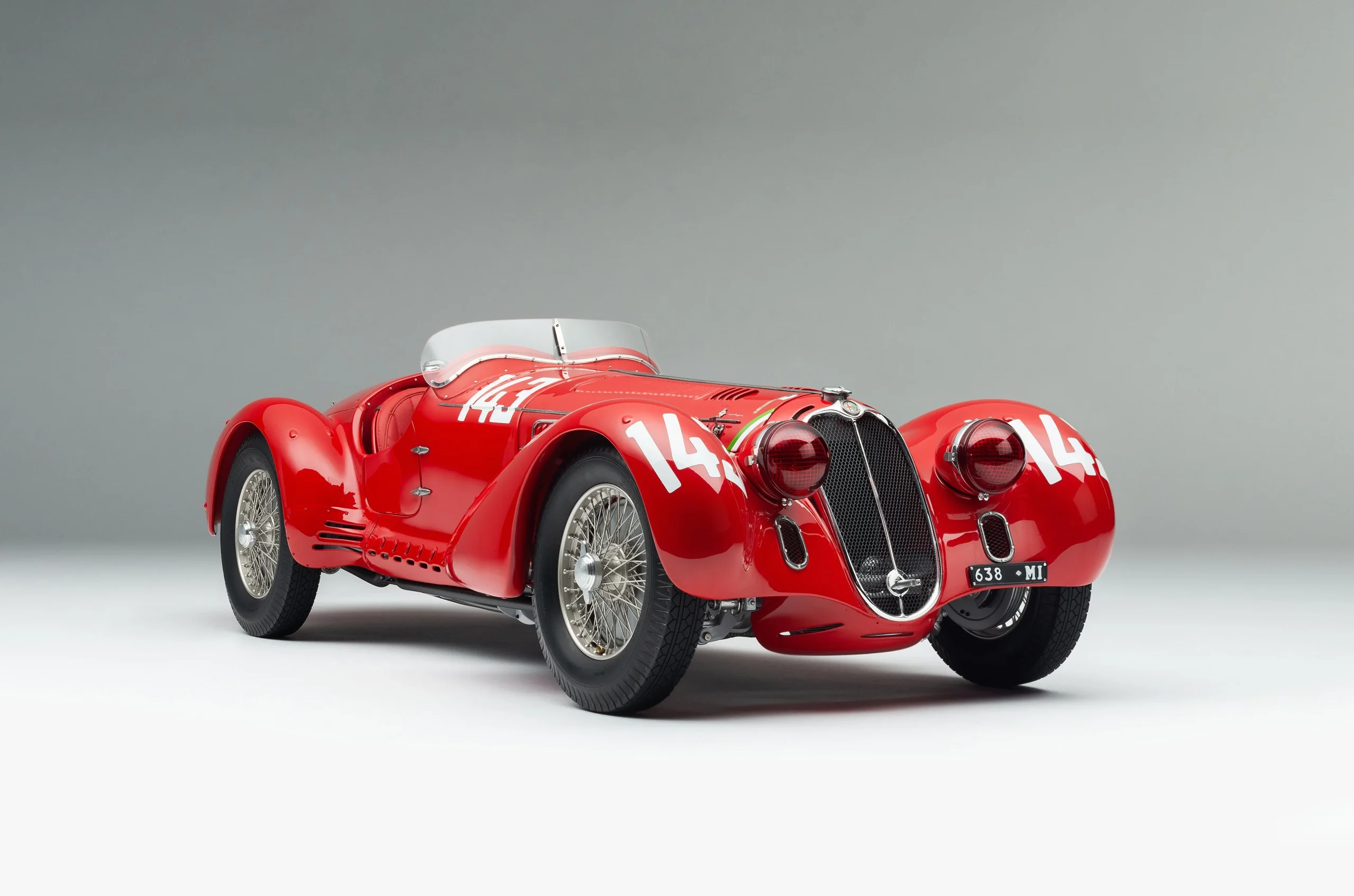
Among the greatest automobiles ever created, few names command as much reverence as the 1938 Alfa Romeo 8C 2900-B Corto Touring Spyder. Often described as the most beautiful and technically advanced car of its era, this masterpiece represents the absolute peak of pre-war automotive engineering, design, and racing heritage. More than just a car, it is a symbol of Italian artistry, mechanical brilliance, and timeless elegance.
Even decades after its creation, the 8C 2900-B Corto Touring Spyder remains one of the most coveted automobiles in the world—an icon admired by collectors, historians, and enthusiasts alike.
Alfa Romeo in the Golden Age of Motoring
To understand the importance of the 8C 2900-B, one must first appreciate Alfa Romeo’s dominance during the 1930s. This was a period when Alfa Romeo stood at the forefront of both racing success and luxury automobile production.
The company’s racing division produced legendary cars that dominated events like:
-
Mille Miglia
-
Le Mans
-
Targa Florio
Alfa Romeo’s philosophy was simple yet ambitious: build racing cars first, then adapt them for the road. The 8C 2900 was the ultimate expression of this idea.
Birth of the 8C 2900
The designation “8C” stands for otto cilindri—eight cylinders—while 2900 refers to the engine displacement of approximately 2.9 liters. The car was originally developed as a competition machine, derived directly from Alfa Romeo’s racing programs.
The 8C 2900 debuted in racing form in 1936 and immediately proved unbeatable. Its road-going counterpart, the 8C 2900-B, followed soon after, offering unparalleled performance combined with bespoke luxury.
What “B Corto” Means
The 8C 2900-B was produced in two main wheelbase versions:
-
Lungo (long wheelbase) – designed for comfort and grand touring
-
Corto (short wheelbase) – sportier, lighter, and more performance-oriented
The Corto variant is the rarest and most desirable. Its shorter wheelbase gave it superior handling and a more aggressive stance, making it closer in spirit to the racing cars from which it was derived.
Touring Spyder: Superleggera Perfection
The body of the 1938 8C 2900-B Corto Spyder was crafted by Carrozzeria Touring of Milan, one of Italy’s most prestigious coachbuilders. Touring employed its revolutionary Superleggera (super-light) construction, which used a framework of thin steel tubes covered by lightweight aluminum panels.
Design Highlights:
-
Flowing, aerodynamic body lines
-
Long sculpted hood and short rear deck
-
Low windshield and open-top Spyder configuration
-
Perfect proportions that balance elegance and aggression
Every curve was designed not only for beauty but also for aerodynamic efficiency—years ahead of its time.
An Engine Ahead of Its Era
At the heart of the 8C 2900-B lies one of the most sophisticated engines of the pre-war period.
Engine Specifications:
-
2.9-liter straight-eight
-
Dual overhead camshafts
-
Twin Roots-type superchargers
-
Approximately 180 horsepower (exceptional for the 1930s)
This engine allowed the car to reach speeds exceeding 110 mph (177 km/h)—an astonishing figure for a road-legal car of its time.
The smoothness, power delivery, and mechanical refinement of the straight-eight engine made it unmatched by competitors.
Advanced Engineering and Chassis
The 8C 2900-B was far more than a powerful engine wrapped in a beautiful body. Its engineering was revolutionary.
Technical Innovations:
-
Independent suspension on all four wheels
-
Rear swing axle design
-
Hydraulic brakes
-
Rear-mounted transaxle for better weight distribution
These features gave the car exceptional handling and balance, setting standards that would not be matched for decades.
Interior: Elegant and Purposeful
The interior of the Touring Spyder is a perfect reflection of 1930s Italian luxury—minimalist yet exquisitely crafted.
Interior Features:
-
Hand-stitched leather seats
-
Large, beautifully designed analog gauges
-
Wooden steering wheel with aluminum spokes
-
Clean dashboard layout focused on the driver
There was no excess decoration; everything served a purpose while maintaining an aura of understated luxury.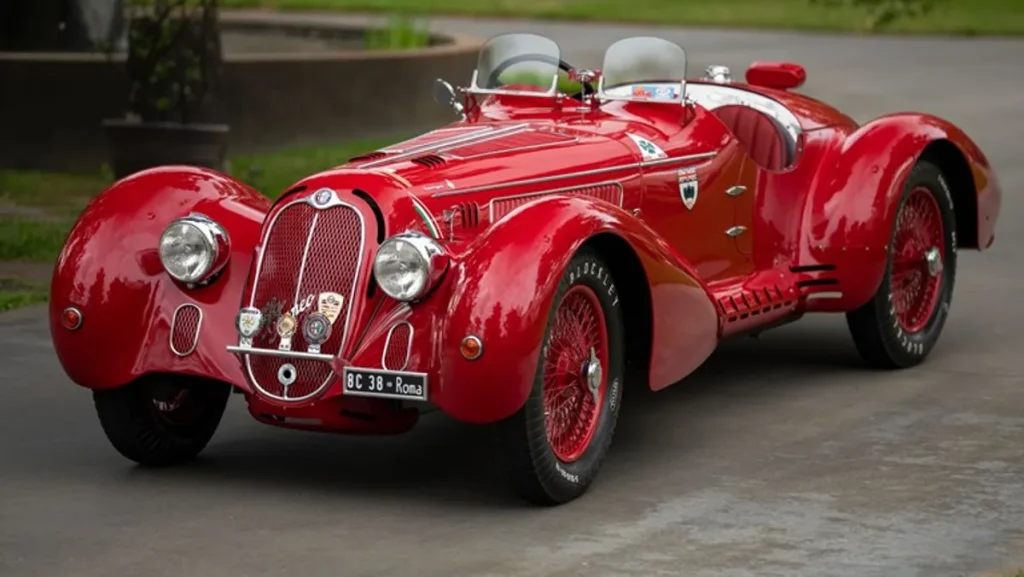
Racing DNA in a Road Car
What truly separates the 8C 2900-B Corto from other luxury cars of its era is its direct racing lineage. This was not a luxury car inspired by racing—it was a race car adapted for the road.
The competition version of the 8C 2900 dominated events like:
-
Mille Miglia (1936, 1937, 1938)
-
Le Mans
-
European endurance races
Owning a road-going 8C meant owning a piece of Alfa Romeo’s racing supremacy.
Extreme Rarity
Only a handful of 8C 2900-B Corto Touring Spyders were ever produced. Estimates suggest fewer than 10 examples exist today, making it one of the rarest automobiles in the world.
Each car was essentially custom-built, meaning no two examples are exactly alike.
Record-Breaking Auction Prices
Due to its rarity, beauty, and historical significance, the 1938 Alfa Romeo 8C 2900-B Corto Touring Spyder has achieved legendary status at auctions.
In recent years, examples have sold for over $18 million, placing it among the most valuable cars ever sold.
Collectors consider it:
-
A blue-chip automotive investment
-
A centerpiece for elite collections
-
One of the greatest cars ever built
Influence on Automotive Design
The impact of the 8C 2900-B extends far beyond its era. Its design philosophy has influenced countless modern sports cars and luxury automobiles.
Many automotive historians regard it as:
-
The most beautiful pre-war car
-
The first true supercar
-
A benchmark for blending performance and elegance
Even modern Alfa Romeo models pay homage to the legendary 8C name.
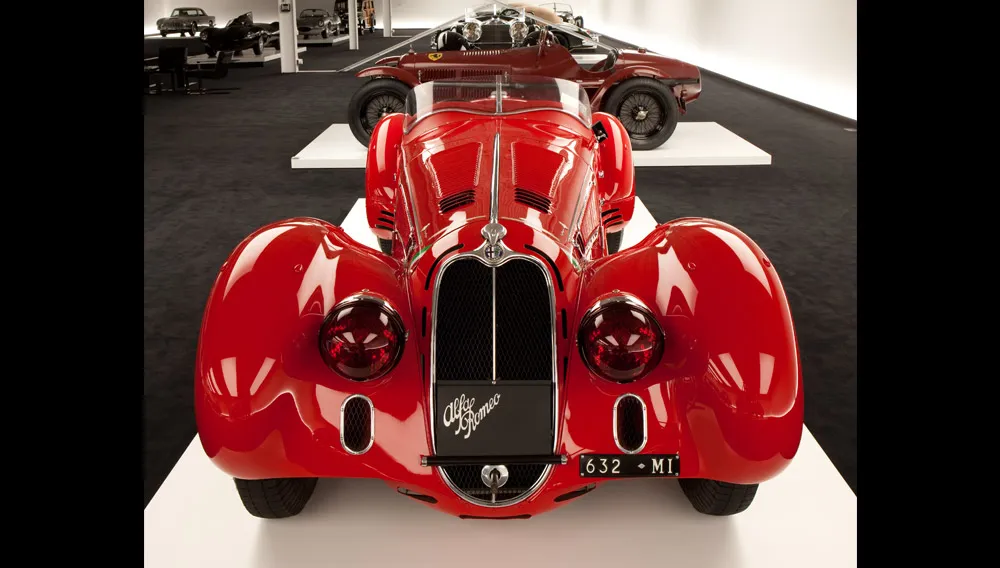
Why the 8C 2900-B Is Considered Perfect
Few cars achieve perfection in every category, but the 8C 2900-B comes remarkably close.
It excels in:
-
Engineering innovation
-
Racing success
-
Aesthetic beauty
-
Exclusivity
-
Historical importance
This rare balance is why it continues to be celebrated nearly a century later.
Preservation and Legacy
Today, surviving examples of the 8C 2900-B Corto Touring Spyder are carefully preserved in:
-
Private collections
-
Prestigious museums
-
Concours d’Elegance events such as Pebble Beach
When displayed, it often wins Best of Show, reaffirming its unmatched elegance.
Final Thoughts
The 1938 Alfa Romeo 8C 2900-B Corto Touring Spyder is not merely an automobile—it is a rolling masterpiece, a fusion of art and engineering that defines the golden age of motoring.
In a world increasingly driven by automation and mass production, the 8C stands as a reminder of what happens when passion, craftsmanship, and innovation unite without compromise.
Read Also: Keep your face towards the sunshine and shadows will fall behind you
Watch Also: https://www.youtube.com/@TravelsofTheWorld24









Leave a Reply