

Alien franchise, the blend of biomechanical horror, claustrophobic environments, and visceral tension has always been irresistible. Few games capture that same sense of unease and dread as effectively as Scorn, the recently released first-person horror title developed by Ebb Software. With its grotesque environments, immersive world-building, and intense atmospheric tension, Scorn delivers an experience that feels like stepping directly into a nightmarish sci-fi horror film.
A Unique Horror Experience
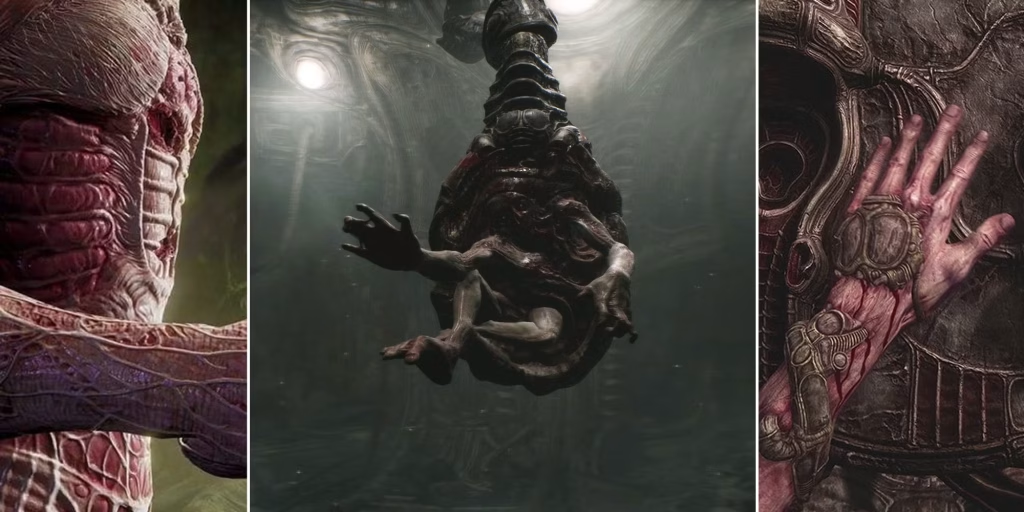
Scorn is not your typical jump-scare game. From the opening moments, players are immersed in a dark, biomechanical world full of strange alien architecture, pulsating machinery, and organic corridors that feel alive. The game draws heavily from the artwork of H.R. Giger, the visionary behind the Xenomorph design in the Alien franchise, creating an atmosphere that will feel immediately familiar to fans of Alien and Alien: Romulus alike.
Unlike conventional horror games, Scorn does not rely on a traditional narrative. Instead, the story unfolds through exploration, environmental storytelling, and cryptic symbols, forcing players to piece together the unsettling world around them. This approach amplifies the feeling of isolation and alienation, much like the tension in Alien, where survival depends on careful observation and understanding of your surroundings.
Grotesque and Immersive World Design
One of Scorn’s standout features is its world design. Every area is meticulously crafted to evoke discomfort, unease, and fascination. The corridors pulse with organic matter, the walls seem to breathe, and the lighting casts eerie shadows that make every corner a potential threat.
Players encounter alien machinery, grotesque biological forms, and unsettling environments that feel simultaneously industrial and alive. This combination of organic horror and mechanical precision mirrors the aesthetic that made the Xenomorph so terrifying in the Alien films, creating an atmosphere of constant tension and anticipation.
Gameplay: Survival, Exploration, and Tension
Scorn places a heavy emphasis on exploration and survival rather than combat-heavy action. Players must navigate twisting corridors, solve intricate puzzles, and manage limited resources, all while avoiding grotesque creatures that stalk the environment.
Key gameplay features include:
-
Resource management: Ammunition, health, and tools are scarce, making every decision critical
-
Environmental puzzles: Many obstacles require careful observation and interaction with the world to proceed
-
Alien-like enemies: Encounters are tense, with creatures that move unpredictably, forcing players to react strategically
-
Immersive first-person perspective: The player’s view emphasizes vulnerability and claustrophobia
The pacing mirrors classic Alien-style horror: slow, suspenseful exploration punctuated by moments of sudden terror.
Creature Design: A Nod to the Xenomorph
The enemies in Scorn are grotesque, biomechanical horrors reminiscent of the Xenomorph’s design principles. While not direct copies, they evoke similar fear through form, movement, and unpredictability.
-
Horror through movement: Creatures move in ways that are unnatural and unsettling, enhancing the tension
-
Organic-mechanical fusion: Many enemies appear part machine, part organism, echoing Giger’s iconic style
-
Psychological terror: The alien-like creatures are not just physically threatening—they provoke anxiety and dread through their presence
Fans of Alien will recognize the lineage: these are creatures designed to instill the same primal fear as the Xenomorph.
Atmosphere and Sound Design
Scorn excels in atmosphere, and much of this comes from its sound design. The game uses ambient noises, pulsating mechanical sounds, and alien screeches to heighten tension. Silence is used strategically, creating moments where the player feels completely alone in a hostile world.
Combined with the game’s lighting and environmental design, the soundscape ensures a fully immersive horror experience, similar to how the original Alien films used silence and industrial sounds to enhance fear.
Puzzle-Solving and Exploration
Unlike straightforward shooters, Scorn rewards observation and curiosity. Players must examine the environment, interact with mysterious machinery, and understand alien technology to progress.
This focus on puzzle-solving under pressure mirrors the sense of urgency and intelligence required in Alien, where characters must navigate unfamiliar environments while remaining aware of potential threats. Every solved puzzle feels like a small victory against a hostile, incomprehensible world.
Art Direction and Visuals
Scorn’s visuals are one of its most striking aspects. Inspired by Giger’s work, the environments are organic, alien, and grotesque, with textures that resemble flesh, bone, and machinery fused together. The level of detail draws players in and makes the world feel alive, hostile, and immersive.
-
Color palette: Muted, industrial tones with occasional bioluminescent accents
-
Environment storytelling: The world itself tells stories of decay, experimentation, and alien life
-
Attention to detail: Every wall, floor, and corridor is packed with textures that evoke unease
For players familiar with the aesthetics of Alien, these environments feel eerily familiar yet distinctly original.
Horror Without Compromise
One of Scorn’s key strengths is its uncompromising approach to horror. The game avoids cheap scares or jump-scare overload, opting instead for:
-
Gradual tension: Fear builds slowly, with each new environment or creature encounter increasing dread
-
Psychological impact: The alien-like world is designed to make players feel small, isolated, and vulnerable
-
Immersion-focused gameplay: The first-person perspective, sound, and visuals work together to create a fully immersive horror experience
This approach aligns perfectly with the Alien philosophy, where horror stems from isolation, unpredictability, and the unknown.
Challenges and Difficulty
Scorn is not a casual horror experience. Its difficulty lies in:
-
Managing scarce resources
-
Navigating confusing, labyrinthine environments
-
Avoiding unpredictable alien creatures
-
Solving environmental puzzles under pressure
This makes the game highly rewarding for dedicated players, especially those seeking the tension and terror reminiscent of the Alien series.

Why Alien Fans Will Love It
For fans of the Alien franchise, Scorn offers everything that makes the movies terrifying:
-
Claustrophobic, industrial environments
-
Grotesque alien designs and biomechanical horror
-
Psychological tension and immersion
-
Slow-burn suspense punctuated by sudden danger
-
Resource scarcity and survival elements
Scorn is effectively a video game embodiment of Alien, providing a deeply immersive experience that lets players explore and survive in a world that feels both alien and horrifying.
Critical and Community Reception
Since its release, Scorn has been praised by both critics and players for its:
-
Unique artistic vision
-
Faithful horror atmosphere
-
Immersive and tense gameplay
-
Originality within the horror genre
Players on forums and social media have repeatedly highlighted how the game captures the essence of classic sci-fi horror, particularly the Alien series, while offering an original and grotesque world to explore.
Final Thoughts
Scorn is more than just a horror game—it’s a grotesque, immersive experience that will resonate deeply with fans of Alien. By combining biomechanical horror, claustrophobic exploration, and tense survival mechanics, it delivers a uniquely terrifying adventure that remains memorable long after the credits roll.
For those who have ever dreamed of exploring a world filled with alien architecture, nightmarish creatures, and suffocating tension, Scorn is a must-play. It stands as one of the best modern examples of how video games can translate the horror and atmosphere of iconic films into interactive experiences.
Read Also: Keep your face towards the sunshine and shadows will fall behind you
Watch Also: https://www.youtube.com/@TravelsofTheWorld24














Leave a Reply