
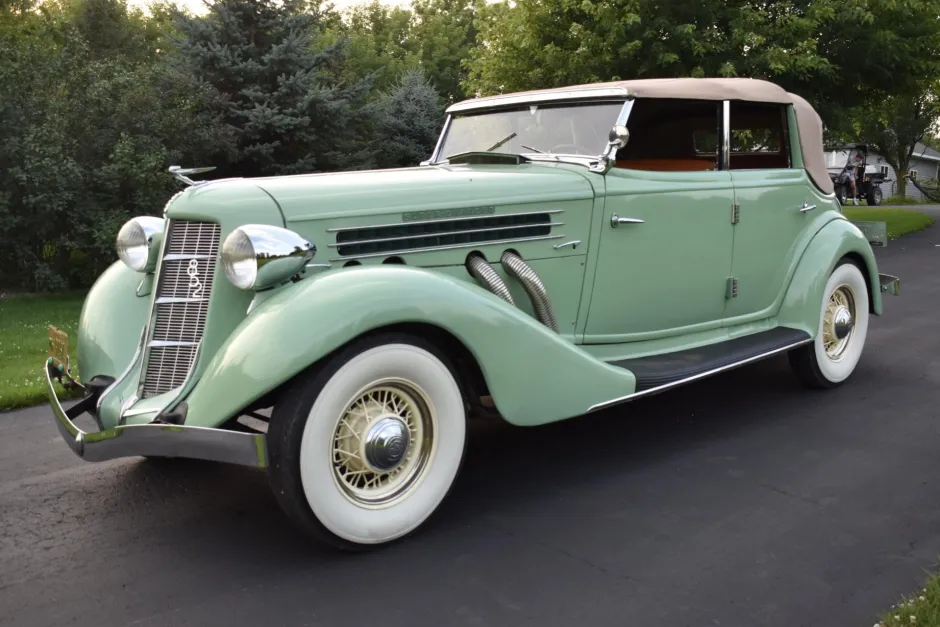
The 1936 Auburn 852 Phaeton represents one of the most elegant expressions of prewar American luxury motoring, blending graceful open-air design, advanced engineering, and refined craftsmanship. Produced during a time when automobiles were not merely transportation but symbols of prestige, freedom, and innovation, the Auburn 852 Phaeton stood out as a sophisticated touring car for discerning buyers who valued both performance and style.
While Auburn is often celebrated for its dramatic Boattail Speedsters, the 852 Phaeton deserves equal recognition for its classic proportions, four-passenger versatility, and timeless elegance. This article explores the history, design, engineering, cultural importance, and lasting legacy of the 1936 Auburn 852 Phaeton.
Auburn Automobile Company: A Tradition of Style and Innovation
The Auburn Automobile Company, founded in 1900 in Auburn, Indiana, rose to prominence as part of the legendary Auburn-Cord-Duesenberg (ACD) automotive group. Under visionary leadership in the 1920s and 1930s, Auburn became known for producing vehicles that combined bold styling, strong performance, and attainable luxury.
By the mid-1930s, Auburn had perfected its design language—long hoods, sweeping fenders, and elegant proportions—while also incorporating advanced engineering, such as straight-eight engines and optional supercharging. The 852 series, introduced in 1935 and refined for 1936, embodied Auburn’s final and most refined offerings before the company ceased production.
Introduction to the 1936 Auburn 852 Phaeton
The 1936 Auburn 852 Phaeton was designed as a luxurious open touring car, offering space, comfort, and style for four passengers. Unlike the sporty Speedster variants, the Phaeton emphasized elegant travel and social motoring, making it ideal for long scenic drives, formal events, and high-society appearances.
Key highlights of the Auburn 852 Phaeton include:
-
Straight-eight engine delivering smooth, confident performance
-
Four-door open-top body style, ideal for touring
-
Flowing fenders and long hood, characteristic of Auburn design
-
High-quality interior materials and refined detailing
-
Balance of luxury, performance, and practicality
The 852 Phaeton was a car meant to be seen and experienced, offering both presence and comfort.
Phaeton Body Style: A Symbol of Prestige
In the 1930s, the phaeton body style was associated with wealth, leisure, and sophistication. Typically featuring four doors, no fixed roof, and a folding soft top, phaetons were favored by affluent buyers who enjoyed open-air motoring.
The Auburn 852 Phaeton followed this tradition, offering:
-
A fully retractable fabric roof
-
Side curtains instead of fixed windows
-
Spacious seating for four adults
-
Elegant proportions emphasizing length and balance
This configuration made the 852 Phaeton ideal for parades, resort towns, country drives, and social events, where visibility and style mattered as much as performance.
Exterior Design and Styling
The exterior of the 1936 Auburn 852 Phaeton reflects the art deco influence of the era, blending graceful curves with confident, streamlined proportions.
Front Design
-
Tall, chrome-finished Auburn grille with vertical slats
-
Sweeping front fenders integrated with headlamps
-
Long hood with decorative louvers for ventilation and style
-
Graceful hood ornament emphasizing forward motion
The front end conveyed authority and elegance, instantly recognizable as an Auburn.
Side Profile
-
Flowing fenders extending smoothly along the body
-
Four full-size doors providing easy access for passengers
-
Running boards enhancing practicality and visual balance
-
Optional dual side-mounted spare tires
The side view showcased the length and refinement expected of a luxury touring car.
Rear Design
-
Rounded rear deck maintaining visual harmony
-
Integrated rear fenders and subtle chrome detailing
-
Clean, uncluttered lines emphasizing elegance over sportiness
The overall silhouette of the 852 Phaeton was dignified, balanced, and timeless.
Interior Craftsmanship and Comfort
Inside, the 1936 Auburn 852 Phaeton offered a luxurious and inviting cabin, designed to provide comfort for extended journeys.
Interior features included:
-
High-quality leather upholstery
-
Plush seating with generous legroom
-
Wood-trimmed dashboard with polished accents
-
Art deco-inspired gauges and controls
-
Thick carpeting and refined interior trim
The interior reflected Auburn’s philosophy of combining style with usability, ensuring both driver and passengers enjoyed a refined experience.
Engineering and Performance
Under the hood, the Auburn 852 Phaeton featured Auburn’s well-regarded straight-eight engine, known for its smoothness and reliability.
Engine Specifications
-
Type: 4.6-liter Lycoming straight-eight
-
Power output: Approximately 120–150 horsepower, depending on configuration
-
Optional supercharged variants available in the 852 lineup
-
Smooth power delivery ideal for touring
Drivetrain and Chassis
-
Rear-wheel drive layout
-
Three-speed manual transmission
-
Sturdy ladder-frame chassis
-
Semi-elliptical leaf springs for ride comfort
-
Four-wheel mechanical brakes
While not intended as a high-performance sports car, the 852 Phaeton delivered confident cruising ability, easily handling highways and long-distance travel.
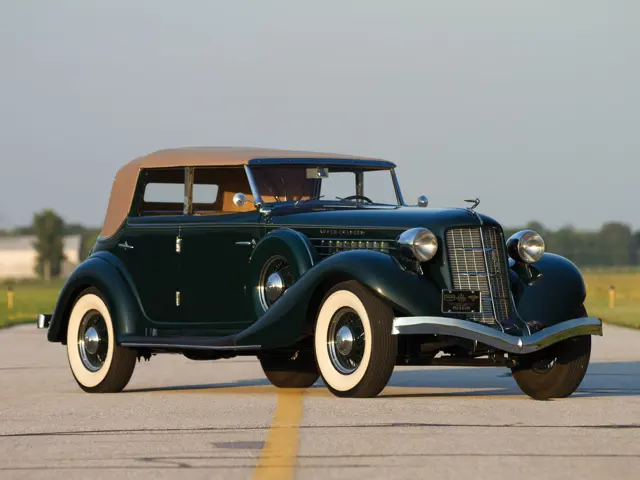 Driving Experience
Driving a 1936 Auburn 852 Phaeton is a distinctly graceful and immersive experience:
-
Smooth acceleration from the straight-eight engine
-
Comfortable ride quality suited for touring
-
Open-air motoring enhances connection with surroundings
-
Commanding driving position with excellent road visibility
The car rewards relaxed driving, encouraging owners to enjoy the journey rather than rush the destination.
Role in 1930s American Society
The Auburn 852 Phaeton was more than a car—it was a status symbol. During the 1930s, phaetons were often owned by:
-
Business leaders and industrialists
-
High-society families
-
Hotel magnates and resort owners
-
Politicians and public figures
Its presence at events conveyed taste, refinement, and success, reinforcing Auburn’s reputation as a maker of aspirational automobiles.
Comparison with Contemporary Rivals
The Auburn 852 Phaeton competed with other luxury touring cars of the era, including:
-
Packard Eight Phaeton – Conservative luxury with exceptional refinement
-
Cadillac Series 60 and 70 Phaetons – Comfort-focused prestige vehicles
-
Buick Roadmaster Phaeton – Strong performance with traditional styling
The Auburn distinguished itself through bolder styling, sportier proportions, and strong visual presence, appealing to buyers who wanted something more expressive.
Collectibility and Market Value
Today, the 1936 Auburn 852 Phaeton is considered a highly desirable prewar classic, though less common than sedans and more practical than Speedsters.
-
Surviving examples are rare but attainable compared to Boattail Speedsters
-
Well-restored cars command strong prices at auctions
-
Originality, documentation, and restoration quality significantly affect value
Collectors appreciate the Phaeton for its combination of rarity, elegance, and usability.
Restoration and Preservation
Restoring an Auburn 852 Phaeton requires specialized knowledge and craftsmanship:
-
Rebuilding straight-eight engines
-
Restoring leather upholstery and wood trim
-
Fabricating period-correct soft tops and side curtains
-
Chrome and paint restoration to original specifications
Well-restored examples are frequently showcased at concours d’elegance and classic car events.
Legacy of the Auburn 852 Phaeton
The legacy of the 1936 Auburn 852 Phaeton lies in its role as:
-
A symbol of prewar American touring luxury
-
A showcase of Auburn’s refined design philosophy
-
A reminder of an era when automobiles emphasized beauty and presence
-
A lasting example of open-air elegance
Even after Auburn’s closure, the 852 Phaeton continues to represent the final flowering of the brand’s creativity.
Modern Appreciation
Today’s collectors and enthusiasts admire the Auburn 852 Phaeton for:
-
Its timeless design and proportions
-
The charm of open-top touring
-
Historical importance within the ACD legacy
-
Suitability for vintage rallies and shows
The car bridges the gap between luxury, nostalgia, and drivability, making it a favorite among prewar enthusiasts.
Conclusion
The 1936 Auburn 852 Phaeton stands as a refined and dignified expression of prewar American automotive excellence. With its elegant open-air body style, smooth straight-eight engine, luxurious interior, and commanding presence, it captured the spirit of an era defined by optimism, craftsmanship, and style.
While often overshadowed by Auburn’s dramatic Speedsters, the 852 Phaeton remains a true classic, offering comfort, beauty, and historical significance in equal measure. For collectors and enthusiasts alike, it represents the art of elegant motoring at its finest, ensuring its place among the most admired American automobiles of the 1930s.
Read Also: Keep your face towards the sunshine and shadows will fall behind you
Watch Also: https://www.youtube.com/@TravelsofTheWorld24






Leave a Reply