
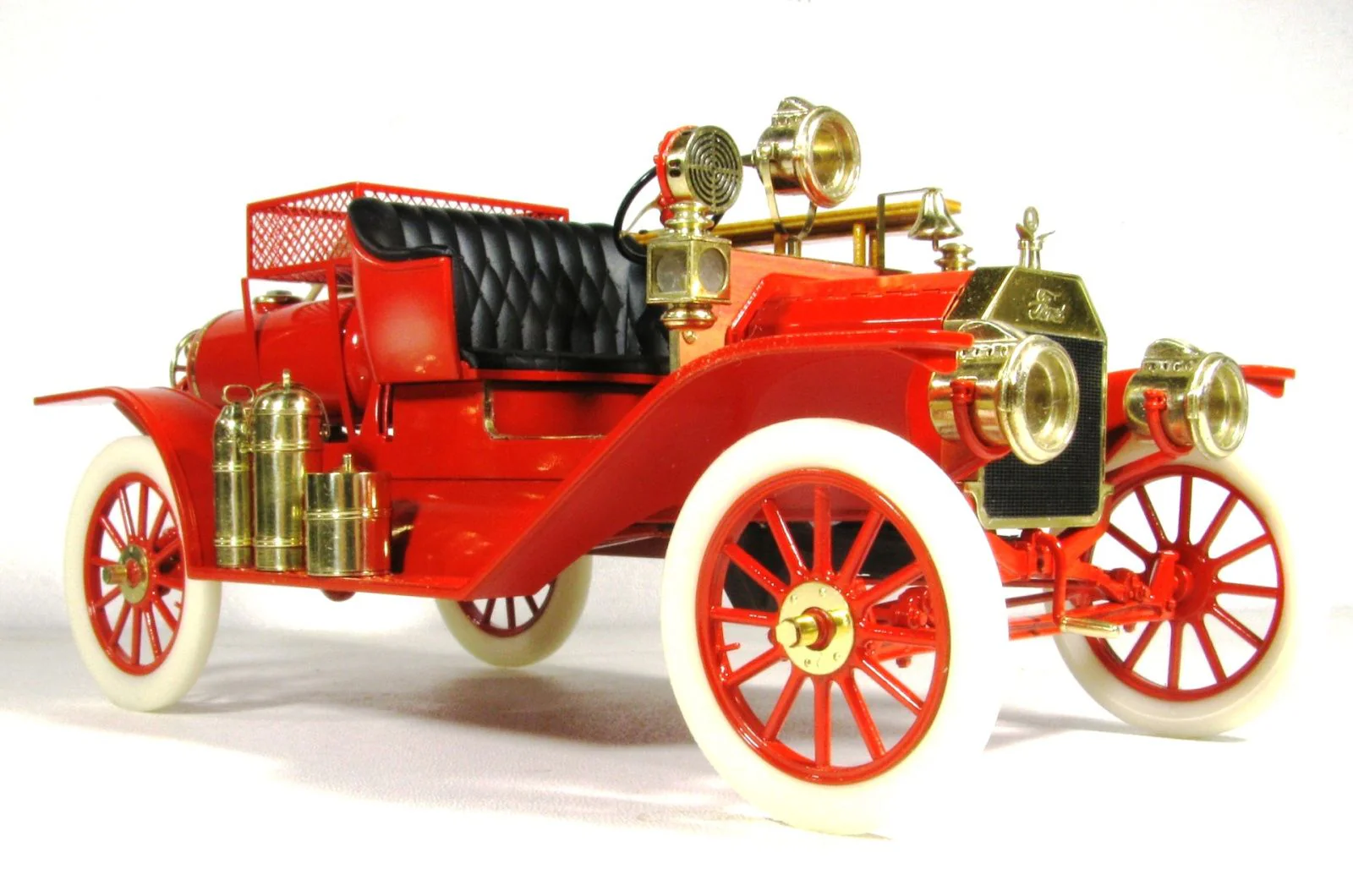
The 1914 Ford Model T Fire Truck stands as one of the most important vehicles in the history of emergency services. At a time when most fire departments still relied on horse-drawn wagons, the Model T fire truck represented a revolutionary leap forward—bringing speed, reliability, and modern engineering into firefighting operations. Built on Henry Ford’s iconic Model T chassis, this early fire truck helped reshape how cities and towns responded to fires, saving lives and property in the process.
This article explores the origins, design, technology, historical significance, and enduring legacy of the 1914 Ford Model T Fire Truck, highlighting why it remains a cherished symbol of innovation more than a century later.
The Era Before Motorized Fire Trucks
Before the introduction of motorized fire apparatus, firefighting was a slow and labor-intensive process. Fire engines were typically horse-drawn, and response times depended heavily on the availability and condition of the horses. Although these teams were highly trained, horses could become exhausted, injured, or panicked—especially during large fires.
Urban growth in the late 19th and early 20th centuries increased the frequency and severity of fires. Taller buildings, denser populations, and industrial facilities demanded faster and more efficient emergency response. Fire departments began searching for alternatives that could overcome the limitations of horse power.
This need for speed and reliability set the stage for the arrival of the Ford Model T Fire Truck.
The Ford Model T: A Game-Changing Platform
Introduced in 1908, the Ford Model T revolutionized transportation. It was affordable, durable, and easy to maintain—qualities that also made it ideal for specialized uses beyond personal transport.
By 1914, the Model T had already proven itself as:
-
Mechanically simple
-
Exceptionally rugged
-
Inexpensive compared to competitors
-
Easy to repair even with basic tools
Henry Ford’s decision to use standardized parts meant that Model T vehicles could be modified into delivery vans, ambulances, tractors—and importantly, fire trucks.
Fire departments quickly recognized the Model T as a perfect base for lightweight fire apparatus.
Birth of the 1914 Ford Model T Fire Truck
Unlike modern fire engines built entirely in dedicated factories, Model T fire trucks were typically custom conversions. Ford supplied the chassis and engine, while specialized companies or local workshops added firefighting equipment.
Popular conversion companies included:
-
American LaFrance
-
Seagrave
-
Ahrens-Fox
-
Chemical fire apparatus manufacturers
These conversions allowed departments to tailor vehicles to their specific needs, whether for hose transport, chemical firefighting, or rapid response.
By 1914, Model T fire trucks were already in service across small towns, rural districts, and even larger cities.
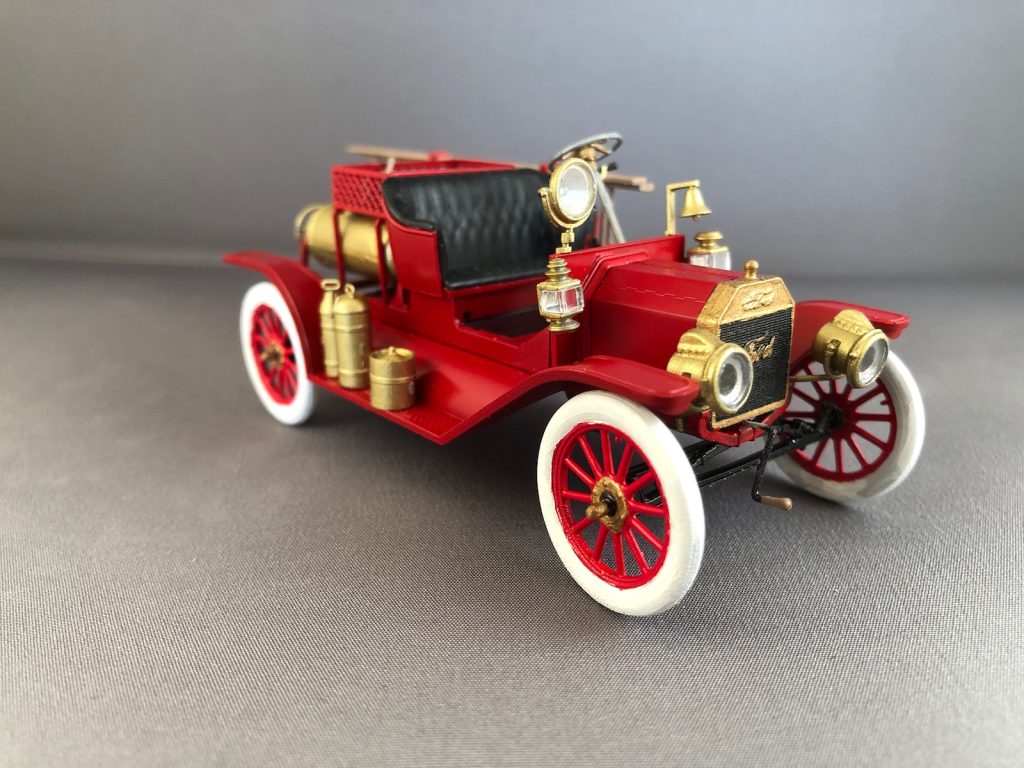
Engine and Mechanical Specifications
At the heart of the 1914 Ford Model T Fire Truck was the same reliable engine found in passenger Model Ts.
Engine Details:
-
Type: Inline 4-cylinder gasoline engine
-
Displacement: 2.9 liters (177 cubic inches)
-
Power Output: Approximately 20 horsepower
-
Cooling System: Water-cooled
-
Transmission: Two-speed planetary transmission
While 20 horsepower may seem modest today, it was more than sufficient for the lightweight fire apparatus of the era.
Performance:
-
Top Speed: Around 40–45 mph (unladen)
-
Typical Fire Service Speed: 20–30 mph
-
Fuel Efficiency: Excellent for its time
Compared to horse-drawn engines, the Model T fire truck offered unmatched consistency and speed, especially over longer distances.
Chassis and Body Design
The Model T chassis was known for its flexibility and durability, making it ideal for conversion into emergency vehicles.
Chassis Features:
-
Ladder-frame construction
-
High ground clearance
-
Strong leaf-spring suspension
-
Rear-wheel drive
Fire truck bodies were usually open-cab designs, allowing firefighters to jump on and off quickly. Weather protection was minimal, but speed and accessibility were prioritized.
Common Body Configurations:
-
Hose carrier trucks
-
Chemical fire engines
-
Utility response vehicles
-
Ladder support units
Wood and steel were commonly used for body construction, often painted in bright red for visibility and tradition.
Firefighting Equipment on Board
The 1914 Ford Model T Fire Truck carried equipment that reflected early 20th-century firefighting methods.
Typical Equipment Included:
-
Fire hoses (canvas or rubber-lined)
-
Chemical tanks with hand-pumped extinguishing agents
-
Axes, hooks, and ladders
-
Brass nozzles and valves
-
Portable fire extinguishers
Some versions featured chemical fire suppression systems, which used pressurized tanks containing soda-acid mixtures—particularly effective against small fires.
While water-pumping capabilities were limited, these vehicles excelled at rapid deployment, getting firefighters and tools to the scene far faster than horses could.
Advantages Over Horse-Drawn Fire Engines
The introduction of the Model T fire truck brought dramatic improvements to firefighting operations.
Key Advantages:
-
Faster Response Times – No need to harness horses
-
Greater Reliability – Engines didn’t tire or panic
-
Lower Operating Costs – Fuel was cheaper than horse care
-
Reduced Manpower – Fewer handlers needed
-
All-Weather Operation – More dependable in rain or snow
Fire departments reported significant reductions in response times, sometimes cutting arrival times in half.
Adoption by Small Towns and Rural Communities
While large cities gradually adopted larger, more powerful fire engines, small towns and rural communities embraced the Model T fire truck enthusiastically.
For these areas, the Model T was:
-
Affordable on limited municipal budgets
-
Easy to repair without specialized mechanics
-
Capable of navigating narrow or unpaved roads
Many rural fire departments purchased used Model T chassis and converted them locally, extending the life of the vehicle for years.
Role in World War I Era America
The year 1914 marked the beginning of World War I, and although the United States entered later, the period brought rapid industrial growth and urban expansion.
The Model T fire truck played a crucial role in protecting:
-
Factories
-
Warehouses
-
Rail yards
-
Military supply depots
Its reliability and low maintenance made it ideal during a time when resources were increasingly strained.
Limitations and Challenges
Despite its many advantages, the 1914 Ford Model T Fire Truck had limitations.
Common Challenges:
-
Limited water-pumping capacity
-
Modest engine power for steep hills
-
Minimal crew protection
-
Basic braking systems
As cities grew larger and buildings taller, departments began requiring heavier, more powerful fire engines, eventually leading to the Model T’s replacement.
Transition to Larger Fire Apparatus
By the late 1910s and early 1920s, fire departments started moving toward:
-
Dedicated motorized pumpers
-
Larger engines with higher horsepower
-
Enclosed cabs for firefighter safety
Even so, many Model T fire trucks remained in service well into the 1920s, particularly in rural regions.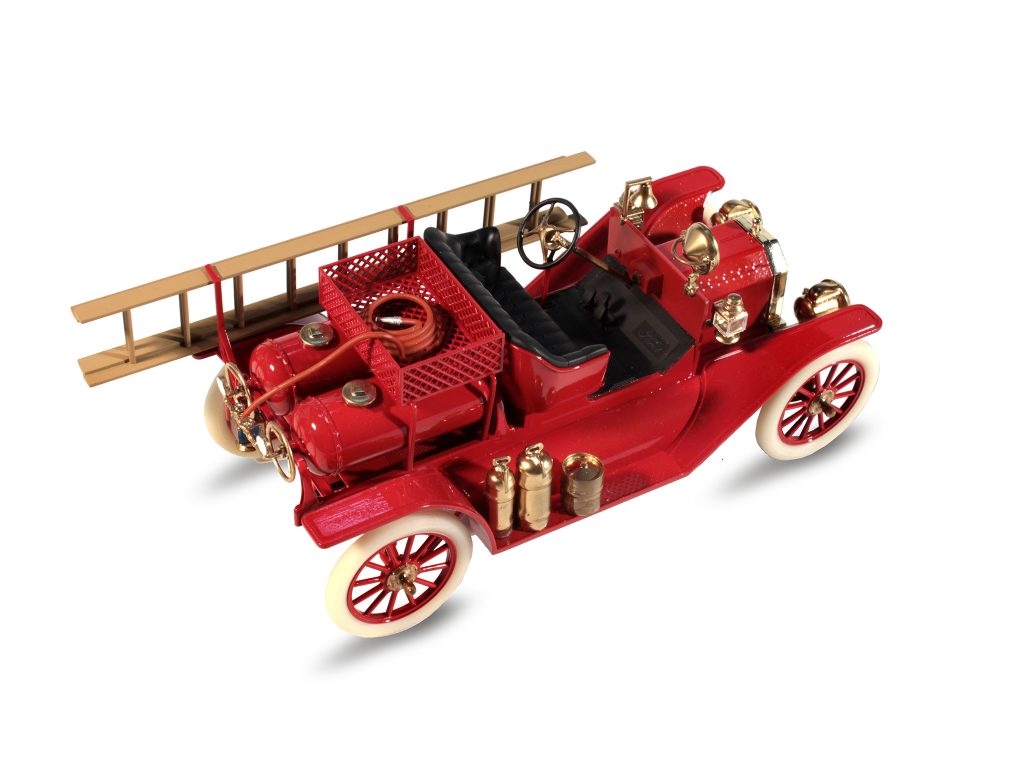
Preservation and Restoration Today
Today, the 1914 Ford Model T Fire Truck is a prized collector’s item and museum exhibit.
Where You’ll Find Them:
-
Firefighting museums
-
Automotive heritage museums
-
Parades and historical reenactments
-
Private collections
Restored examples often feature authentic paint schemes, brass fittings, and period-correct equipment, offering a glimpse into early firefighting history.
Cultural and Historical Significance
Beyond its mechanical role, the Model T fire truck symbolizes a broader transformation in society.
It represents:
-
The shift from animal to machine power
-
The modernization of public safety
-
Henry Ford’s impact beyond consumer automobiles
-
The beginning of rapid emergency response systems
Its influence can be seen in every modern fire engine on the road today.
Legacy of the 1914 Ford Model T Fire Truck
The legacy of the 1914 Ford Model T Fire Truck is one of innovation, practicality, and progress. It helped establish the foundation for modern firefighting, proving that motorized emergency vehicles could outperform traditional methods.
While it may appear simple by modern standards, its impact was profound—saving lives, protecting communities, and pushing emergency services into a new technological era.
Conclusion
The 1914 Ford Model T Fire Truck was far more than a modified automobile. It was a symbol of change at a critical moment in history. By combining affordability, reliability, and adaptability, it transformed firefighting operations and paved the way for the sophisticated emergency vehicles we rely on today.
More than a century later, it remains a powerful reminder of how innovation—even in its simplest form—can reshape the world.
Read Also: Keep your face towards the sunshine and shadows will fall behind you
Watch Also: https://www.youtube.com/@TravelsofTheWorld24













Leave a Reply