
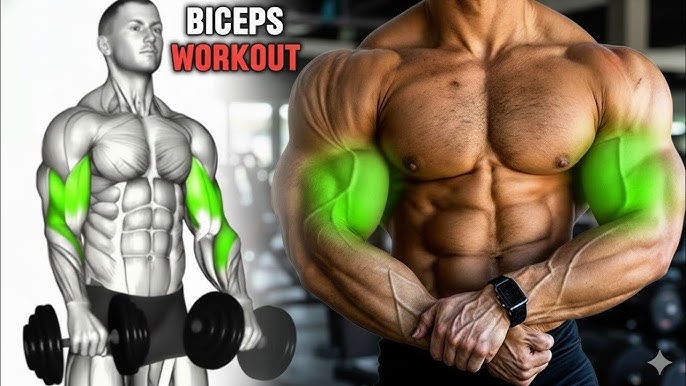
Building big, strong biceps is one of the most satisfying goals for beginners at the gym. Well-developed biceps not only improve the aesthetics of your arms but also enhance overall upper-body strength, functional movements, and confidence.
This guide will cover beginner-friendly exercises, proper form, training tips, and nutrition strategies to help you build impressive biceps safely and effectively.
Understanding Biceps Anatomy
Before diving into exercises, it’s important to understand what makes up your biceps:
-
Biceps Brachii – The large muscle at the front of the upper arm, responsible for arm flexion and rotation.
-
Brachialis – Located underneath the biceps, adding thickness to the arm when developed.
-
Brachioradialis – A forearm muscle that assists in elbow flexion and enhances arm appearance.
-
Tip: A balanced approach targeting all these muscles ensures fuller, stronger arms.
Training Principles for Beginners
As a beginner, the goal is to build strength, learn proper form, and gradually increase volume. Key principles include:
-
Start Light: Use manageable weights to master technique.
-
Progressive Overload: Gradually increase weights or reps to stimulate growth.
-
Mind-Muscle Connection: Focus on the biceps contracting during each rep.
-
Consistency: Train 2–3 times per week with at least 48 hours rest between sessions.
-
Rest & Recovery: Allow muscles time to repair and grow.
Beginner-Friendly Biceps Exercises
Here’s a step-by-step guide to exercises designed for beginners to build big biceps at the gym.
1. Standing Dumbbell Bicep Curl
Target: Biceps Brachii
How to Do It:
-
Stand straight with a dumbbell in each hand, palms facing forward.
-
Keep elbows close to your torso.
-
Curl the weights up while contracting your biceps.
-
Slowly lower back down.
Sets & Reps: 3×12–15
Tip: Avoid swinging your arms. Focus on controlled motion.
2. Barbell Curl
Target: Biceps Brachii, Forearms
How to Do It:
-
Hold a barbell with palms facing up, shoulder-width grip.
-
Keep elbows stationary.
-
Curl the bar toward your chest, squeezing at the top.
-
Lower slowly.
Sets & Reps: 3×10–12
Tip: Maintain a straight back; avoid leaning back to lift more weight.
3. Hammer Curl
Target: Brachialis, Biceps, Forearms
How to Do It:
-
Hold dumbbells with palms facing each other.
-
Curl weights toward shoulders while keeping palms in neutral position.
-
Lower slowly.
Sets & Reps: 3×12–15
Tip: Keep elbows tucked to prevent shoulder involvement.
4. Preacher Curl (Machine or Bench)
Target: Biceps Isolation
How to Do It:
-
Sit at a preacher bench or use a preacher curl machine.
-
Place arms on the pad and hold the barbell or dumbbell.
-
Curl toward shoulders, squeeze, then lower slowly.
Sets & Reps: 3×10–12
Tip: This isolates biceps and reduces cheating.
5. Concentration Curl
Target: Peak of Biceps
How to Do It:
-
Sit on a bench with legs apart.
-
Rest your elbow on the inner thigh holding a dumbbell.
-
Curl slowly, focusing on contraction.
-
Lower with control.
Sets & Reps: 3×12 per arm
Tip: Focus on slow, deliberate movements to maximize muscle tension.
6. Cable Bicep Curl
Target: Continuous Tension on Biceps
How to Do It:
-
Stand facing a cable machine with straight bar attachment.
-
Keep elbows close, curl bar up while squeezing biceps.
-
Slowly release for continuous tension.
Sets & Reps: 3×12–15
Tip: Adjust cable height for a full range of motion.
7. Chin-Ups (Optional for Beginners)
Target: Biceps & Back
How to Do It:
-
Grab a pull-up bar with palms facing you (underhand grip).
-
Pull body up until chin reaches the bar.
-
Lower slowly.
Sets & Reps: 3×6–10 (assisted if necessary)
Tip: Focus on elbow flexion, not swinging the body.
Sample Beginner Biceps Workout (Gym)
Warm-Up: 5–10 minutes of light cardio or dynamic arm swings
Workout:
-
Standing Dumbbell Curl – 3×12
-
Hammer Curl – 3×12
-
Barbell Curl – 3×10
-
Preacher Curl – 3×10
-
Concentration Curl – 3×12 per arm
-
Optional Chin-Ups – 3×6–10
Cool-Down: Stretch biceps, forearms, and shoulders
Tip: Rest 60–90 seconds between sets for recovery.
Beginners Tips for Maximizing Biceps Growth
-
Full Range of Motion: Always extend and contract fully for better results.
-
Tempo Training: Slow eccentric phase (lowering) increases tension.
-
Grip Variations: Mix palms up, neutral, and reverse curls for balanced development.
-
Frequency: Train biceps 2–3 times a week, not every day.
-
Track Progress: Keep a workout log to increase weights gradually.
Nutrition Tips for Bigger Biceps
Muscle growth isn’t just about exercise—it’s also nutrition-dependent:
-
Protein: Essential for muscle repair. Sources: chicken, eggs, fish, beans
-
Carbohydrates: Fuel workouts. Sources: rice, oats, potatoes
-
Healthy Fats: Support hormones for muscle growth. Sources: nuts, olive oil, avocado
-
Hydration: Drink 2–3 liters of water daily
-
Post-Workout: Protein shake or meal within 30–60 minutes after training
Tip: A calorie surplus combined with resistance training supports faster growth.
Common Mistakes Beginners Make
-
Using Too Much Weight: Leads to poor form and injury.
-
Neglecting Warm-Up: Can cause strains or tears.
-
Training Biceps Every Day: Muscles need recovery.
-
Cheating Movements: Swinging weights reduces effectiveness.
-
Ignoring Nutrition: Muscles cannot grow without proper fuel.
Tip: Focus on quality, not quantity. Correct form beats heavier weights every time.
Importance of Rest & Recovery
-
Muscles grow during rest, not just workouts.
-
Sleep 7–8 hours per night for optimal hormone function.
-
Allow at least 48 hours between biceps workouts.
-
Use foam rolling and stretching to aid recovery.
Tip: Avoid overtraining; patience is key for beginners.
Mind-Muscle Connection
-
Focus on feeling your biceps contract with each rep.
-
Visualize muscle working through every motion.
-
Avoid distractions and maintain concentration.
Tip: Beginners often lift weights without engaging the target muscle—focus on connection for better growth.
Conclusion
Building big biceps as a beginner is achievable with proper form, consistency, and a balanced approach. By following a beginner-friendly gym workout, incorporating progressive overload, and combining with proper nutrition and rest, you can see noticeable strength and size gains in a few months.
Remember:
-
Start with light weights and proper form
-
Train 2–3 times per week for biceps
-
Focus on variety: dumbbells, barbells, cables, and bodyweight
-
Prioritize recovery and nutrition
-
Track progress to gradually increase intensity
With dedication, patience, and the right workout plan, your biceps will grow stronger, thicker, and more defined, setting the foundation for advanced training in the future.
Read Also: Keep your face towards the sunshine and shadows will fall behind you
Watch Also: https://www.youtube.com/@TravelsofTheWorld24


Leave a Reply