
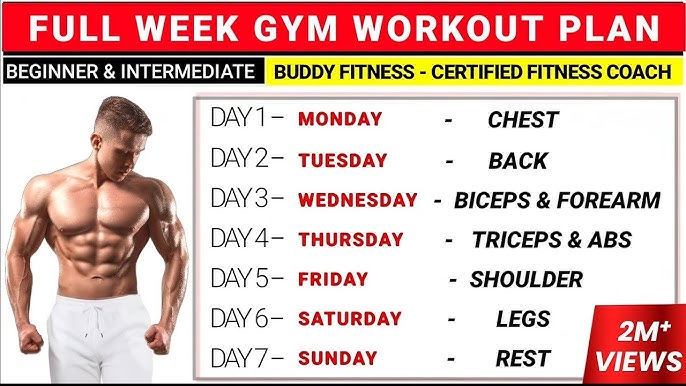
 Sticking to a structured gym routine can be one of the most effective ways to improve strength, build muscle, burn fat, and enhance overall fitness. Whether you are a beginner or someone looking to structure your training efficiently, a full-week gym workout plan ensures that all major muscle groups are trained adequately while allowing enough rest and recovery.
This article provides a 7-day gym workout plan, including exercises, sets, reps, and tips to help you maximize results safely. By following a weekly routine, you can balance strength training, cardio, and flexibility, building a strong foundation for long-term health and performance.
Why a Full Week Gym Workout Plan Matters
A weekly gym plan provides several key benefits:
-
Balanced Training: Ensures every major muscle group gets attention.
-
Consistency: Structured schedules make it easier to stick to workouts.
-
Recovery: Proper rest days reduce the risk of overtraining and injury.
-
Progress Tracking: Helps measure strength gains, endurance, and body composition changes.
-
Variety: A weekly plan allows you to mix strength, cardio, and mobility exercises.
Whether your goal is muscle building, fat loss, or overall fitness, following a structured weekly plan is highly effective.
Key Principles Before You Start
-
Warm Up: Begin each session with 5–10 minutes of light cardio (treadmill, rowing, cycling) and dynamic stretches.
-
Cool Down: Finish with static stretches to improve flexibility and reduce soreness.
-
Proper Form: Focus on technique before increasing weights. Poor form increases injury risk.
-
Progressive Overload: Gradually increase weights, reps, or intensity over time.
-
Rest: Ensure 7–9 hours of sleep each night to allow muscles to recover.
Full Week Gym Workout Plan
This 7-day plan balances strength training, cardio, and flexibility. Adjust weight, reps, and intensity based on your experience level.
Day 1: Upper Body – Push Focus (Chest, Shoulders, Triceps)
1. Bench Press (Chest, Triceps, Shoulders)
-
3 sets × 10–12 reps
-
Keep core tight, avoid arching your back, and lower the bar to mid-chest.
2. Dumbbell Shoulder Press (Shoulders, Triceps)
-
3 sets × 10–12 reps
-
Press dumbbells overhead, control the weight on the way down.
3. Incline Dumbbell Press (Upper Chest, Shoulders)
-
3 sets × 10–12 reps
-
Bench inclined at 30–45°, maintain controlled movements.
4. Tricep Dips (Triceps, Shoulders)
-
3 sets × 10–15 reps
-
Use a bench or dip station; elbows close to body.
5. Push-Ups (Chest, Core)
-
2–3 sets × as many reps as possible
-
Keep body straight and core engaged.
Optional: 10–15 minutes of moderate-intensity cardio.
Day 2: Lower Body – Legs & Glutes
1. Squats (Quadriceps, Glutes, Hamstrings)
-
3 sets × 12 reps
-
Keep feet shoulder-width apart, weight on heels, chest upright.
2. Romanian Deadlifts (Hamstrings, Glutes, Lower Back)
-
3 sets × 10–12 reps
-
Hinge at hips, keep back straight, slight bend in knees.
3. Leg Press (Quadriceps, Glutes)
-
-
3 sets × 12 reps
-
-
Avoid locking knees at extension, control the motion.
4. Walking Lunges (Glutes, Hamstrings, Quadriceps)
-
2–3 sets × 10 steps per leg
-
Keep torso upright, step forward and lower until knees at ~90°.
5. Calf Raises (Calves)
-
3 sets × 15–20 reps
-
Control both upward and downward movement.
Optional: 10 minutes of stationary bike or light cardio.
Day 3: Back & Biceps
1. Lat Pulldown (Lats, Biceps, Upper Back)
-
3 sets × 10–12 reps
-
Pull bar toward chest, avoid leaning back excessively.
2. Seated Cable Row (Back, Biceps)
-
3 sets × 12 reps
-
Squeeze shoulder blades together at the end of each rep.
3. Dumbbell Rows (Lats, Rear Delts, Biceps)
-
3 sets × 10–12 reps per side
-
Keep back flat and avoid twisting torso.
4. Barbell or Dumbbell Bicep Curls
-
3 sets × 12 reps
-
Focus on controlled movements, elbows stationary.
5. Face Pulls (Rear Delts, Traps)
-
3 sets × 12–15 reps
-
Pull rope toward face, elbows high, slow and controlled.
Optional: 10–15 minutes of moderate cardio.
Day 4: Active Recovery / Mobility
-
Light cardio: 20–30 minutes walking, cycling, or swimming
-
Stretching or yoga: Focus on hamstrings, hip flexors, chest, shoulders, and back
-
Foam rolling: Relieve tension in major muscle groups
Active recovery helps reduce soreness, improve flexibility, and prevent burnout.
Day 5: Full Body Strength
1. Deadlifts (Hamstrings, Glutes, Lower Back, Core)
-
3 sets × 8–10 reps
-
Keep back neutral, hinge at hips, avoid rounding shoulders.
2. Bench Press (Chest, Triceps, Shoulders)
-
3 sets × 8–10 reps
-
Maintain controlled movement and proper alignment.
3. Pull-Ups or Assisted Pull-Ups (Back, Biceps)
-
3 sets × as many reps as possible
-
Focus on pulling with back, not just arms.
4. Dumbbell Step-Ups (Glutes, Quadriceps)
-
2–3 sets × 10 reps per leg
-
Step onto a sturdy platform, drive through heel.
5. Plank with Shoulder Taps (Core, Shoulders)
-
3 sets × 20 taps
-
Keep hips stable, core engaged.
Optional: 10 minutes moderate-intensity cardio.
Day 6: Cardio & Core
-
Cardio: 20–30 minutes moderate-intensity treadmill, cycling, or rowing
-
Core Circuit (Repeat 2–3 rounds):
-
Bicycle Crunches × 15–20 reps per side
-
Leg Raises × 12–15 reps
-
Russian Twists × 20 reps (with or without weight)
-
Side Plank × 20–30 seconds per side
-
This session emphasizes endurance, fat loss, and core stability.
Day 7: Rest / Active Recovery
-
Complete rest or light activity like walking, stretching, or yoga
-
Hydrate well and focus on nutrition and recovery
Rest is essential for muscle growth, nervous system recovery, and overall performance.
Tips for Beginners Following This Plan
-
Start with Light Weights: Focus on form and gradually increase load.
-
Listen to Your Body: Avoid pushing through pain.
-
Consistency Over Intensity: Frequency matters more than lifting maximum weights at first.
-
Track Progress: Keep a workout journal or app to monitor improvements.
-
Combine With Nutrition: Adequate protein, carbs, and healthy fats support recovery and muscle growth.
-
Stay Hydrated: Water is critical for performance and recovery.
Optional Modifications
-
Home Workouts: Substitute dumbbells for machines or use resistance bands.
-
Time Constraints: Reduce sets to 2 instead of 3 or split sessions into shorter workouts.
-
Focus Goals: Adjust exercises to prioritize strength, hypertrophy, or fat loss.
Flexibility ensures the plan works for your lifestyle, equipment access, and fitness goals.
Nutrition Tips to Support a Weekly Gym Routine
-
Protein: Eggs, chicken, fish, beans, or whey protein to support muscle repair.
-
Carbs: Whole grains, rice, oats, and fruits for energy.
-
Fats: Nuts, seeds, avocado, and olive oil for hormone production and recovery.
-
Pre-Workout: Light meal or snack 1–2 hours before training.
-
Post-Workout: Protein + carbs within 1 hour to aid recovery.
Proper nutrition enhances results from your full-week gym plan and supports long-term fitness.
Mental Benefits of a Structured Gym Routine
-
Reduces Stress: Exercise releases endorphins and improves mood.
-
Improves Sleep: Regular activity can enhance sleep quality.
-
Boosts Confidence: Visible strength and endurance gains enhance self-esteem.
-
Enhances Focus: Structured workouts promote discipline and mental clarity.
A weekly gym plan benefits both physical and mental health, supporting holistic wellness.
Progression and Long-Term Tips
-
Increase Weights Gradually: Add 2–5% weight increments as strength improves.
-
Swap Exercises Occasionally: Introduce variety to prevent plateaus.
-
Track Body Changes: Measure strength, endurance, and body composition.
-
Include Deload Weeks: Reduce intensity every 6–8 weeks to allow recovery.
-
Set Goals: Short-term (weekly improvements) and long-term (6–12 months) targets.
Consistency and progression are key to long-term results.
Conclusion
A full-week gym workout plan provides structure, balance, and efficiency for anyone seeking strength, endurance, and overall fitness. By targeting all major muscle groups, incorporating cardio and core, and including recovery, this plan lays a strong foundation for long-term progress.
Whether you are a beginner or looking to improve consistency, this weekly routine is flexible, adaptable, and sustainable. Combine it with proper nutrition, hydration, and rest to maximize results and achieve your fitness goals.
Starting a structured gym routine not only builds physical strength but also improves mental health, confidence, and discipline, making it an essential tool for anyone committed to a healthier, stronger life.
Read Also: Keep your face towards the sunshine and shadows will fall behind you
Watch Also: https://www.youtube.com/@TravelsofTheWorld24












Leave a Reply