
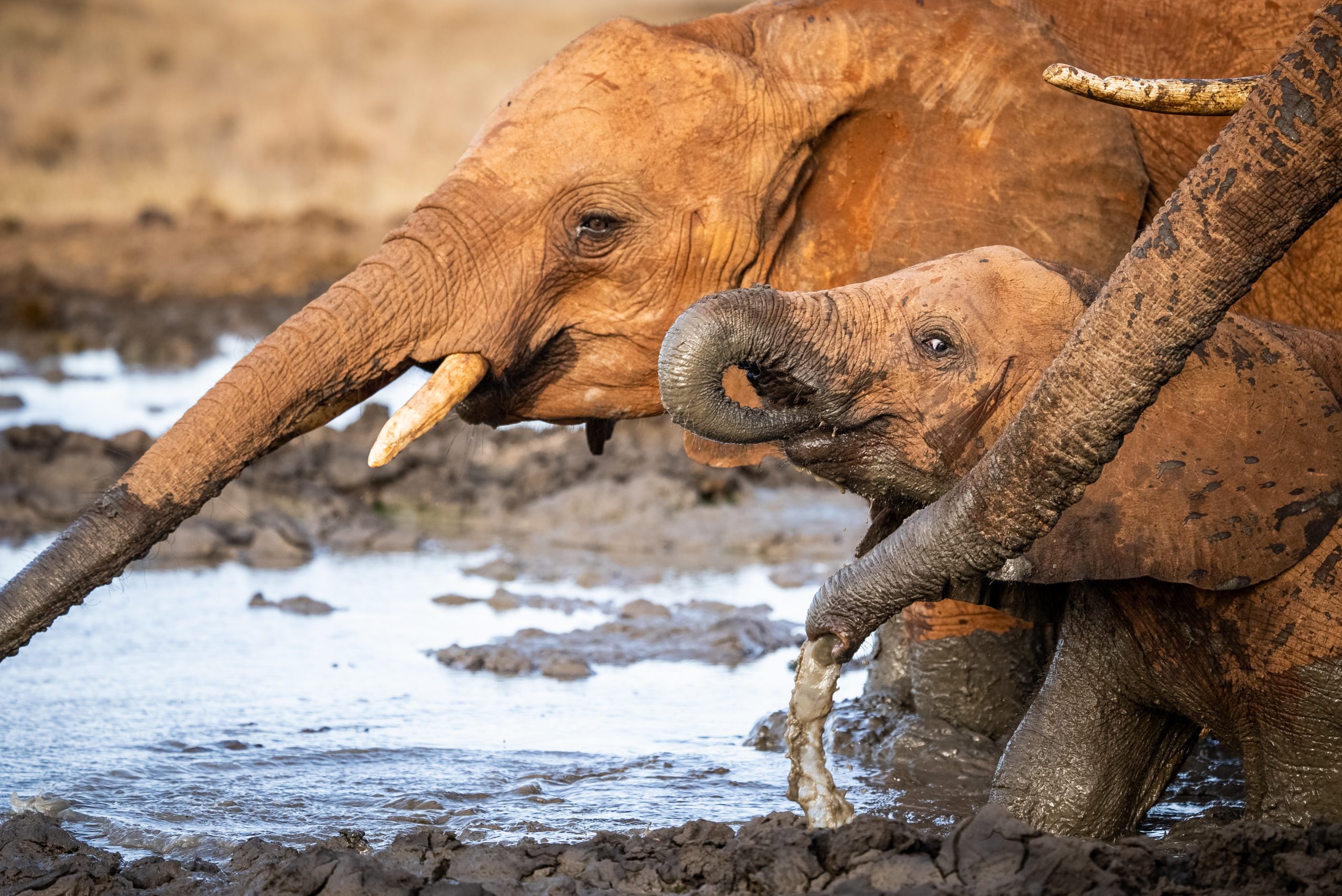
Elephants have long captured human fascination, not only for their immense size and intelligence but for the striking similarities they share with us in social behavior, emotion, and cognition. From their intricate family bonds to their remarkable memory, elephants exhibit traits that echo what many would consider profoundly human.
Recent research has revealed that elephants are capable of empathy, grief, cooperation, and even cultural transmission—behaviors once thought to be uniquely human. Scientists observing wild and captive elephants have documented moments that challenge our understanding of intelligence, consciousness, and social complexity in the animal kingdom.
This article explores the extraordinary behaviors of elephants, why they matter, and what they teach us about the connections between humans and other sentient beings.
Understanding Elephant Intelligence
Elephants are widely recognized as one of the most intelligent non-human species on the planet. Studies of both African (Loxodonta africana) and Asian elephants (Elephas maximus) reveal a complex array of cognitive and emotional capabilities.
Key Indicators of Elephant Intelligence:
-
Large brains: Elephant brains weigh around 4.5–5 kilograms, with highly developed temporal lobes associated with memory and emotion.
-
Long-term memory: Elephants remember water sources, migration routes, and even individuals across decades.
-
Problem-solving abilities: Elephants can manipulate tools, cooperate to achieve goals, and adapt strategies in novel situations.
This combination of physical and cognitive traits allows elephants to thrive in complex social environments, navigate vast landscapes, and respond flexibly to challenges—much like humans.
Social Complexity: Family and Community Bonds
One of the most human-like traits elephants display is their strong social bonds. Female elephants, in particular, live in matriarchal family groups that can last decades. These groups are led by the oldest and often wisest female, the matriarch, who guides migration, protects the herd, and transmits cultural knowledge to younger generations.
Key aspects of elephant social behavior include:
-
Care for the young: Allomothering, where females help care for calves that are not their own.
-
Cooperative problem-solving: Herd members coordinate to protect each other from predators or navigate difficult terrain.
-
Communication: Elephants use vocalizations, body language, and even seismic signals transmitted through the ground to communicate over long distances.
This social sophistication resembles human family and community networks, highlighting the evolutionary importance of cooperation and collective intelligence.
Empathy and Altruism: Elephant Emotions
Perhaps the most striking human-like behavior is elephants’ capacity for empathy and altruism. Researchers and wildlife observers have documented multiple instances where elephants appear to console distressed individuals, assist injured companions, and show concern for the dead.
Examples of Empathy:
-
Helping the injured: Elephants have been seen supporting a limping herd member or assisting a trapped calf by using their trunks to lift or pull.
-
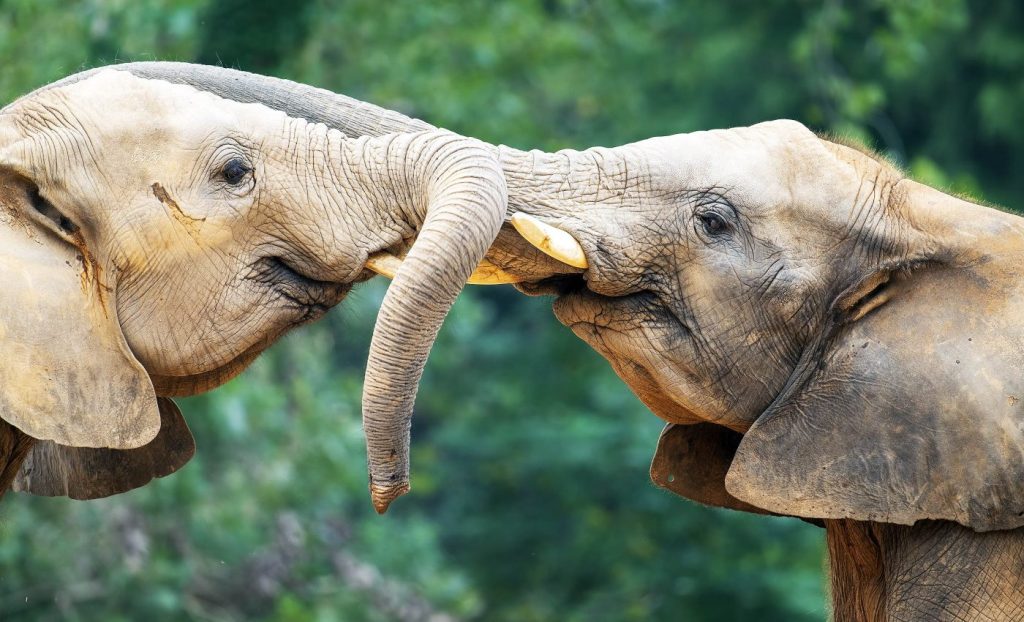
Consolation behaviors: Adult elephants often caress or nuzzle distressed individuals, suggesting an emotional awareness of others’ suffering.
-
Mourning the dead: Elephants famously investigate the bones of deceased relatives, gently touching skulls and tusks with their trunks, sometimes returning to the same site repeatedly.
These behaviors suggest that elephants possess not only intelligence but a form of moral emotion—caring for the welfare of others in ways reminiscent of human compassion.
Grief and Mourning: Rituals Around Death
Elephants are among the few non-human animals observed to express grief in response to death. Their reactions are complex and ritualistic:
-
Standing silently near deceased individuals for extended periods.
-
Using their trunks to touch, lift, or caress bones.
-
Covering the body with leaves or soil.
-
Returning to bones months or even years later.
This mourning behavior indicates an understanding of mortality and an emotional depth that mirrors human grieving practices. Some scientists argue that these rituals may serve a social function, helping the herd cope with loss and reinforcing bonds.
Culture and Learning: Passing Knowledge Across Generations
Elephants also demonstrate cultural transmission, another behavior once thought uniquely human. Cultural traits in elephants include:
-
Migration routes and water source locations known only to older matriarchs.
-
Specific vocalizations or gestures unique to regional herds.
-
Learned problem-solving behaviors and strategies to avoid human conflict.
Young elephants learn these behaviors by observing and imitating elders, demonstrating social learning and the ability to transmit knowledge over generations—essentially creating a culture.
Self-Awareness and Cognition
Scientific experiments suggest elephants possess a high degree of self-awareness, a trait closely associated with human consciousness.
Mirror Test Studies:
-
Elephants have passed the mirror test, recognizing themselves in a reflective surface rather than perceiving the reflection as another animal.
-
They often use mirrors to explore parts of their body they cannot normally see, indicating a level of cognitive sophistication previously attributed primarily to primates and dolphins.
Self-awareness allows elephants to plan, adapt, and navigate social situations with a level of intentionality that is deeply human-like.
Communication: More Than Just Noise
Elephants communicate using a range of vocalizations, some of which are infrasonic (below the range of human hearing) and can travel several kilometers. This allows herds to coordinate over vast distances, respond to threats, and maintain social cohesion.
Their communication also includes:
-
Seismic signals: Vibrations through the ground that can convey warning messages.
-
Touch and gesture: Physical contact serves as reassurance, warning, or greeting.
This multi-layered communication system demonstrates sophistication comparable to human language in certain functional aspects, especially in transmitting emotional or practical information across social networks.
Cooperation and Problem-Solving
Elephants often demonstrate complex cooperative behaviors:
-
Coordinating to move heavy objects.
-
Working together to rescue trapped herd members.
-
Finding collective solutions to reach food or water in challenging environments.
Such cooperation requires social intelligence, foresight, and trust—qualities central to human societies. These observations challenge the notion that sophisticated collaborative behavior is exclusive to humans.
Conservation Implications
Understanding elephants’ human-like behaviors underscores their intrinsic value beyond ecological roles. Conservationists argue that recognizing emotional and cognitive sophistication strengthens the case for protecting elephants from threats such as:
-
Poaching for ivory
-
Habitat destruction and fragmentation
-
Human-wildlife conflict
Elephants are keystone species, meaning their survival is crucial for maintaining ecosystem balance. Protecting them safeguards entire habitats and the species that depend on them.
Ethical considerations also come into play. Recognizing elephants’ complex social lives and emotional depth prompts questions about captivity, wildlife tourism, and human intervention. Should laws account for their welfare in ways more aligned with what we afford sentient beings?
Elephants as Teachers: Lessons for Humanity
Observing elephants offers profound insights into human values:
-
Community and Cooperation: Strong social bonds and teamwork are crucial for survival.
-
Empathy and Compassion: Emotional awareness and caring for others strengthen group cohesion.
-
Respect for Elders: Knowledge is preserved and passed down through generations.
-
Connection to Nature: Elephants embody deep environmental awareness, responding to seasonal changes and ecosystem needs.
In many ways, elephants remind humans that intelligence is more than problem-solving—it is relational, emotional, and deeply intertwined with social context.
Stories from the Wild
Wildlife researchers and safari guides regularly witness extraordinary behaviors:
-
Elephants attempting to comfort crying calves from other herds.
-
Adult elephants forming protective circles around vulnerable members during predator encounters.
-
Elephants pausing at the bones of deceased elephants, engaging in silent observation.
Such stories have captured the imagination of the public and inspired documentaries, wildlife photography, and research programs highlighting elephant cognition and social complexity.
Challenges Facing Elephants
Despite their intelligence and resilience, elephants face mounting threats:
-
Poaching for ivory remains a major issue, particularly in Africa and parts of Asia.
-
Habitat loss due to agriculture, urban development, and logging reduces space for roaming herds.
-
Human-elephant conflict arises when elephants raid crops, leading to retaliation.
-
Climate change affects water availability, migratory patterns, and food sources.
Protecting these magnificent animals requires coordinated efforts across countries, communities, and disciplines.
The Future: Ethical and Conservation Considerations
The recognition of elephants’ human-like qualities challenges humans to rethink our responsibilities:
-
-
Should elephants’ cognitive and emotional capacities influence legal protections?
-
How can conservation programs respect social structures and individual welfare?
-
-
Can ecotourism and human-elephant interactions be managed to prevent stress and disruption of natural behaviors?
Some scientists and ethicists argue that these considerations make elephant protection not just an environmental issue, but a moral and ethical imperative.
Conclusion
Elephants are doing something deeply human. They grieve, empathize, cooperate, and teach, demonstrating a level of emotional and cognitive sophistication that blurs the line between humans and other species. By studying and observing them, we gain not only scientific insights but also a mirror reflecting the core values of community, compassion, and intelligence.
Protecting elephants is more than conserving a species—it is preserving a living testament to the complexity of life on Earth. Their survival challenges humans to expand our understanding of intelligence, emotion, and ethical responsibility, reminding us that the natural world is full of beings capable of profound connection and meaning.
Every trunk gesture, every mournful pause, and every protective act is a glimpse into a world that is at once alien and familiar—proving that elephants, in many ways, are not just animals but extraordinary reflections of our own humanity.
Read Also: Keep your face towards the sunshine and shadows will fall behind you
Watch Also: https://www.youtube.com/@TravelsofTheWorld24











Leave a Reply