
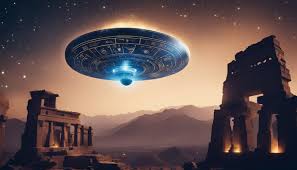
For decades, the idea that humans might have been influenced — or even created — by extraterrestrial beings has fascinated the public, spawning books, documentaries, and television shows. Known as the Ancient Astronaut Theory, this concept suggests that intelligent aliens visited Earth in ancient times and left a profound mark on human civilizations. Proponents claim that advanced technologies, monumental architecture, and cultural myths may provide evidence of extraterrestrial intervention. Critics argue that the theory is speculative and often undermines the achievements of ancient societies. This article explores the origins, evidence, critiques, and cultural significance of the ancient astronaut hypothesis.
Origins of the Ancient Astronaut Theory
The Ancient Astronaut Theory emerged in mainstream consciousness during the mid-20th century, though the idea of celestial beings interacting with humans is ancient. Many religions, myths, and legends include deities descending from the heavens to instruct or intervene in human affairs. Modern proponents, however, frame these narratives as potential evidence of real extraterrestrial encounters.
Early Influences
Swiss author Erich von Däniken is widely credited with popularizing the theory through his 1968 book Chariots of the Gods?. Von Däniken argued that ancient texts, religious artifacts, and megalithic structures were proof of alien influence. His books were highly successful and sparked international debate.
Other influential figures include Zecharia Sitchin, who interpreted Sumerian texts to suggest that a race of extraterrestrials called the Anunnaki visited Earth and helped shape human civilization. Sitchin’s ideas, especially regarding human origins and ancient technology, have been both influential and controversial.
Evidence Cited by Proponents
Ancient astronaut theorists point to a variety of phenomena as evidence of extraterrestrial contact:
1. Monumental Architecture
Structures such as the Great Pyramids of Giza, Stonehenge, and the Nazca Lines in Peru are often cited. The precision, scale, and engineering complexity of these sites — particularly without modern technology — lead proponents to suggest that humans received assistance from advanced visitors.
For example, the Nazca Lines, giant geoglyphs etched into the Peruvian desert, are visible from the air. Ancient astronaut theorists argue that their design implies knowledge of aerial perspectives, suggesting extraterrestrial observation.
2. Ancient Texts and Myths
Texts from cultures worldwide describe gods or beings descending from the sky. The Epic of Gilgamesh, Hindu Vedas, and Biblical accounts like Ezekiel’s vision of the “wheel within a wheel” are interpreted as descriptions of alien spacecraft or encounters.
3. Advanced Knowledge
Proponents highlight examples of sophisticated astronomical knowledge, metallurgy, and navigation in ancient cultures. They argue that civilizations such as the Egyptians, Mayans, and Sumerians possessed advanced understanding far beyond what might be expected for their era, potentially hinting at external guidance.
4. Depictions in Art
Carvings, paintings, and sculptures depicting humanoid figures with unusual helmets, flying objects, or technology are cited as visual evidence. Ancient astronaut theorists interpret these as representations of extraterrestrial visitors.
Scientific and Scholarly Critiques
While the ancient astronaut hypothesis has captivated the imagination of millions, it is heavily critiqued by archaeologists, historians, and scientists:
-
Cultural and Technological Context: Scholars argue that ancient civilizations achieved remarkable feats using human ingenuity, trial and error, and available resources. Pyramids, for instance, were built with complex labor organization and engineering techniques, not alien intervention.
-
Selective Interpretation: Critics highlight that proponents often cherry-pick evidence while ignoring broader archaeological and historical contexts.
-
Misreading Texts and Art: Ancient texts and artwork are symbolic, religious, or mythological in nature. Interpreting them literally as extraterrestrial encounters is considered speculative.
-
No Physical Evidence: Despite decades of research, there is no concrete, verifiable evidence of alien visitation in antiquity. Tools, artifacts, and human remains show natural human origins and development.
Cultural Impact and Popular Media
Despite scientific skepticism, the theory has influenced pop culture extensively:
-
Television: Shows like Ancient Aliens on the History Channel explore these ideas, combining dramatic reenactments with historical speculation.
-
Books and Documentaries: Von Däniken’s books and documentaries inspired other writers and filmmakers to explore human origins and alien influence.
-
Science Fiction: Movies such as Prometheus and franchises like Star Trek and Stargate borrow heavily from ancient astronaut themes.
The theory persists partly because it challenges conventional views, encourages imaginative thinking, and blends mystery with history.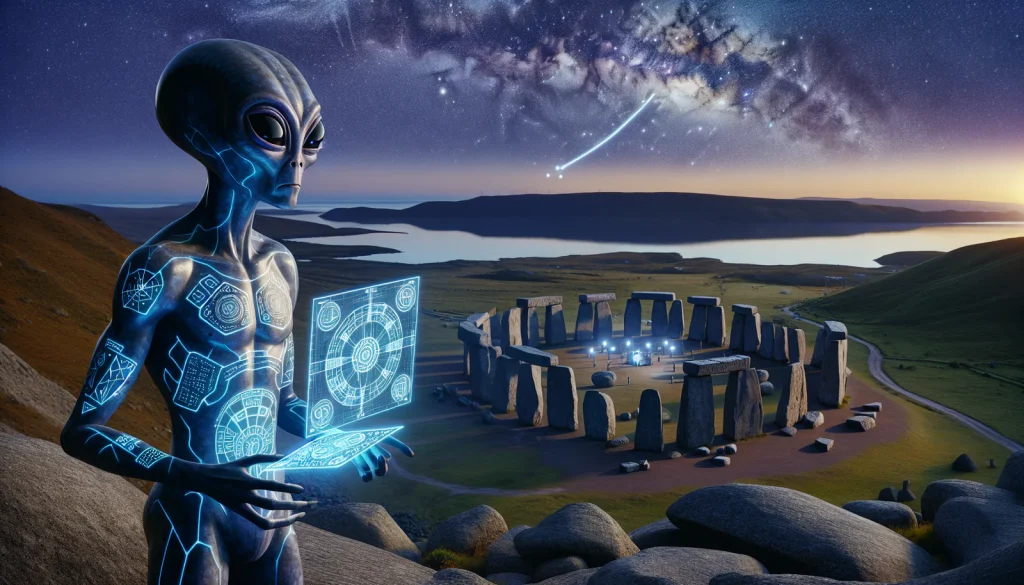
Psychological and Sociological Aspects
Interest in ancient astronauts can also be explained through psychology and sociology:
-
Desire for Wonder: Humans are naturally drawn to mystery and the unknown. The theory provides a cosmic dimension to human history.
-
Skepticism of Authority: Some adherents distrust mainstream academia, seeing the ancient astronaut hypothesis as an alternative narrative suppressed by traditional institutions.
-
Pattern Recognition: Humans tend to seek patterns and intentionality in random phenomena. Interpreting artifacts or texts as evidence of extraterrestrial contact may reflect this cognitive bias.
Alternative Explanations
Most archaeologists attribute the achievements highlighted by ancient astronaut theorists to:
-
Human ingenuity: Early civilizations developed sophisticated technologies adapted to local environments.
-
Cultural transmission: Knowledge was shared and refined over generations.
-
Symbolism and mythology: Art and texts reflected religious, spiritual, or social meaning rather than literal alien encounters.
Understanding these achievements in context does not diminish their wonder — human creativity is extraordinary.
Conclusion
The Ancient Astronaut Theory continues to fascinate, straddling the line between speculation and popular science. While compelling stories, myths, and monumental structures invite imaginative interpretations, no concrete evidence supports the idea that extraterrestrials shaped human civilization. Archaeological and historical research provides credible explanations for human accomplishments.
Whether viewed as a cultural phenomenon, a thought experiment, or a window into our fascination with the cosmos, the theory of ancient astronauts highlights humanity’s desire to understand its origins and its place in the universe. It also underscores the enduring allure of the unknown — a reminder that the cosmos may hold mysteries yet to be discovered, even if they are not found in our ancient past.
Read Also: Keep your face towards the sunshine and shadows will fall behind you
Watch Also: https://www.youtube.com/@TravelsofTheWorld24








Leave a Reply