
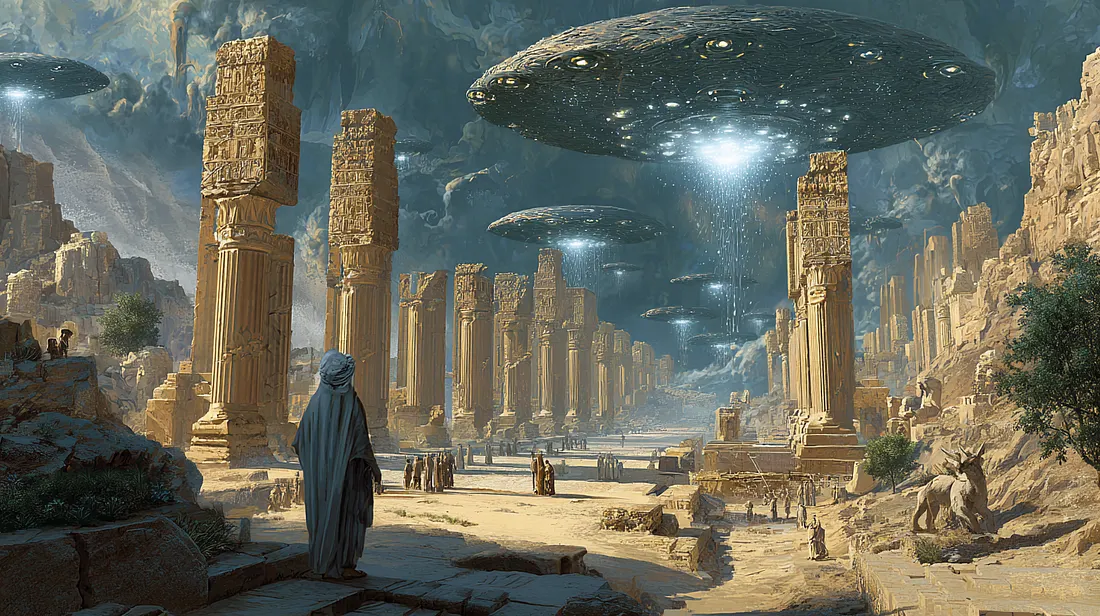
In the realm of fringe theories and alternative history, few concepts have achieved the visibility and cultural penetration of the Ancient Aliens phenomenon. Popularized by television shows, books, and documentaries, this movement posits that extraterrestrial visitors shaped human civilization, technology, and mythology. It has often been described as “Flat Earth for smart people,” a phrase that captures both the intellectual veneer and the speculative nature of its claims. Unlike flat Earth theory, which is easily dismissed due to its obvious conflict with basic physics, ancient aliens theories engage with history, archaeology, and mythology, giving them a patina of plausibility that attracts a wide audience. This article explores the rise of the ancient aliens movement, its arguments, its criticisms, and why it resonates in modern culture.
Origins of the Ancient Aliens Movement
The modern concept of ancient extraterrestrial visitors has roots in mid-20th-century speculative literature. In 1968, Swiss author Erich von Däniken published Chariots of the Gods?, which argued that many ancient texts and archaeological sites reflected contact with intelligent aliens. Von Däniken claimed that humanity’s ancestors lacked the technology or knowledge to build monumental structures, such as the Pyramids of Giza, Stonehenge, or the Nazca Lines, without extraterrestrial assistance.
Following von Däniken, other writers, notably Zecharia Sitchin, expanded on these ideas, interpreting Mesopotamian texts to suggest that a race of alien beings called the Anunnaki played a central role in human evolution and civilization. These theories framed ancient myths, deities, and advanced technologies as evidence of extraterrestrial guidance.
The movement gained momentum in the 1970s and 1980s, partly due to the growing fascination with space exploration and UFO culture. Unlike flat Earth theories, which challenge fundamental scientific principles, ancient aliens propositions often involve ambiguous archaeological interpretations, allowing enthusiasts to debate the claims while feeling intellectually sophisticated.
The Appeal: Intellectual Plausibility
One reason ancient aliens theories are often described as “Flat Earth for smart people” is their strategic use of evidence and reasoning:
-
Engagement with Archaeology and History
Ancient alien theorists reference real artifacts, monuments, and texts, grounding their claims in verifiable cultural history. For example, the Great Pyramid of Giza is real and historically significant, but theorists reinterpret its precision and engineering as evidence of alien technology. -
Appeal to Mystery and Uncertainty
Unlike flat Earth theory, which is easily debunked, ancient aliens arguments exploit genuine gaps in our understanding of history. Ambiguities in texts or incomplete knowledge about ancient engineering techniques allow theorists to claim that humans could not have achieved such feats alone. -
Cultural and Narrative Resonance
By connecting myths and legends to extraterrestrial visitors, the theory provides a compelling narrative that resonates across cultures. Stories of gods descending from the sky, for example, are reframed as encounters with alien beings rather than symbolic religious narratives.
Key Arguments of the Ancient Aliens Hypothesis
Proponents of ancient aliens put forward several main arguments, often repeated across books, documentaries, and television series:
1. Monumental Architecture
Structures such as the Pyramids, Stonehenge, Easter Island Moai, and Nazca Lines are often cited. Ancient aliens theorists argue that the precision, scale, and alignment of these monuments surpass what humans could have achieved with primitive tools and knowledge.
2. Advanced Ancient Knowledge
Claims include:
-
Precise astronomical measurements by ancient civilizations
-
Advanced metallurgy or construction techniques
-
Navigation abilities over long distances without modern instruments
The argument suggests that such knowledge may have been imparted by extraterrestrial visitors.
3. Religious Texts and Mythology
Ancient scriptures, myths, and legends frequently describe beings descending from the sky, wielding incredible powers, or delivering knowledge. For example:
-
Biblical visions, such as Ezekiel’s “wheel within a wheel”
-
Hindu texts describing flying machines called Vimanas
-
Sumerian stories of gods interacting with humans
Ancient alien theorists interpret these accounts literally, rather than symbolically or spiritually.
4. Art and Iconography
Depictions of strange figures, flying objects, or helmets in ancient art are sometimes interpreted as aliens or their technology. Critics, however, argue these interpretations often ignore cultural symbolism and artistic convention.
Critiques and Scientific Rebuttals
While ancient alien theories are popular, they face strong criticism from archaeologists, historians, and scientists:
-
Undermining Human Ingenuity
Critics argue that the theories diminish human achievement, implying that ancient peoples could not achieve remarkable feats on their own. Historical research shows that civilizations developed complex engineering, mathematics, and astronomy independently. -
Cherry-Picking Evidence
Ancient alien proponents often focus on anomalies while ignoring broader archaeological and historical contexts. Selective evidence can create misleading narratives. -
Misinterpretation of Texts and Art
Many texts and images cited as proof of aliens are symbolic, religious, or artistic, not literal descriptions of extraterrestrial contact. -
No Empirical Evidence
Despite decades of research, there is no verified physical evidence of extraterrestrial influence on ancient civilizations. -
Pseudo-Scientific Framing
Critics liken the theories to pseudoscience: they rely on conjecture, anecdotal evidence, and reinterpretation rather than testable hypotheses.
Cultural Impact and Media Influence
Despite scientific skepticism, ancient aliens theories have permeated popular culture:
-
Television: Shows like Ancient Aliens (History Channel) dramatize speculative connections between historical artifacts and extraterrestrial intervention.
-
Movies and Fiction: Films such as Prometheus and franchises like Stargate draw heavily on ancient alien motifs.
-
Tourism and Archaeology: Sites associated with alleged alien activity often experience increased tourism, boosting economic interest in speculative interpretations.
-
Internet Communities: Online forums and social media amplify discussions, debates, and fan theories, creating a global community around ancient alien speculation.
The cultural resonance of these theories demonstrates their power as modern mythology, blending science, history, and imagination.
The Flat Earth Comparison
Describing ancient aliens as “Flat Earth for smart people” highlights key similarities and contrasts:
-
Similarity: Both theories challenge mainstream scientific and historical understanding. They often appeal to skepticism of authority and embrace conspiracy thinking.
-
Difference: Ancient alien theories engage with real historical, archaeological, and cultural artifacts, lending a superficial appearance of intellectual rigor. Flat Earth claims contradict fundamental and observable physics, making them easier to dismiss.
-
Cognitive Appeal: Both satisfy a human desire for mystery and novelty, but ancient alien claims are packaged as erudite interpretations of human history, making them more persuasive to certain audiences.
Psychological and Sociological Perspectives
Several factors explain the allure of ancient alien theories:
-
Pattern Recognition: Humans naturally seek patterns and intentionality in events, artifacts, and stories.
-
Desire for Wonder: These theories offer cosmic scale, suggesting that human history is interconnected with the universe.
-
Distrust of Mainstream Institutions: Skepticism of academia or government explanations fuels belief in alternative narratives.
-
Narrative Satisfaction: Ancient aliens provide explanations for otherwise puzzling phenomena, satisfying cognitive desire for closure.
Conclusion
The ancient aliens phenomenon remains a powerful cultural force, straddling the line between entertainment, speculation, and pseudoscience. While scientific scrutiny rejects the notion that extraterrestrials shaped human history, the movement persists due to its narrative appeal, engagement with real historical artifacts, and imaginative reinterpretation of myths.
Calling it “Flat Earth for smart people” captures the tension: the theory appears intellectually grounded, yet rests on speculative leaps and selective evidence. Ultimately, ancient aliens serve as a mirror for human curiosity — a testament to our enduring fascination with the unknown, the cosmos, and the mysteries of our own past.
Read Also: Keep your face towards the sunshine and shadows will fall behind you
Watch Also: https://www.youtube.com/@TravelsofTheWorld24







Leave a Reply