
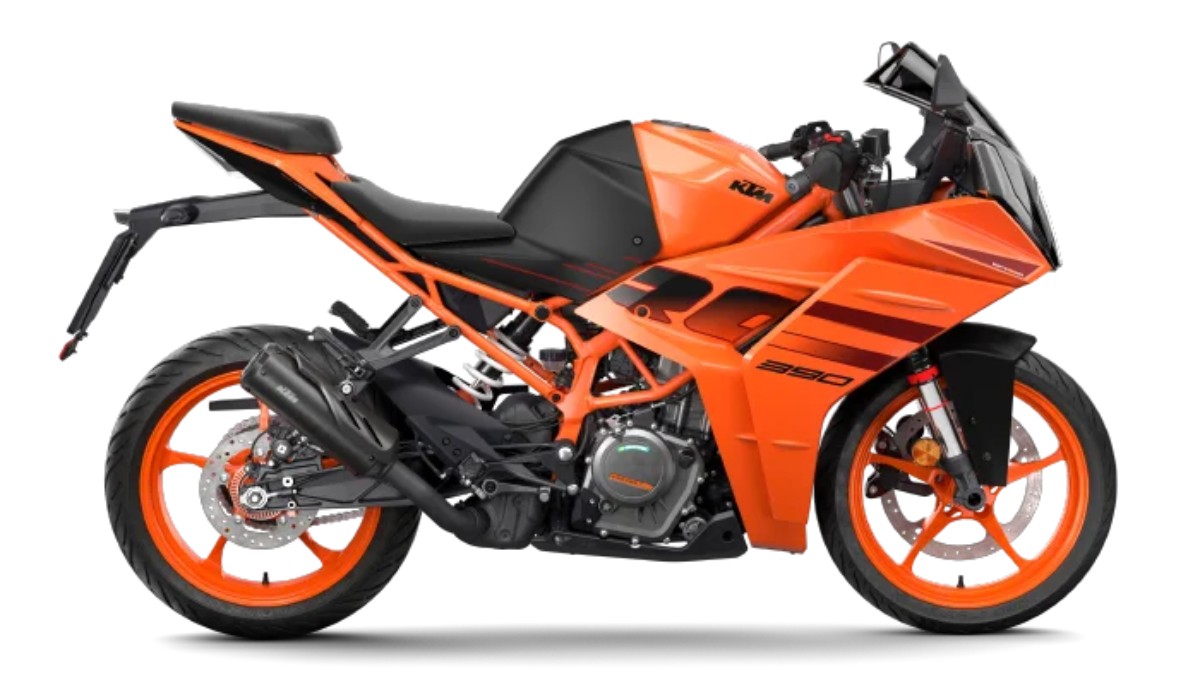
The KTM RC 390, one of the most popular entry-level supersport motorcycles in the 300-400cc segment, has recently been discontinued in most global markets, including Europe and the Americas. However, the bike continues to be available in India, KTM’s largest single market for the RC 390. This move has sparked speculation about a new-generation RC 390 and KTM’s strategy in the entry-level supersport segment worldwide.
The RC 390 has been a favorite among beginner and intermediate riders due to its aggressive styling, sharp handling, and spirited performance, making it a standout in the lightweight supersport category. In this report, we examine the reasons behind the discontinuation, the RC 390’s continued presence in India, and what the future might hold for KTM’s small-capacity sportbikes.
1. KTM RC 390 – Overview
The RC 390 is the faired, sport-oriented variant of KTM’s Duke 390 naked bike, offering a more aggressive riding position, aerodynamic bodywork, and racetrack-inspired looks. Since its introduction, it has been appreciated for combining performance, affordability, and KTM’s racing DNA in a compact package.
Key Specifications of the RC 390 (current model):
-
Engine: 373cc, single-cylinder, liquid-cooled
-
Power: ~44 PS
-
Torque: ~37 Nm
-
Transmission: 6-speed manual
-
Features: Ride-by-wire throttle, TFT display, ABS, slipper clutch, lightweight trellis frame
The RC 390 competes with other small-capacity sportbikes like the KTM RC 200, Honda CBR500R (lower displacement competitors in some markets), and Yamaha R3 in the global arena, though the RC 390 is particularly appealing for its lightweight, nimble handling.
2. Global Discontinuation – What Happened?
KTM recently updated its global lineup strategy, and the RC 390 was removed from most international markets, including Europe and North America. The reasons behind this move include:
-
Emission Compliance (Euro 5/Euro 6):
The RC 390 faces increasingly stringent emission standards in Europe and the US. Updating the engine to meet Euro 5/6 norms would require significant modifications, which KTM may have deemed less profitable for entry-level sportbikes. -
Market Shift to Electric & Mid-Capacity Bikes:
KTM is focusing on electric mobility and expanding its mid-weight and high-capacity sportbike segment. Entry-level supersport bikes like the RC 390 are seeing declining demand in certain markets as younger buyers shift toward urban mobility solutions and naked bikes. -
Inventory Rationalization:
Streamlining the product lineup allows KTM to focus on more profitable models like the Duke 390, 790 Adventure, and RC 125 in global markets.
Despite the discontinuation globally, KTM has confirmed that the RC 390 will continue in India, reflecting strong domestic demand and an existing enthusiast community.
3. Why RC 390 Remains in India
India remains a key market for KTM’s small-capacity motorcycles. The RC 390 is well-suited for Indian roads, offering:
-
Aggressive yet manageable power for city and highway use
-
Sportbike styling that appeals to younger riders
-
Track-capable chassis for weekend racing and track-day events
In India, the RC 390 competes with the KTM RC 200, Yamaha R15 V4, and Honda CBR500R (entry-level segment). Its continued popularity in India is due to:
-
Strong brand image of KTM
-
Racing-inspired performance at an affordable price
-
Aftermarket and accessory ecosystem, including track upgrades
KTM India has reported that the RC 390 continues to be one of its best-selling faired motorcycles, and it is unlikely to be discontinued in the near future in the country.
4. Speculation About a New RC 390 Model
The global discontinuation has sparked speculation about a next-generation KTM RC 390. Industry insiders and enthusiasts believe that KTM might be preparing an updated model with:
-
Compliance with Euro 5/6 and BS6 standards (or equivalent)
-
Improved electronics, such as a larger TFT display, ride modes, and enhanced ABS
-
Chassis and suspension upgrades for better handling and comfort
-
Styling refresh, potentially inspired by KTM’s RC 125 and RC 200 updates
-
More track-focused performance, while maintaining everyday usability
KTM’s development cycle suggests that a new RC 390 could be launched globally within 12-18 months, possibly debuting first in India before expanding internationally.
5. RC 390 vs Duke 390 – Why Both Continue
The RC 390 shares its engine and frame with the Duke 390, but differs in:
-
Fairing and aerodynamics – RC 390 has full-body fairing for sport aesthetics
-
Riding ergonomics – aggressive, track-oriented position
-
Target audience – RC 390 for sport riders; Duke 390 for urban commuters
By keeping both models in India, KTM caters to different rider preferences:
-
Urban riders and beginners: Duke 390
-
Track enthusiasts and sportbike fans: RC 390
This strategic positioning is one reason KTM continues the RC 390 in India despite discontinuing it elsewhere.
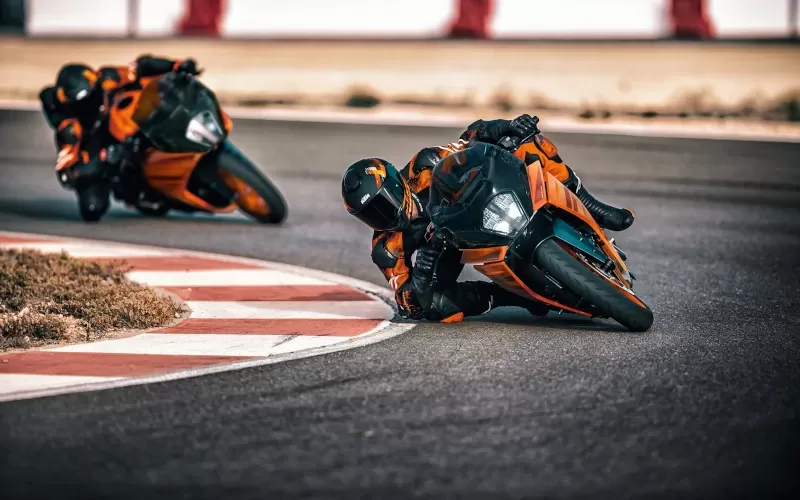
6. RC 390’s Track and Performance Reputation
One of the RC 390’s biggest strengths is its track-capable chassis:
-
Trellis frame and lightweight build allow nimble cornering
-
WP suspension provides firm handling for sporty riding
-
Slipper clutch and ride-by-wire throttle enhance performance during aggressive acceleration
Several Indian riders use the RC 390 for track-day events, club racing, and performance tuning, cementing its reputation as a budget-friendly sportbike with racing DNA.
7. Market Impact of Global Discontinuation
While the RC 390 remains in India, its global discontinuation signals:
-
Potential increase in demand in India: Enthusiasts may buy the RC 390 before a new model arrives
-
Speculation about a global launch of a new model with updated features
-
Secondary market value: Existing RC 390s could see stable or higher resale values due to discontinued status abroad
For KTM, this provides an opportunity to generate hype and anticipation for the next-generation RC 390.
8. Competitor Landscape
In India, the RC 390 competes with:
-
Yamaha R15 V4: Smaller displacement, high-tech features
-
Honda CBR500R (entry-level segment globally): Heavier, more touring-oriented
-
Suzuki Gixxer SF 250: Similar displacement, sport styling
Globally, with the RC 390 discontinued, KTM may allow competitors like Yamaha R3 and Kawasaki Ninja 400 to capture the entry-level supersport market until a new RC 390 is launched.
9. Future Outlook for KTM RC 390
Given KTM’s history, the RC 390 is likely to return globally with improvements in:
-
Emission compliance and environmental regulations
-
Electronics and safety features
-
Modern styling and ergonomics
India will continue to serve as a primary launch market, testing buyer reception before global expansion.
Expected launch timeframe: 2026–2027 for the new-generation RC 390, with India seeing the first units followed by European and international markets.
10. Conclusion
The KTM RC 390’s global discontinuation reflects KTM’s strategic shift and the challenges of small-capacity sportbikes in markets with strict emission norms. However, India remains a key market for the RC 390, thanks to its affordability, performance, and brand popularity.
Enthusiasts can expect a new-generation RC 390 in the near future, with updated tech, styling, and compliance features, potentially making it a stronger contender in the entry-level supersport segment worldwide. Until then, the current RC 390 continues to deliver an unmatched blend of style, performance, and track-ready capabilities for riders in India.
KTM’s strategy ensures that the RC 390 remains relevant, while also building anticipation for a next-generation model that could reassert its position globally.
Read Also: Keep your face towards the sunshine and shadows will fall behind you
Watch Also: https://www.youtube.com/@TravelsofTheWorld24





Leave a Reply