
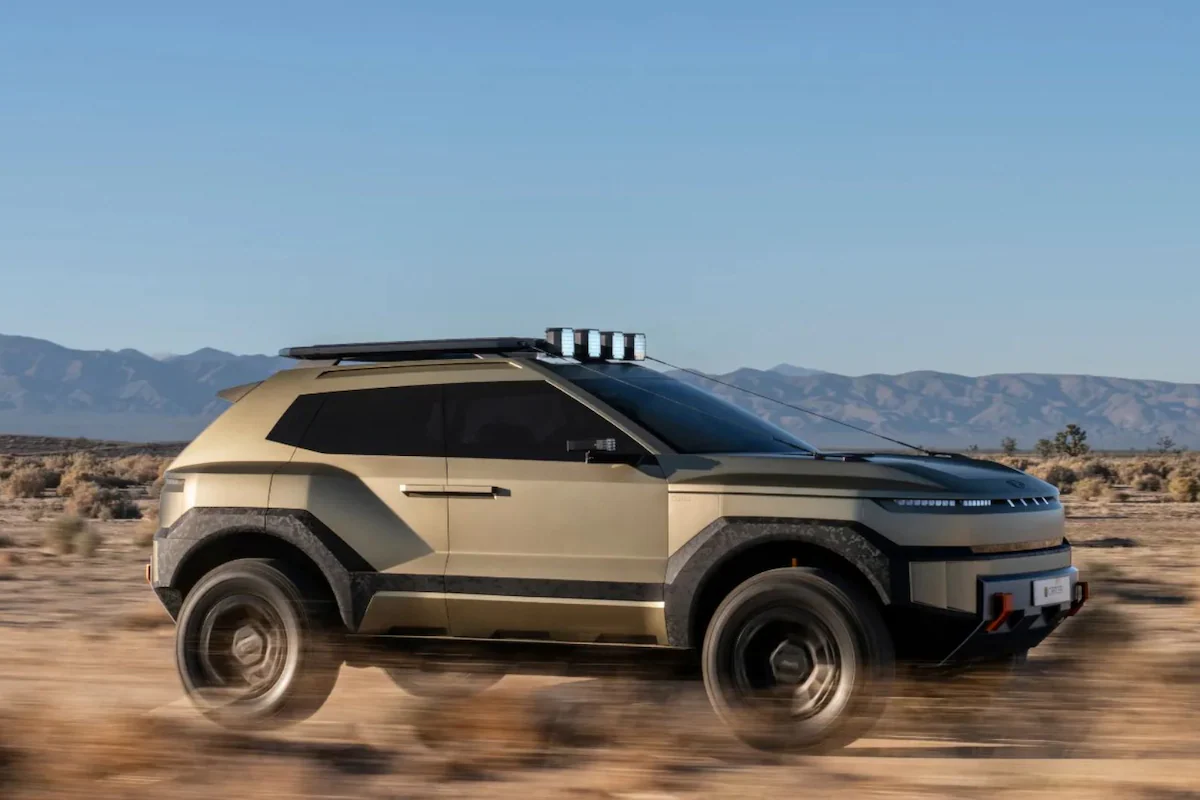
In late November 2025, Hyundai revealed one of the most striking concept SUVs of the year — the Hyundai CRATER Concept — at AutoMobility LA 2025 in Los Angeles, California. This bold new design pushes Hyundai’s adventure‑ready identity into truly extreme territory, blending futuristic styling with rugged off‑road capability. With an electric powertrain, aggressive proportions, and countless trail‑focused design cues, the Crater concept is Hyundai’s answer to what “freedom” looks like in a modern off‑road era.
Vision: What Is the Hyundai Crater Concept?
The Hyundai CRATER Concept isn’t just another SUV concept — it represents a visionary step in Hyundai’s design and capability evolution, especially for the U.S. off‑road market. The idea behind the Crater was simple yet ambitious: to capture the unbridled spirit of adventure in a vehicle that looks like it’s ready to tackle extreme environments — deserts, forests, rocky terrain, and backcountry trails — with confidence and purpose.
Conceived at the Hyundai America Technical Center in Irvine, California, the Crater concept is rooted in what the company describes as “capability and toughness.” It is intended as a design exploration that goes well beyond the relatively mild ruggedness seen in previous XRT versions of Hyundai models (such as the IONIQ 5 XRT, Santa Cruz XRT, and Palisade XRT Pro). The Crater concept dramatically raises the bar for what a Hyundai off‑road vehicle could look and feel like — both aesthetically and functionally.
Radical Design: “Art of Steel” Meets Extreme Ruggedness
A defining feature of the Hyundai Crater concept is its bold design language, grounded in Hyundai’s “Art of Steel” philosophy. This approach celebrates the inherent strength and fluidity of steel by shaping it into sculptural, powerful forms — a language that suits an off‑road beast perfectly.
Exterior Styling Highlights
-
Blocky, Chiseled Bodywork: The Crater’s exterior is dominated by sharply cut surfaces, robust shoulders, and sheer fender surfaces that evoke feelings of strength and durability. It looks like it was carved out of a single solid piece of steel.
-
Compact Monocoque Architecture: Unlike some traditional body‑on‑frame off‑roaders, the Crater uses a compact monocoque structure that contributes to agile proportions and visual balance — giving it a nimble yet aggressive stance.
-
Steep Approach and Departure Angles: The short overhangs help give the Crater serious off‑road attitude, signaling that this vehicle is meant to climb, descend, and traverse challenging terrain without hesitation.
-
18‑inch Hexagonal Wheels With 33‑inch Tires: Inspired by the idea of a hexagonal asteroid crashing into a metal landscape and leaving a fractal crater behind, the wheels — wrapped in massive off‑road tires — highlight both rugged capability and bold, geometric styling.
-
Wide Skid Plate and Protective Rocker Panels: A full‑width skid plate stretches across the underbody to protect vital components while visually anchoring the vehicle. Rocker panels inspired by protective utility cases further emphasize real‑world readiness.
-
Roof Platform and Trail‑Ready Accessories: The roof serves as a modular platform ideal for mounting auxiliary lights, storage gear, or other adventure accessories.
-
Limb Risers: Cables stretching from the front hood to the roof act as “limb risers,” helping protect the body from low branches and obstacles when navigating overgrown trails.
-
Parametric Pixel Lighting: The unique three‑dimensional lighting signature uses layered pixel elements to give a futuristic look while adding depth and precision to both headlights and auxiliary lighting.
These exterior design elements don’t just look wild — they communicate a strong off‑road purpose that suggests the Crater could actually handle rugged terrain if it ever went into production.
Color and Thematic Expression: Dune Gold Matte
The Crater concept was shown in an eye‑catching Dune Gold Matte finish, a greenish‑gold hue inspired by California’s sun‑bleached terrain, including coastal sagebrush, sand dunes, and windswept canyons. This outdoor‑inspired color reinforces the vehicle’s adventurous character while adding a youthful, dynamic vibe. Contrasting pops of anodized orange on select details introduce playful energy, making the design feel vibrant and alive.
Interior: Rugged Yet Functional
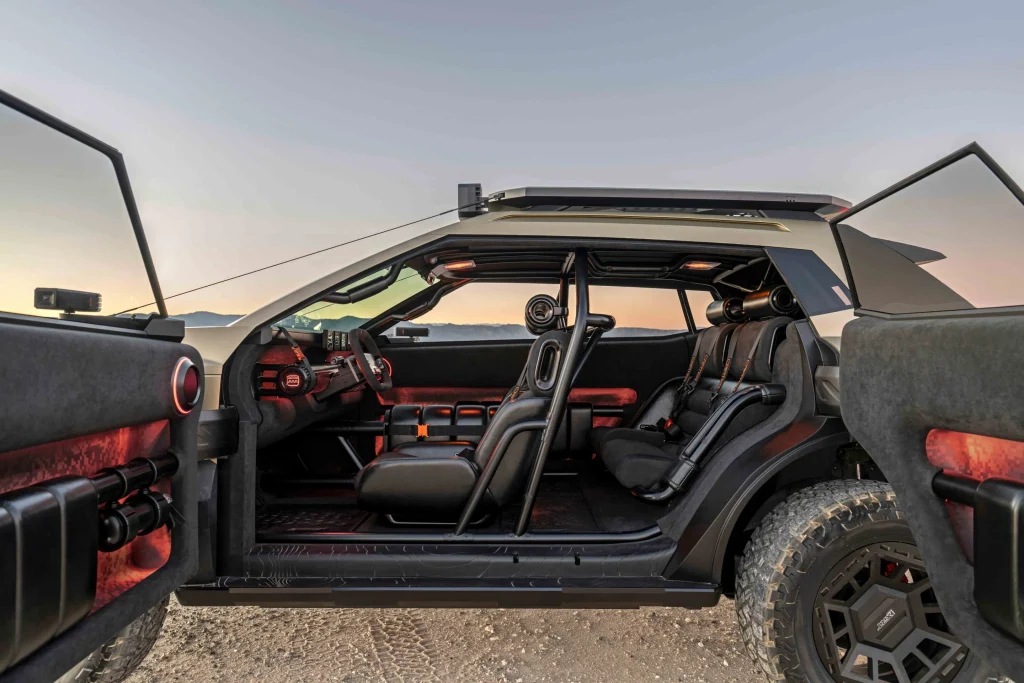
The Crater concept’s interior is designed with practicality and durability in mind, suitable for boots, dirt, and gear — not just show car polish. While Hyundai hasn’t released complete interior schematics, official descriptions emphasize materials and features created to endure off‑road use and evoke a connection with nature.
Interior Design and Materials
-
-
Black Ember Theme: The cabin materials are chosen for resilience and comfort, with black leather and Alcantara surfaces that can take abuse from rugged trails yet provide a tactile, grounded feel.
-
-
Orange Accents: Energetic orange details inside echo the sunset hues of outdoor landscapes, tying cabin mood back to the world beyond pavement.
-
Brushed Metal Accents: These reinforce an industrial toughness throughout the cabin, matching the exterior’s robust aesthetic.
-
Utility‑Focused Controls: While Hyundai hasn’t detailed full armrest or infotainment features, early reports suggest controls that favor durability and ease of use over delicate screens — ideal for environments where dirt and grit are expected.
Though Hyundai has kept some interior details under wraps, the available information highlights a space built not just to impress at a show, but to actually endure the realities of adventurous, off‑grid use.
Off‑Road Capability and Features
While the CRATER is a concept and not a production vehicle, Hyundai has imbued it with numerous design cues and features that speak to real off‑road capability:
Capability‑Driven Elements
-
Multi‑Function Off‑Road Controller: A tactile gear‑type controller lets drivers manage traction, differential locks, and braking behavior — suggesting sophisticated control over rough terrain.
-
Terrain Mode Selector: The concept includes selectable modes for Snow, Sand, and Mud, demonstrating how it could adapt traction, throttle, and stability systems to varying surfaces.
-
Downhill Brake Control: This assists controlled descents in challenging environments.
-
Trailer Brake Control: Useful for towing gear or equipment when adventure demands more cargo support.
-
Compass and Altimeter: Tactical tools built into the system support navigation and awareness in remote locations.
Although Hyundai has not confirmed powertrain specifications, all signs indicate the Crater concept is all‑electric — reflecting Hyundai’s broader investment in electric mobility. Its closed‑grille front end and futuristic styling also suggest an EV platform that could deliver instantaneous torque — advantageous for low‑speed trail driving and traction control.
Positioning and Future Impact
While the Crater remains a design study for now, there’s no question it signals Hyundai’s intent to expand the rugged side of its SUV lineup:
-
Evolving XRT Identity: The Crater goes beyond previous XRT models by incorporating real trail‑ready cues rather than just rugged styling.
-
Competition with Traditional Off‑Roaders: Some media and enthusiast discussions consider the Crater concept a bold statement aimed at rivals like the Jeep Wrangler, Ford Bronco, and other hardcore off‑road icons — though Hyundai hasn’t officially stated this ambition.
-
Design Influence: Even if a production Crater never arrives, its design language, modular features, and off‑road philosophies could influence future Hyundai SUVs and EVs — signaling a shift in how Hyundai approaches adventure mobility.
Public Reveal and Display
The Crater concept made its global debut on November 20, 2025 at AutoMobility LA 2025, where it captured attention for its daring design and expressive, purpose‑built aesthetic. It was displayed through the remainder of the Los Angeles Auto Show public days, gaining praise and intrigue from media and car enthusiasts alike.
Conclusion: What the Crater Means for Hyundai and Off‑Road EVs
The Hyundai CRATER Concept is more than just a radical design experiment — it’s a vision of where rugged, adventure‑focused vehicles might go in an electric and design‑driven future. With an aggressive “Art of Steel” exterior, thoughtful off‑road cues, and a cabin built for the outdoors, the Crater stands out as one of the most exciting SUV concepts of 2025. Whether it leads directly to new production models or influences future design directions, the Crater concept underscores Hyundai’s commitment to exploring fresh territory — both literally and figuratively — in the world of automotive design and capability.
Read Also: Keep your face towards the sunshine and shadows will fall behind you
Watch Also: https://www.youtube.com/@TravelsofTheWorld24






Leave a Reply