
Bajaj Auto, one of India’s most iconic two‑wheeler manufacturers, reported its sales figures for November 2025, revealing mixed performance trends across its popular motorcycles and scooters lineup. Overall, Bajaj’s monthly sales showed a slight contraction compared to last year, but several of its key models continued to command attention in their respective segments.
Overview of Bajaj Auto’s November 2025 Sales
In November 2025, Bajaj Auto reported domestic two‑wheeler sales of around 191,088 units, which was slightly lower than the equivalent period a year ago (197,086 units). This translates to a 3.04% year‑on‑year (YoY) decline, indicating the market faced some cyclical slowdown after the festive season. Month‑on‑month numbers also showed a sharper drop of 23.67% compared with October 2025 figures, when domestic sales were about 250,359 units.
At the same time, Bajaj’s press release reported that the company’s overall two‑wheeler domestic sales declined by around 1% to approximately 202,510 units in November 2025 compared with the previous year, while exports grew by approximately 8% — reflecting stronger international demand.
Taken together, these figures paint a picture of a company operating in a transition phase, balancing variable domestic demand with stronger export growth and evolving product mix.
Model‑Wise Breakup: How Each Bajaj Model Performed
Let’s look in detail at how individual Bajaj two‑wheelers contributed to total sales and how they performed in terms of growth.
1. Bajaj Pulsar — The Flagship Performer
-
Sales: ~113,802 units
-
Contribution: ~59.55% of total Bajaj domestic sales
-
YoY Change: ~0.58% decline
The Pulsar series remained Bajaj’s top performer for November 2025, with total cumulative sales of approximately 113,802 units. This model family dominated Bajaj’s domestic sales chart, accounting for nearly 60% of overall domestic volumes, albeit with a slight YoY dip in sales compared with November 2024 figures.
Breakdown of Pulsar Sub‑Segments
-
125cc Pulsars: ~60,002 units (22.34% YoY decline)
-
150cc Pulsars: ~18,133 units (13.35% YoY decline)
-
160cc Pulsars: ~27,113 units (124.61% YoY growth)
-
250cc Pulsars: ~7,909 units (118.18% YoY growth)
-
400cc Pulsars: ~645 units (10.82% YoY growth)
Overall, 160cc and higher displacement Pulsars posted strong double‑digit growth, highlighting that buyers are gravitating toward higher capacity models within the Pulsar family. Meanwhile, 125cc and 150cc variants noted declines, reflecting changing consumer preferences toward more performance‑oriented bikes or competitors in that segment.
The Pulsar’s strength underscores its enduring appeal among riders seeking a sporty commuter‑crossover experience that balances performance and practicality. Its expansive lineup spanning 125cc to 400cc continues to attract wide segments of buyers.
2. Bajaj Chetak — Electric Scooter Growth
-
Sales: ~38,022 units
-
Contribution: ~19.90% of total Bajaj sales
-
YoY Growth: ~47.03%
The Bajaj Chetak electric scooter posted impressive growth in November 2025, selling around 38,022 units, which translates to nearly 20% of Bajaj’s domestic volumes and a substantial 47% year‑on‑year increase.
This growth underscores the expanding attractiveness of electric two‑wheelers among Indian consumers. Despite a broader EV market contraction reported in some segments in the same month, Chetak’s momentum suggests Bajaj’s continued strength in the e‑scooter category — still relatively niche compared with ICE scooters but growing quickly.
Interestingly, broader industry data from EV segments shows mixed performance in November 2025, with some major EV players experiencing declines in retail volumes even as Bajaj’s Chetak showed strong gains.
3. Bajaj Platina — Established Commuter Model
-
Sales: ~32,040 units
-
Contribution: ~16.77% of total Bajaj sales
-
YoY Change: ~28.13% decline
Platina, Bajaj’s long‑standing commuter motorcycle offering, sold around 32,040 units in November 2025. While still a significant part of the company’s volume mix, the model experienced a steep 28.13% YoY decline, indicating competitive pressures in the commuter segment, especially from rival brands and shifting buyer preferences.
Despite the drop, Platina remains important for budget‑conscious buyers due to its fuel efficiency and low operating costs, but it faces strong competition from other 100–110cc commuters that dominate India’s mass market.
4. Bajaj CT Series — Smaller Commuter Segment
-
Sales: ~4,180 units
-
YoY Change: ~2.95% decline
The CT series, another commuter offering from Bajaj, saw modest sales of around 4,180 units — slightly down compared with the previous year. While not a major contributor to total volumes, this model still serves as a budget‑oriented option for fleet and rural riders.
5. Bajaj Avenger — Cruiser Niche
-
Sales: ~1,324 units
-
YoY Change: ~1.85% growth
The Avenger lineup — known for its relaxed cruiser ergonomics — remained a niche player with approximately 1,324 units sold. It recorded modest growth, hinting at a stable but limited demand in the cruiser motorcycle segment. Most units (about 1,060) were Avenger 160, with the remainder (264) comprising Avenger 220 variants.
6. Bajaj Dominar — Premium Cruiser
-
Sales: ~709 units
-
YoY Growth: ~14.17%
The Dominar lineup had moderate sales of around 709 units, but it showed double‑digit year‑on‑year growth, indicating that premium and enthusiast riders are still engaging with this model. The Dominar 250 contributed 444 units, while the Dominar 400 added 265 units to the tally.
While Dominar’s volume is smaller compared with mass commuter models, its consistent sales growth highlights steady interest in performance‑oriented midweight motorcycles among Indian riders. 
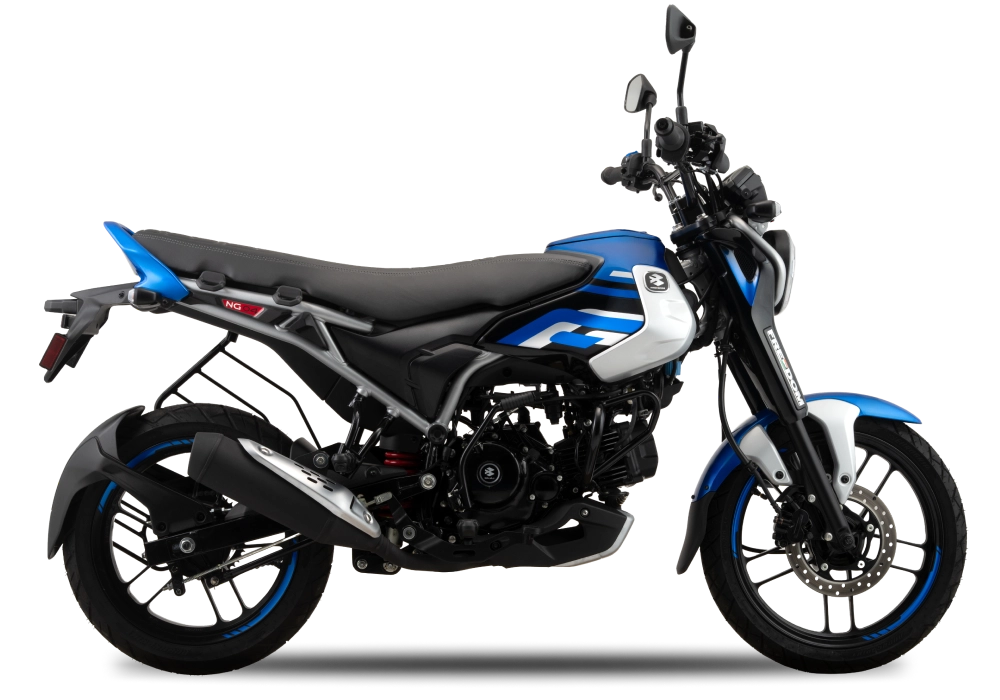
7. Freedom 125 CNG — Sharp Drop
-
Sales: ~1,011 units
-
YoY Change: ~83.02% decline
One of the steepest declines in Bajaj’s November 2025 chart came from the Freedom 125 CNG motorcycle, which saw sales plummet by 83.02% YoY. This dramatic drop reflects weakening demand or supply‑side challenges for this niche variant, which had previously appealed to buyers focused on fuel cost efficiency.
Month‑on‑Month & Year‑on‑Year Trends
Year‑on‑Year (YoY)
-
Bajaj’s total domestic two‑wheeler sales declined by about 3.0% YoY in November 2025 versus November 2024, indicating a slight contraction in the home market.
-
Despite this, certain models, especially Chetak, Pulsar 160cc+ variants, and Dominar, recorded strong positive growth, highlighting areas of resilience.
Month‑on‑Month (MoM)
-
A more pronounced 23.67% MoM decline compared with October 2025 suggests post‑festive slowdown effects — typical in the Indian automotive cycle once celebratory demand subsides.
Context: Bajaj in the Broader Market
Industry data places Bajaj’s overall November 2025 two‑wheeler sales share at around 3.79 lakh units, contributing to about 17% share of total industry volumes in a competitive market alongside rivals like Hero MotoCorp, Honda, and TVS.
Meanwhile, the broader sector saw robust demand for scooters and electric two‑wheelers, as reflected in rising volumes for other brands and strong consumer uptake of scooter models. However, Bajaj’s performance reveals that motorcycle demand cycles may not always mirror scooter trends, especially in niche EV segments where buyers are still evaluating newer technologies like range and charging infrastructure.
What Bajaj’s November 2025 Sales Tell Us
-
Pulsar dominance remains intact: The iconic Pulsar brand continues to be Bajaj’s backbone, especially with strong growth in mid‑ and higher displacement variants.
-
Electric mobility gains traction: Strong growth in Chetak EV’s volumes signals rising acceptance of electric scooters — an important trend as India’s EV ecosystem expands.
-
Commuter demand evolves: While models like Platina still sell in respectable numbers, declines point toward competitive pressures and shifting customer preference toward performance or electric options.
-
Niche models show mixed responses: Cruiser and premium bikes such as Avenger and Dominar maintain steady but limited demand, highlighting their specific appeal within dedicated rider groups.
-
Market cycles influence demand: The post‑festive MoM dip emphasizes the cyclical nature of India’s two‑wheeler market, where demand often peaks during festive seasons then moderates.
Conclusion
The Bajaj Sales Breakup for November 2025 reveals a nuanced story of stable leadership in key segments, transitional dynamics in commuter and electric scooter spaces, and evolving consumer preferences in India’s expanding two‑wheeler landscape. While total volumes dipped slightly on a YoY and MoM basis, growth in strategic areas like electric scooters and higher displacement Pulsars suggests Bajaj is successfully navigating both legacy strengths and new market opportunities.
Read Also: Keep your face towards the sunshine and shadows will fall behind you
Watch Also: https://www.youtube.com/@TravelsofTheWorld24





Leave a Reply