
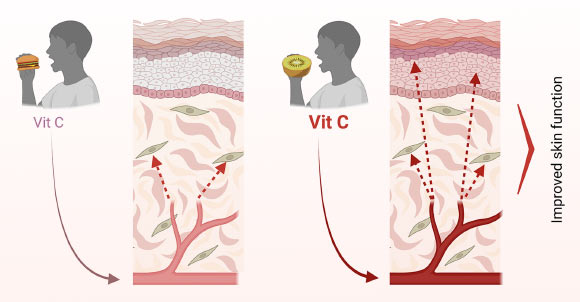
Vitamin C, long celebrated for its immune-boosting properties, has now been firmly linked to one of the most visible aspects of human health: our skin. According to a recent study, collagen production and skin renewal are directly influenced by the amount of vitamin C we consume. This finding underscores the essential role of diet in maintaining youthful, healthy skin, and offers practical insights for skincare routines and overall wellness.
Researchers say that understanding this connection is vital, as collagen is not only critical for skin health but also for the structural integrity of bones, joints, and connective tissue throughout the body.
The Science of Collagen
Collagen is the most abundant protein in the human body, providing structure, strength, and elasticity to skin, tendons, ligaments, and bones. In the skin, collagen forms a network of fibers that support skin firmness and prevent sagging, wrinkles, and other signs of aging.
Collagen synthesis is a complex process that requires specific amino acids, enzymes, and micronutrients. Vitamin C, also known as ascorbic acid, is a crucial cofactor in the enzymatic reactions that stabilize and cross-link collagen fibers. Without adequate vitamin C, collagen formation is incomplete, resulting in weaker, less resilient tissue.
Vitamin C: More Than Just an Antioxidant
Vitamin C is widely known for its antioxidant properties, helping neutralize free radicals that cause oxidative stress and cellular damage. However, its role in collagen production is distinct and essential. The vitamin facilitates the hydroxylation of proline and lysine, amino acids necessary for the formation of stable collagen triple helices. This structural stability is critical for both skin health and overall connective tissue strength.
The recent study demonstrates that insufficient vitamin C intake directly impairs collagen synthesis, leading to slower skin renewal, reduced elasticity, and increased vulnerability to damage from UV exposure and environmental pollutants.
The Study: Design and Findings
The research, conducted by a team of dermatologists and nutritional scientists, involved a controlled dietary intervention. Participants were divided into groups receiving different levels of vitamin C intake, ranging from below the recommended daily allowance (RDA) to significantly above it. Skin biopsies, blood tests, and imaging technologies were used to measure collagen density, fiber structure, and skin renewal rates.
Key findings include:
-
Collagen production increased proportionally with vitamin C intake up to a certain threshold.
-
Skin renewal, measured through cellular turnover markers, was significantly faster in participants with adequate vitamin C consumption.
-
Participants with vitamin C deficiency exhibited thinner, weaker collagen networks and slower regeneration.
-
No adverse effects were observed in individuals consuming moderately higher-than-RDA vitamin C, though benefits plateaued beyond a certain intake level.
These results confirm a direct, dose-dependent relationship between vitamin C intake and collagen formation, highlighting the nutrient’s essential role in skin health.
Implications for Skin Health and Aging
The study’s findings have profound implications for anti-aging strategies and dermatology. As humans age, natural collagen production declines, leading to wrinkles, sagging, and slower wound healing. Ensuring sufficient vitamin C intake may slow these age-related changes by supporting ongoing collagen synthesis.
Additionally, individuals exposed to high levels of UV radiation or environmental pollutants may benefit from increased vitamin C, as it enhances both antioxidant defense and collagen repair. This dual function makes vitamin C a cornerstone nutrient for maintaining skin resilience and appearance over time.
Dietary Sources of Vitamin C
Vitamin C is water-soluble and cannot be stored in the body for long periods, so regular consumption is necessary. Rich dietary sources include:
-
Citrus fruits: Oranges, lemons, grapefruits
-
Berries: Strawberries, blueberries, blackberries
-
Tropical fruits: Kiwi, mango, pineapple
-
Vegetables: Bell peppers, broccoli, Brussels sprouts, spinach
-
Other sources: Tomatoes, cabbage, cauliflower
Incorporating a variety of these foods ensures sufficient intake and provides additional phytonutrients that support overall skin health.
Recommended Intake and Supplementation
The Recommended Dietary Allowance (RDA) for adults is 75 mg/day for women and 90 mg/day for men, though some experts suggest higher amounts may enhance collagen synthesis, particularly for individuals with high oxidative stress or skin aging concerns.
Vitamin C supplements are available in various forms, including tablets, powders, and liposomal preparations, which may improve absorption. However, experts recommend prioritizing dietary sources first, as whole foods provide synergistic nutrients that support skin health beyond vitamin C alone.
Topical Vitamin C: Complementing Oral Intake
In addition to dietary consumption, topical vitamin C has gained popularity in dermatology. Applied directly to the skin, it can:
-
Promote local collagen synthesis
-
Reduce hyperpigmentation
-
Protect against UV-induced oxidative damage
-
Improve skin texture and brightness
Topical vitamin C, especially in stabilized forms, complements oral intake by targeting specific areas and enhancing overall skin quality.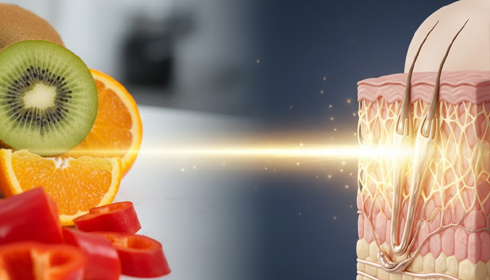
Mechanisms of Skin Renewal
Skin renewal, or epidermal turnover, is a continuous process in which old cells are shed and replaced by new ones. Collagen plays a critical role in this cycle by providing structural support to the dermis, maintaining elasticity, and facilitating proper cell migration.
Vitamin C enhances this process in multiple ways:
-
Supporting fibroblast function, the cells responsible for collagen production
-
Protecting cells from oxidative stress
-
Improving vascular function, which delivers nutrients and oxygen to the skin
By promoting these mechanisms, adequate vitamin C intake ensures faster, more efficient skin renewal.
Clinical Applications and Skincare Strategies
The study’s findings have practical applications in both clinical dermatology and everyday skincare routines:
-
Anti-aging treatments: Encouraging patients to consume sufficient vitamin C can improve skin resilience and support cosmetic procedures.
-
Wound healing: Vitamin C supplementation may accelerate recovery from cuts, burns, and surgical procedures.
-
Cosmetic formulations: Incorporating vitamin C in serums, creams, and masks provides localized benefits and enhances skin appearance.
Combining oral and topical vitamin C may maximize collagen synthesis and skin renewal, offering a comprehensive approach to skin health.
Read Also: Keep your face towards the sunshine and shadows will fall behind you
Broader Health Implications
Collagen is not limited to the skin; it is critical for bones, cartilage, tendons, and blood vessels. Vitamin C deficiency can lead to scurvy, characterized by weak connective tissue, slow wound healing, and joint pain. Ensuring adequate vitamin C intake supports overall structural health, reducing the risk of injury and age-related degeneration.
Furthermore, the antioxidant properties of vitamin C contribute to cardiovascular health, immune function, and protection against chronic diseases, highlighting the nutrient’s systemic importance.
Lifestyle Factors and Synergistic Nutrients
Vitamin C works synergistically with other nutrients to support collagen and skin health:
-
Protein: Provides amino acids like proline and lysine essential for collagen formation.
-
Copper and zinc: Cofactors for enzymes involved in collagen cross-linking.
-
Vitamin A and E: Enhance antioxidant protection and tissue repair.
-
Hydration and sleep: Critical for cellular repair and nutrient delivery to the skin.
A balanced lifestyle, combined with adequate vitamin C, ensures optimal skin regeneration and overall health.
Practical Recommendations
Based on the study and existing research, experts suggest the following for maintaining healthy collagen and skin renewal:
-
Consume a variety of vitamin C-rich fruits and vegetables daily.
-
Consider supplementation if dietary intake is insufficient, especially in aging individuals or those under oxidative stress.
-
Incorporate topical vitamin C for targeted skin benefits.
-
Maintain a protein-rich diet to provide the amino acids necessary for collagen synthesis.
-
Protect skin from UV damage and environmental pollutants to reduce collagen degradation.
These strategies provide a holistic approach to supporting skin health from both the inside and outside.
Future Research Directions
While this study establishes a clear link between vitamin C and collagen production, researchers plan to explore:
-
The optimal dosage for maximum skin benefits without adverse effects
-
Long-term effects of combined oral and topical vitamin C
-
Interactions with other micronutrients and lifestyle factors
-
Genetic variations that may affect individual collagen synthesis and vitamin C requirements
Continued research will refine recommendations and enhance personalized approaches to skin health.
Conclusion: Vitamin C as a Cornerstone of Skin Health
The study confirms that collagen production and skin renewal are directly responsive to vitamin C intake. Adequate consumption of this essential nutrient supports not only the visible aspects of skin health but also the integrity of connective tissue throughout the body.
By emphasizing vitamin C-rich foods, considering supplementation when necessary, and combining with topical applications, individuals can maintain stronger, more resilient skin while supporting overall structural health. This research reinforces the timeless advice: diet matters—and when it comes to youthful, healthy skin, vitamin C is indispensable.
Watch Also: https://www.youtube.com/@TravelsofTheWorld24















Leave a Reply