
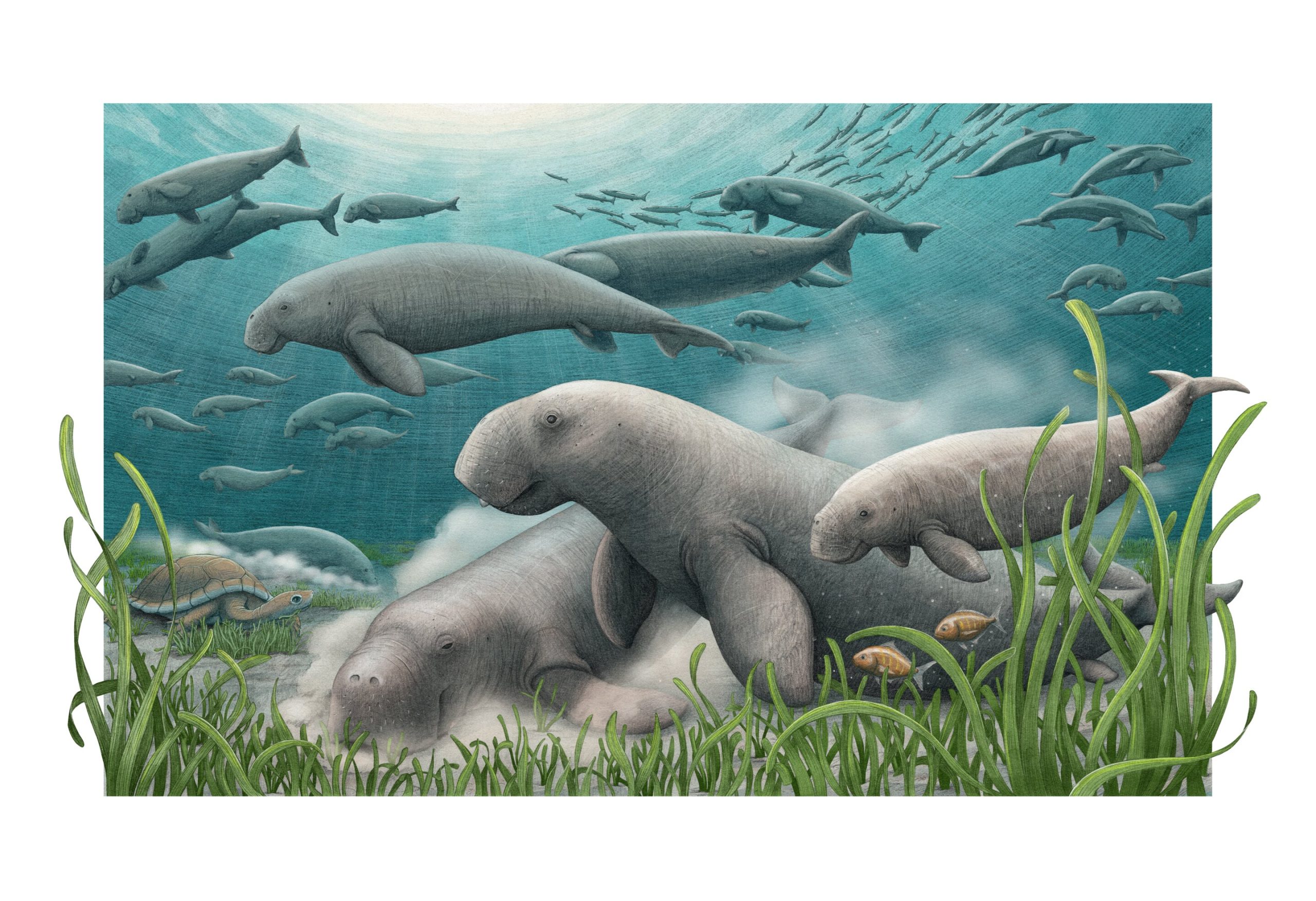
New research indicates that sea cow communities, distant relatives of modern dugongs and manatees, have played a critical role in shaping the seagrass ecosystems of the Arabian Gulf for over 20 million years. These gentle marine herbivores are not only grazers but also ecosystem engineers, profoundly influencing the structure, diversity, and resilience of seagrass meadows. The discovery sheds light on the deep evolutionary history of marine ecosystems in the Gulf and highlights the intricate relationship between megafauna and their habitats.
Scientists say that understanding the long-term impact of sea cows provides crucial insight into both the past and the future of marine ecosystem management, particularly as human activity continues to threaten these fragile environments.
The Significance of Sea Cows in Marine Ecosystems
Sea cows, members of the order Sirenia, are large, slow-moving marine mammals that primarily feed on seagrass. Modern dugongs (Dugong dugon) inhabit parts of the Indian Ocean and Western Pacific, while manatees are found in the Atlantic. Fossil evidence shows that their ancestors were widespread, including in the Arabian Gulf region.
These herbivores are more than simple grazers. By feeding on seagrass, they control plant density, prevent overgrowth, and facilitate nutrient cycling. Their movement stirs sediments, which can help oxygenate the seabed and support a variety of invertebrates and fish. In essence, sea cows shape the very structure and function of their ecosystems—a role ecologists term “ecosystem engineering.”
Fossil Evidence from the Arabian Gulf
Paleontologists have unearthed fossils of ancient sea cow species in sediment layers dated to the Miocene epoch, roughly 20 to 25 million years ago. These fossils include skeletal remains, teeth, and traces of feeding behavior, such as scraped seagrass surfaces preserved in the sediment.
Analysis of these fossils indicates that sea cows in the Arabian Gulf region have maintained consistent feeding behaviors over millions of years. Their presence coincides with the expansion and diversification of seagrass meadows, suggesting a long-term relationship between herbivore activity and plant ecosystem dynamics.
How Sea Cows Shape Seagrass Ecosystems
Sea cows influence seagrass ecosystems through several mechanisms:
-
Grazing: By feeding selectively on certain species, they promote plant diversity and prevent any single species from dominating.
-
Sediment Aeration: Movement across the seabed stirs sediments, improving water flow and oxygen availability for seagrass roots.
-
Nutrient Cycling: Their waste products enrich sediments with nutrients, supporting further plant growth.
-
Habitat Creation: Grazing patterns create microhabitats for fish, invertebrates, and other marine species.
These activities demonstrate that sea cows are keystone species—their presence disproportionately affects the structure and health of the ecosystem.
Evidence from Modern Dugongs
Modern dugongs offer a living example of these ecosystem engineering effects. In areas where dugong populations are healthy, seagrass meadows tend to be more diverse, productive, and resilient to environmental stress. Conversely, overgrazed or depopulated areas can experience decline in seagrass quality, sediment compaction, and reduced biodiversity.
By studying the relationship between dugongs and seagrass today, scientists can infer the long-term historical impact of their ancient relatives in the Arabian Gulf.
Long-Term Ecological Engineering
The continuous presence of sea cows in the Arabian Gulf for over 20 million years has likely shaped the region’s marine ecosystems in profound ways. Fossil and sediment analyses indicate that ancient sea cow communities maintained open, patchy seagrass landscapes that allowed light penetration, water flow, and biodiversity.
This long-term ecological engineering created a stable and resilient system capable of supporting diverse marine life, including fish, crustaceans, and mollusks, over geological timescales.
Climate and Environmental Adaptation
During the Miocene and subsequent epochs, the Arabian Gulf underwent significant climatic and geological changes, including fluctuations in sea level, temperature shifts, and sediment deposition. Sea cows appear to have adapted to these changes while continuing to influence seagrass ecosystems.
Their grazing behavior may have helped seagrass meadows recover from environmental disturbances, such as storms or changes in salinity, demonstrating the importance of megafauna in maintaining ecosystem resilience over millions of years.
Co-Evolution of Sea Cows and Seagrasses
Scientists suggest that the relationship between sea cows and seagrasses is a form of co-evolution. Seagrass species have evolved traits that make them more resilient to grazing, such as rapid growth, nutrient storage in rhizomes, and tolerance to sediment disturbance.
In turn, sea cows have evolved specialized feeding adaptations, including muscular lips and molars suited for shearing tough seagrass blades. This mutual adaptation underscores the deep evolutionary interdependence of marine herbivores and their habitats.
Implications for Modern Conservation
Today, the Arabian Gulf faces significant ecological pressures, including coastal development, pollution, climate change, and overfishing. Dugongs and other marine megafauna are also threatened, leading to concerns about the long-term health of seagrass ecosystems.
Understanding that sea cows have shaped these ecosystems for millions of years highlights the importance of protecting them. Conservation strategies that preserve both the animals and their habitats are essential to maintain biodiversity, ecosystem function, and resilience.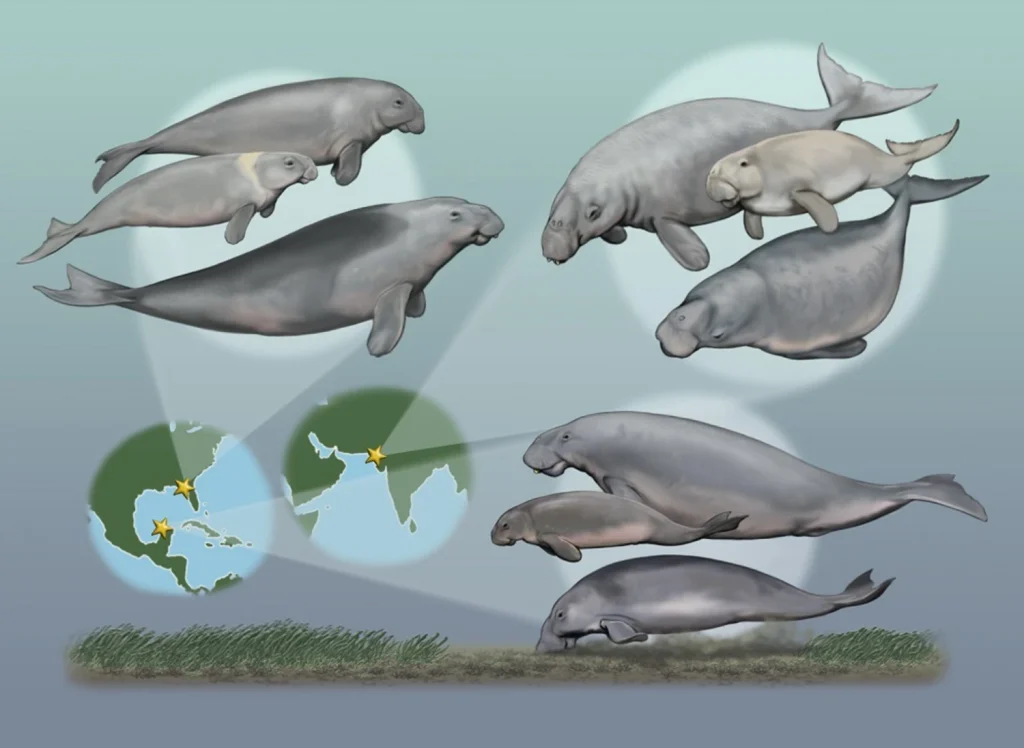
Human Impact on Seagrass and Sea Cow Populations
Historical and modern human activities have had profound effects on seagrass and sea cow populations:
-
Coastal development: Leads to habitat loss and fragmentation.
-
Pollution: Nutrient loading and chemical contamination can reduce seagrass growth.
-
Boat traffic: Physical damage to seagrass meadows and disturbance to marine mammals.
-
Hunting: Historically, dugongs were hunted for meat and oil, reducing population numbers.
These factors disrupt the long-term balance maintained by sea cows, threatening both the species and the ecosystems they engineer.
The Role of Scientific Research
Ongoing research combines paleontology, ecology, and marine biology to reconstruct the history of sea cow influence. Techniques include:
-
Fossil analysis: Studying ancient bones and teeth to understand diet, physiology, and behavior.
-
Sediment cores: Identifying grazing marks, nutrient deposits, and plant diversity over millions of years.
-
Modern observation: Tracking dugong feeding behavior, movement patterns, and effects on seagrass.
This multidisciplinary approach allows scientists to connect ancient ecological patterns to contemporary conservation needs.
Lessons for Ecosystem Management
The case of Arabian Gulf sea cows provides important lessons for ecosystem management:
-
Protecting keystone species: Preserving megafauna can maintain ecosystem structure and resilience.
-
Restoring seagrass habitats: Conservation efforts should consider natural grazing patterns to promote biodiversity.
-
Mitigating human impact: Sustainable coastal development and pollution control are critical to protect these ecosystems.
-
Long-term ecological perspective: Understanding millions of years of ecological engineering can guide modern conservation strategies.
By learning from deep-time ecological interactions, humans can better manage marine environments in a rapidly changing world.
Biodiversity Benefits of Sea Cow Engineering
Seagrass meadows maintained by sea cows support a variety of marine life, including:
-
Fish species that use seagrass for shelter and spawning
-
Crustaceans and mollusks feeding on plant matter or detritus
-
Microbial communities essential for nutrient cycling
-
Other marine herbivores benefiting from balanced plant growth
These biodiversity benefits demonstrate that sea cows play a crucial role in the health and productivity of marine ecosystems.
The Future of Sea Cow Populations
Conservation organizations are working to protect modern dugong populations in the Arabian Gulf and elsewhere. Key strategies include:
-
Establishing marine protected areas
-
Monitoring populations and migratory patterns
-
Reducing boat strikes and fishing-related injuries
-
Restoring degraded seagrass meadows
Protecting these species is not only important for their survival but also for maintaining the ecological functions they have performed for over 20 million years.
Conclusion: A Legacy of Ecosystem Engineering
The discovery that sea cows have engineered Arabian Gulf seagrass ecosystems for more than 20 million years highlights the profound impact of megafauna on the environment. These marine herbivores have shaped biodiversity, sediment dynamics, and habitat structure, demonstrating that animals are active agents in ecosystem formation, not just passive residents.
Understanding this deep history reinforces the need for conservation. Preserving sea cows and their habitats is essential to maintaining the ecological legacy they have sustained for millions of years, ensuring that the Arabian Gulf’s rich marine biodiversity continues to thrive.
Read Also: Keep your face towards the sunshine and shadows will fall behind you
Watch Also: https://www.youtube.com/@TravelsofTheWorld24










Leave a Reply