
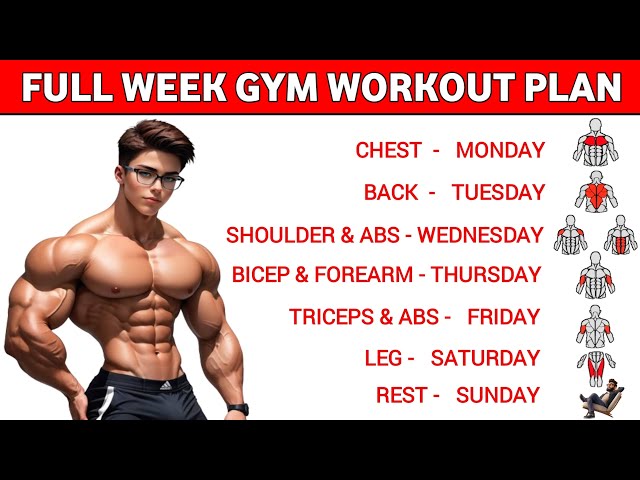
A well‑structured weekly workout plan is essential for building muscle, improving strength, and maximizing progress in the gym. Whether you’re a beginner or intermediate lifter, having a clear plan helps ensure that each major muscle group receives enough stimulus and recovery throughout the week. The 7‑day workout plan focuses primarily on muscle hypertrophy — increasing muscle size — by organizing different muscle groups on different days, balancing workout intensity, appropriate rest, and strategic training splits.
Introduction & Program Overview
This workout schedule is designed with the main goal of muscle building and follows a training split that assigns specific muscle groups to specific days. It’s suitable for beginners and intermediate gym‑goers and can be followed consistently for 8–12+ weeks for the best results. The routine includes intense strength training exercises with progressive overload, proper warm‑ups, and planned rest days to allow adequate recovery. Training sessions vary from compound lifts — which work several muscle groups at once — to isolation exercises targeting specific muscles.
Day 1 – Monday: Chest and Triceps
Focus: Chest (pectorals) and triceps (back of arms).
Goal: Stimulate the pushing muscles to build upper‑body strength and mass.
Start your week with chest exercises and triceps to take advantage of fresh energy and strength after rest. Begin your session with heavy compound lifts followed by isolation movements:
-
Barbell Flat Bench Press – This is the foundational chest exercise. It targets the pectoral muscles while also engaging the triceps and shoulders. Aim for 3–4 sets of 8–12 reps with challenging weight.
-
Barbell Incline Bench Press – By adjusting the bench to an incline, you place more emphasis on the upper chest and front deltoids. Perform 3–4 sets of 8–12 reps.
-
Barbell Decline Bench Press – This variation hits the lower chest and helps develop a full‑chest look. Do 3 sets of 8–12 reps.
-
Incline Dumbbell Flyes – A chest isolation exercise to widen the chest and improve muscle stretch. Complete 3 sets of 10–12 reps.
-
Dumbbell Pullover – This move works both the chest and the lats, helping expand the rib cage and engage the core. Do 3 sets of 10–12 reps.
-
Tricep Push‑Down (Cable) – Focus on the triceps with controlled movements. Perform 3 sets of 10–15 reps.
-
Triceps Dips – Use bodyweight or added weight to further fatigue the triceps. Aim for 3 sets of 8–12 reps.
This combination ensures that both the chest muscles and triceps are thoroughly worked at the start of the week. Rest between sets should be around 60–90 seconds for hypertrophy benefits.
Day 2 – Tuesday: Cardio & Light Rest
Focus: Active recovery with light cardio.
Goal: Improve blood flow, aid muscle recovery, and reduce soreness.
On Day 2, you won’t be targeting heavy resistance training. Instead, perform moderate‑intensity cardio such as brisk walking, cycling, or a light jog for 20–30 minutes. The purpose is to help your body recover while still keeping your metabolism active. Active recovery helps remove metabolic waste products from workouts and enhances overall recovery. If you feel overly fatigued, it’s okay to take a complete rest day.
Day 3 – Wednesday: Back and Biceps
Focus: Back muscles (lats, mid‑back, lower back) and biceps.
Goal: Build pulling strength and create upper‑body thickness.
This session emphasizes pulling movements, essential for balanced upper‑body development:
-
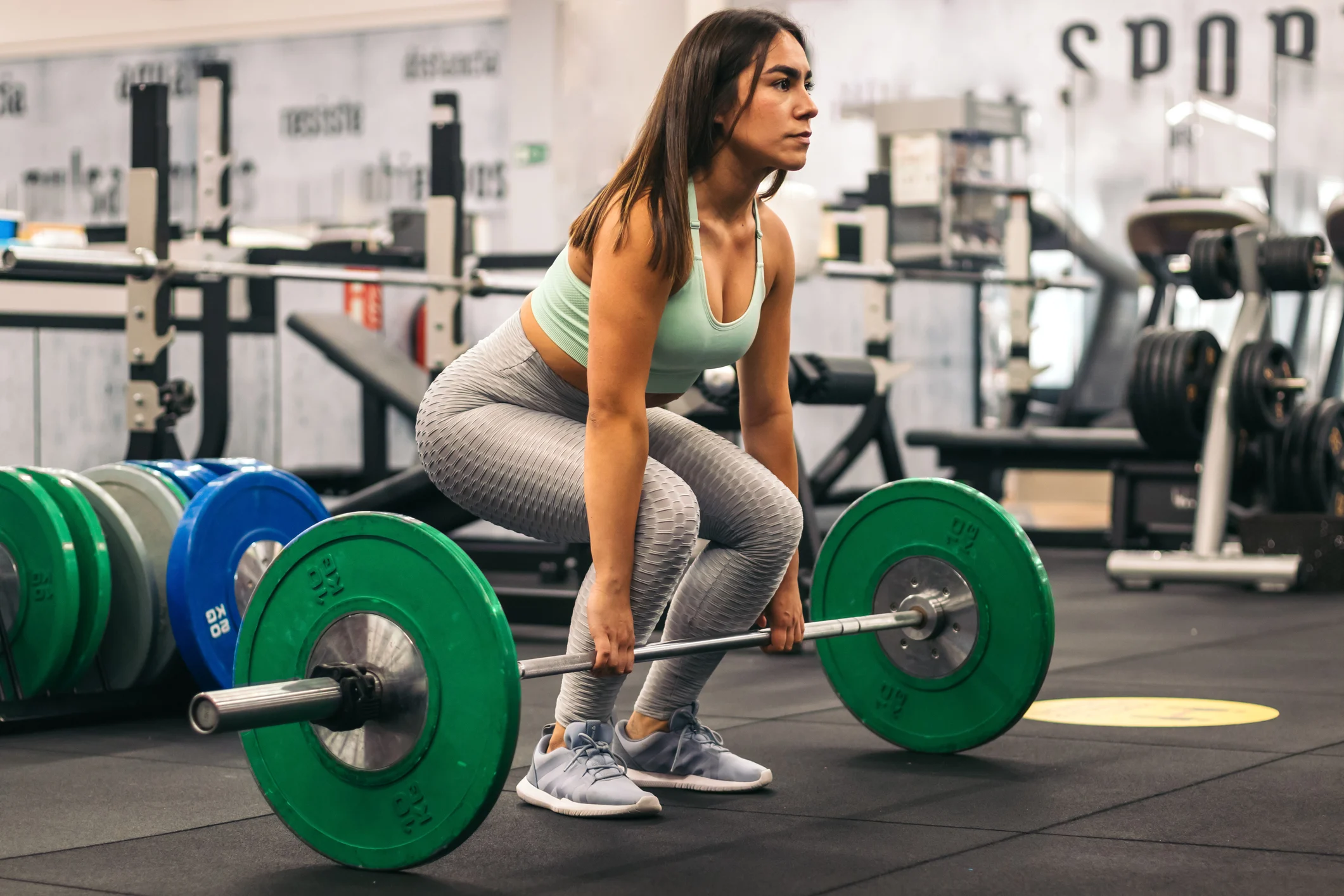
Barbell Deadlift – A full‑body compound lift that targets the entire posterior chain, especially the lower back and glutes. Perform 3 sets of 6–10 reps.
-
Lat Pull‑Down – Works the latissimus dorsi, helping create a wider back. Do 3 sets of 10–12 reps.
-
Dumbbell Row – Provides unilateral training to fix muscle imbalances. Aim for 3 sets of 10–12 reps per arm.
-
Seated Cable Row – Engages the middle back and helps enhance posture. Do 3 sets of 10–12 reps.
-
Chin‑Up or Assisted Pull‑Up – Great for both lats and biceps. Perform 3 sets of 6–10 reps or to failure.
-
Dumbbell Bicep Curl – A focused isolation move for the biceps. Do 3 sets of 10–15 reps.
-
Z‑Bar Preacher Curl – Predominantly targets the bicep peak. Aim for 3 sets of 10–12 reps.
-
Hammer Curl – Works the brachialis and forearms. Do 3 sets of 10–12 reps.
Training the back and biceps together makes sense because many pulling exercises also recruit the biceps, allowing efficient muscle use.
Day 4 – Thursday: Cardio & Rest
Focus: Similar to Day 2.
Goal: Active recovery ensuring muscles that were grown on Day 3 begin recovering properly before the next resistance training day.
Repeat moderate‑intensity cardio for around 20–30 minutes. Stretching and mobility work are also recommended. If you feel particularly sore, a full rest day is acceptable.
Day 5 – Friday: Shoulders and Forearms
Focus: Deltoids (shoulders) and forearms.
Goal: Build strong shoulders and improve grip strength.
Shoulder workouts add width and balance to the upper body:
-
Dumbbell Shoulder Press (Seated) – Primary shoulder builder. Perform 3–4 sets of 8–12 reps.
-
Dumbbell Side Raise – Targets the lateral deltoids for shoulder width. Do 3 sets of 10–15 reps.
-
Cable Front Raise – Focuses on the front deltoids. Do 3 sets of 10–12 reps.
-
Barbell Overhead Press – Heavy compound lift for overall shoulder strength. Aim for 3 sets of 8–10 reps.
-
Dumbbell Shrug – Works the trapezius muscles for upper‑back thickness. Perform 3 sets of 10–15 reps.
-
Dumbbell Wrist Curl – Isolates the forearms. Do 3 sets of 12–15 reps.
-
Dumbbell Reverse Wrist Curl – Works the extensor muscles of the forearms. Perform 3 sets of 12–15 reps.
Developing shoulder strength also improves posture and enhances performance in other lifts like bench presses and rows.
Day 6 – Saturday: Legs and Abs
Focus: Quadriceps, hamstrings, calves, and abdominal muscles.
Goal: Stimulate lower‑body muscle growth and core strength.
Leg day is critical because large muscle groups require heavier training stimulus for growth:
-
Barbell Squat – The king of leg exercises, engaging quads, glutes, and core. Do 3–5 sets of 6–12 reps.
-
Dumbbell Lunges – Works quads and glutes unilaterally. Perform 3 sets of 10 reps per leg.
-
Leg Extension – Isolates the quads. Do 3 sets of 12–15 reps.
-
Leg Curl – Targets hamstrings. Perform 3 sets of 12–15 reps.
-
Seated Calf Raise – Focuses on the calves. Aim for 3–4 sets of 15–20 reps.
-
Bicycle Crunches – Dynamic core exercise. Do 3 sets of 20–30 reps.
-
Reverse Crunches – Focused on the lower abs. Perform 3 sets of 15–20 reps.
-
Decline Sit‑Ups – Strong core builder. Do 3 sets of 12–15 reps.
Training legs promotes hormonal release and improves overall muscle balance, while focused abdominal work strengthens the core for better stability in all lifts.
Day 7 – Sunday: Full Rest
Focus: Recovery.
Goal: Let your muscles fully repair and grow.
The final day of the week should be a rest day to give your body and nervous system a complete break. Good sleep, stretching, hydration, and proper nutrition (especially protein and carbohydrates) will help optimize recovery. Without sufficient rest, muscle growth and workout performance can plateau or decline.
Conclusion & Additional Training Tips
This 7‑day gym workout plan structures your week around targeted muscle group training and strategic rest periods to maximize muscle gain. Each training day focuses on different muscle groups, ensuring you can train with intensity while allowing adequate recovery — a key factor for hypertrophy. Warm‑ups, progressive overload (increasing weight/reps over time), proper nutrition, staying hydrated, and consistent sleep are vital to make this plan effective. Additionally, if you feel overly fatigued, don’t hesitate to adjust rest days to avoid overtraining, especially as a beginner.
Read Also: Keep your face towards the sunshine and shadows will fall behind you
Watch Also: https://www.youtube.com/@TravelsofTheWorld24








Leave a Reply