

The Delhi High Court is currently examining the legal validity of the will of businessman Sunjay Kapur, amid questions regarding the absence of probate and the inaction of the appointed executor. This development has drawn significant attention in legal and business circles, as it raises important questions about the administration of estates, testamentary rights, and the legal responsibilities of executors in India.
Sunjay Kapur, a well-known industrialist, passed away recently, leaving behind a will that names certain beneficiaries and appoints an executor to oversee the distribution of his assets. However, legal complications have arisen because probate—the formal recognition of the will by the court—has not yet been obtained. Additionally, reports indicate that the executor has not initiated any steps to execute the will, leading to disputes among family members and potential beneficiaries.
The case came before the Delhi High Court after parties involved sought clarification on the enforceability of Kapur’s will. Typically, under Indian succession law, a will can be considered valid even before probate is granted, provided it meets the statutory requirements. However, probate serves as a legal confirmation, allowing executors to administer the estate without interference. The absence of probate, combined with the executor’s inaction, has complicated matters, prompting the court to review the circumstances in detail.
Legal experts explain that the executor has a fiduciary duty to ensure that the deceased’s wishes, as expressed in the will, are carried out efficiently and fairly. Executors are expected to obtain probate, manage the deceased’s assets, pay debts and taxes, and distribute the remaining estate according to the will. Failure to act can lead to legal consequences, including potential removal of the executor by the court or personal liability for any resulting losses or delays.
In this case, family members have reportedly raised concerns that the delay in probate and lack of executor action is preventing beneficiaries from accessing their rightful inheritance. The dispute has also highlighted broader issues in estate management in India, where delays in probate or disagreements over executor responsibilities often result in protracted legal battles. Such cases underscore the importance of clear legal guidance, timely action by executors, and judicial oversight to ensure that the decedent’s intentions are respected.
The Delhi High Court has sought detailed submissions from all parties involved, including the executor, family members, and legal representatives. The bench is examining whether the will meets all legal requirements under the Indian Succession Act, including proper drafting, signatures, witnesses, and compliance with statutory formalities. Any deficiencies could impact the enforceability of the will, making the court’s scrutiny crucial for establishing a clear legal precedent.

Sunjay Kapur’s will reportedly includes instructions regarding the distribution of significant business and personal assets. These assets may include shares in private companies, real estate holdings, bank accounts, and other financial investments. The complexity of Kapur’s estate, coupled with the absence of executor action, has raised concerns that the estate could depreciate in value or be subject to disputes if not promptly administered. Courts typically prioritize efficient resolution in such cases to protect the interests of beneficiaries and maintain the integrity of estate management processes.
The executor, whose identity has been confirmed in court filings, has reportedly cited procedural delays and ongoing legal consultations as reasons for not initiating probate or administering the estate. Legal analysts note that while certain delays can be understandable, prolonged inaction may be challenged in court, especially if beneficiaries demonstrate that the estate’s administration is being compromised. Courts in India have, in previous cases, exercised authority to appoint alternative executors or enforce action when the appointed executor fails to fulfill their duties.
This case also underscores the distinction between the validity of a will and the formal recognition of probate. According to Indian law, a will is considered legally binding if it is executed properly and meets statutory requirements. Probate, however, is a separate legal process that provides public recognition and enforceability. Executors are generally required to obtain probate to facilitate smooth administration, especially for properties registered in the deceased’s name or for assets that may involve third-party claims. In the absence of probate, disputes and uncertainties often arise, as seen in the Kapur case.
Legal experts suggest that the Delhi High Court’s examination of this case could have broader implications for estate management in India. The court’s decision may clarify the responsibilities of executors, the timeline for obtaining probate, and the rights of beneficiaries in situations where executors delay action. It may also influence how wills are drafted and administered in high-value estates, reinforcing the need for clarity and compliance with statutory formalities.
The case has attracted attention not only for its legal implications but also because of Sunjay Kapur’s prominence in business circles. Kapur was involved in multiple ventures and had accumulated considerable wealth over his career. The management and distribution of such assets require careful legal oversight, which the court’s intervention aims to ensure. For many observers, the case highlights the critical intersection of business interests, family expectations, and legal obligations in estate administration.
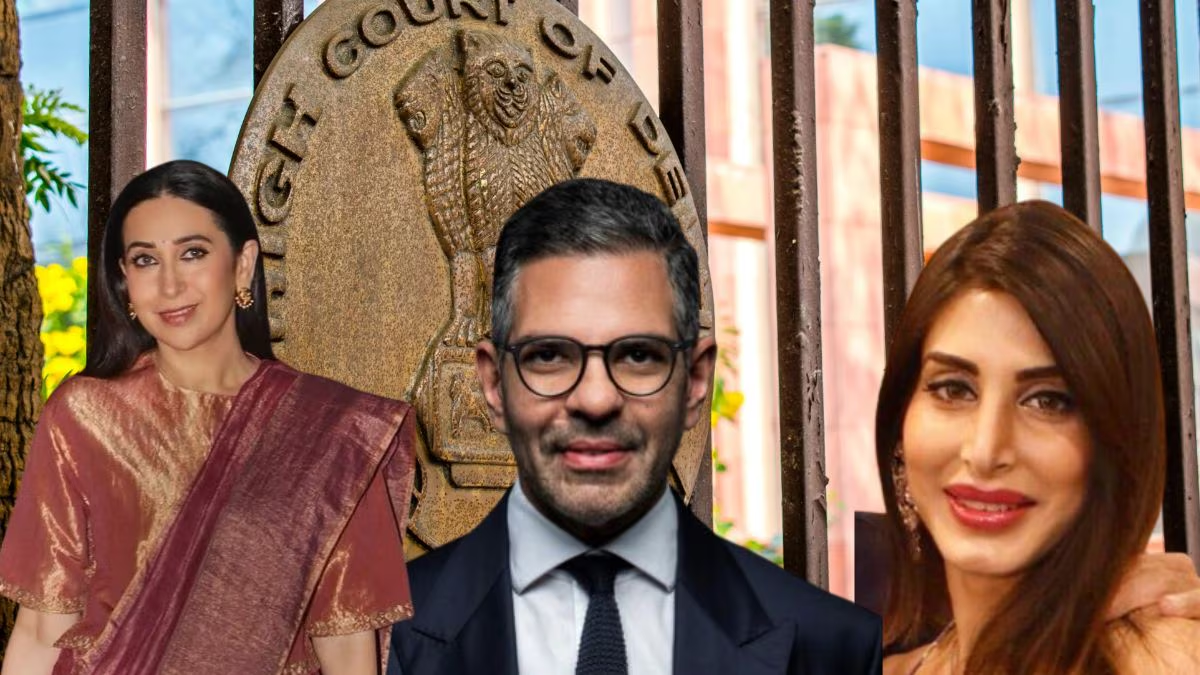
In response to the court proceedings, beneficiaries have expressed hope that the High Court will provide clear directives regarding the administration of the estate. Their legal representatives have emphasized the need for timely action, both to honor Kapur’s wishes and to prevent potential disputes or devaluation of assets. The court is expected to weigh these considerations carefully, balancing the executor’s responsibilities with the rights of the beneficiaries and the legal requirements for probate.
Experts note that similar cases in India have sometimes resulted in prolonged litigation, particularly when high-value estates are involved. However, the Delhi High Court’s proactive approach in examining the validity of the will and the executor’s inaction suggests a judicial intent to resolve matters efficiently. The court may provide interim directions to facilitate estate administration while determining the legal validity and enforceability of the will.
The outcome of this case may also influence estate planning practices in India. Legal advisors often recommend that individuals ensure that their wills are clear, properly witnessed, and accompanied by detailed instructions for executors to avoid delays or disputes. Executors, in turn, are advised to act promptly, seek necessary probate, and maintain transparency with beneficiaries. The Sunjay Kapur case serves as a reminder of the importance of adhering to these practices, particularly for high-value estates.
As the Delhi High Court continues to examine the matter, parties involved are expected to submit additional documentation, including the original will, financial statements, and correspondence regarding executor actions. The court’s scrutiny will focus on ensuring that the decedent’s intentions are honored, that legal formalities are observed, and that beneficiaries receive their entitlements in a timely manner. The proceedings are being closely monitored by legal experts, media, and stakeholders interested in the evolving jurisprudence of estate administration in India.
In conclusion, the examination of Sunjay Kapur’s will by the Delhi High Court highlights several critical aspects of estate law in India, including the validity of wills, the necessity of probate, and the responsibilities of executors. The case underscores the importance of timely action by executors, adherence to statutory requirements, and judicial oversight to resolve disputes and ensure fair distribution of assets. As the proceedings unfold, the court’s decisions may set important precedents for future cases, offering clarity on the interplay between testamentary wishes, legal formalities, and executor duties.
The case also serves as a cautionary tale for families and executors, emphasizing the need for careful estate planning, clear communication, and proactive administration. For Sunjay Kapur’s beneficiaries, the court’s intervention may finally pave the way for the resolution of the estate and the realization of the decedent’s intentions. Observers and legal professionals will be closely watching the Delhi High Court’s rulings, as they are likely to have lasting implications for how wills and estates are managed in India, particularly in cases where probate and executor action are delayed or disputed.
Read Also: Keep your face towards the sunshine and shadows will fall behind you
Watch Also: https://www.youtube.com/@TravelsofTheWorld24















Leave a Reply