

For centuries, humans have gazed at the night sky and wondered whether we are truly alone in the universe. The idea of extraterrestrial life has captivated the imagination of scientists, philosophers, and storytellers alike. With billions of stars in the Milky Way alone and countless galaxies beyond, the question remains: are aliens out there? Modern science is closer than ever to exploring this mystery, blending astronomy, biology, and technology to search for signs of life beyond Earth.
The Vastness of the Universe
One of the strongest arguments for the existence of aliens is the sheer scale of the cosmos.
-
Billions of Stars and Planets: Astronomers estimate that the Milky Way contains over 100 billion stars, many with their own planetary systems. The discovery of thousands of exoplanets — planets orbiting stars outside our solar system — increases the likelihood that some of them host life.
-
Potentially Habitable Worlds: Planets in the “habitable zone,” where conditions allow for liquid water, are prime candidates for life. Water is a critical ingredient for life as we know it, making these planets especially intriguing.
-
Galactic Diversity: Beyond the Milky Way, there are billions of galaxies, each with billions of stars. The statistical probability that life exists somewhere else in the universe seems compelling.
The universe’s enormity suggests that while intelligent life may be rare, microbial life could be widespread.
Scientific Searches for Life
Scientists are actively searching for signs of extraterrestrial life through multiple approaches:
-
SETI (Search for Extraterrestrial Intelligence)
-
SETI programs scan the skies for radio signals or other communications that might indicate intelligent civilizations.
-
While no definitive signals have been detected yet, the search continues with ever-improving technology.
-
-
Astrobiology
-
Astrobiologists study extreme environments on Earth — from deep-sea vents to acidic lakes — to understand where life might exist elsewhere.
-
Insights from these studies guide missions to Mars, Europa, and Enceladus, moons that may harbor microbial life beneath their surfaces.
-
-
Exoplanet Research
-
Telescopes like Kepler and TESS have identified thousands of planets, some of which may have atmospheres suitable for life.
-
Spectroscopic analysis allows scientists to detect gases like oxygen or methane, which could hint at biological activity.
-
-
Mars Missions
-
Rovers and orbiters have found evidence of ancient water on Mars, increasing the possibility that life once existed there.
-
Future missions aim to bring samples back to Earth for detailed analysis.
-
The Fermi Paradox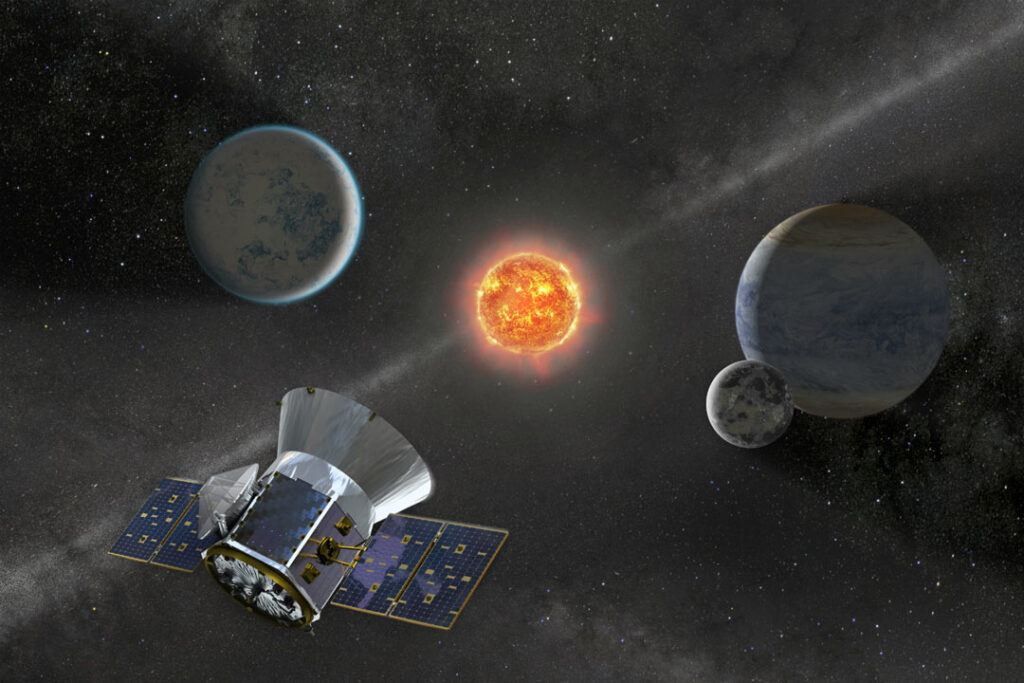
Despite the likelihood of extraterrestrial life, we have no confirmed evidence. This discrepancy is known as the Fermi Paradox:
-
If aliens are common, where is everyone?
-
Possible explanations include:
-
Intelligent life is exceedingly rare.
-
Civilizations self-destruct before developing interstellar communication.
-
Aliens intentionally avoid contact (the “zoo hypothesis”).
-
We are not yet technologically capable of detecting them.
-
The Fermi Paradox reminds us that the absence of evidence is not evidence of absence, but it also challenges assumptions about the abundance of intelligent life.
Could Aliens Be Different From Us?
Our imagination often depicts aliens as humanoid beings, but reality may differ dramatically:
-
Alternative Biochemistry: Life could exist without carbon or water, making it difficult for us to recognize.
-
Different Physical Forms: Aliens may have evolved under entirely different environmental pressures, resulting in forms we cannot easily conceive.
-
Non-Physical Life: Some theorists speculate about life based on energy or consciousness, rather than matter, existing in ways beyond our current understanding.
Understanding these possibilities broadens the scope of what “alien life” might mean.
Evidence and Sightings
Over the years, numerous reports have claimed encounters with extraterrestrial life:
-
UFO Sightings: Unidentified flying objects, or UAPs, have been reported worldwide. While many can be explained by natural or human-made phenomena, a small percentage remain unexplained.
-
Ancient Artifacts and Legends: Some interpretations of ancient structures, cave paintings, or myths suggest early human contact with unknown beings. However, these claims are often speculative.
-
Scientific Scrutiny: No verified evidence of alien contact has been confirmed, and extraordinary claims require rigorous verification.
While tantalizing, anecdotal sightings cannot yet confirm the existence of aliens.
Why Finding Aliens Matters
Discovering extraterrestrial life would be one of humanity’s most profound achievements:
-
Scientific Breakthroughs
-
Even microbial life elsewhere would revolutionize biology, chemistry, and our understanding of evolution.
-
-
Philosophical Implications
-
The existence of aliens would reshape our perception of life’s uniqueness and our place in the universe.
-
-
Technological Insights
-
Intelligent life might possess advanced technologies that could inspire human innovation.
-
-
Cultural Impact
-
Religions, philosophies, and societies would need to re-evaluate long-held beliefs about humanity and the cosmos.
-
Finding aliens would not only answer a scientific question but also fundamentally change human culture and thought.
Challenges in the Search
Despite advances, detecting extraterrestrial life remains difficult:
-
Distance and Time: Planets with life may be light-years away, making direct observation challenging.
-
Technological Limitations: Current instruments are limited in sensitivity and scope.
-
Communication Barriers: Even if intelligent aliens exist, messages may be encoded in ways we cannot decipher.
-
Life’s Diversity: Life may exist in forms we cannot recognize with Earth-based criteria.
These challenges underscore the need for patience, ingenuity, and continued exploration.
The Future of Alien Exploration
The coming decades promise exciting opportunities:
-
Next-Generation Telescopes: Instruments like the James Webb Space Telescope can detect atmospheric signs of life on distant exoplanets.
-
Interplanetary Missions: Sample-return missions from Mars, Europa, or asteroids may yield groundbreaking discoveries.
-
AI and Data Analysis: Artificial intelligence can process vast amounts of astronomical data to identify unusual signals.
-
International Collaboration: Global scientific cooperation increases the chances of discovery and verification.
As technology improves, our ability to answer the question of alien life will grow exponentially.
Conclusion
Are aliens out there? While we have no definitive proof yet, the vastness of the universe, the number of potentially habitable planets, and the adaptability of life on Earth make it plausible. From microbial organisms on distant moons to intelligent civilizations across galaxies, the possibilities are endless.
Scientific exploration, rigorous observation, and open-minded inquiry are our best tools for understanding the cosmos. Whether life exists as microbes, complex beings, or civilizations beyond imagination, the search for extraterrestrial life continues to inspire wonder, curiosity, and discovery.
In the end, the question itself drives humanity forward, pushing us to explore, innovate, and contemplate our place in an ever-expanding universe. The universe may be silent now, but the search is far from over — and one day, we may finally discover that we are not alone.
Read Also: The Race to 300 mph: Will Hennessey or Koenigsegg Break the Speed Record in 2025?
Watch Also: https://www.youtube.com/@TravelsofTheWorld24













Leave a Reply