
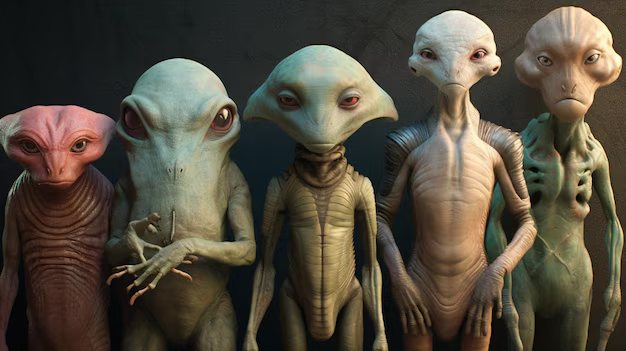
The universe is vast, with billions of galaxies, stars, and planets. While humanity has yet to confirm intelligent life beyond Earth, digital artists, concept designers, and illustrators have long imagined the incredible diversity that extraterrestrial life could exhibit. One striking way this imagination manifests is through a lineup of diverse aliens, each with unique anatomy, physiology, and cultural hints. These illustrations, often shared on platforms like ArtStation, DeviantArt, and social media, blend science, creativity, and storytelling to depict what life beyond Earth might look like.
The Concept: Imagining Alien Diversity
Unlike humans, aliens can theoretically evolve under drastically different environmental pressures. Factors such as gravity, atmospheric composition, radiation levels, and planetary terrain would shape their morphology and abilities. The concept of a lineup of diverse aliens allows artists to explore:
-
Physiological Variety
-
Multi-limbed species adapted for climbing, flying, or swimming.
-
Variations in sensory organs — multiple eyes, echolocation systems, or heat-sensitive receptors.
-
Different respiratory and circulatory systems suited to alternative atmospheres.
-
-
Cultural and Social Indicators
-
Body markings, luminescence, or exoskeleton patterns suggesting social hierarchy or communication methods.
-
Clothing or bio-armor reflecting technological advancement or environmental needs.
-
-
Scale and Form
-
Giants towering over humans or microscopic intelligent species.
-
Bipedal, quadrupedal, amorphous, or even modular forms capable of detaching or reforming parts.
-
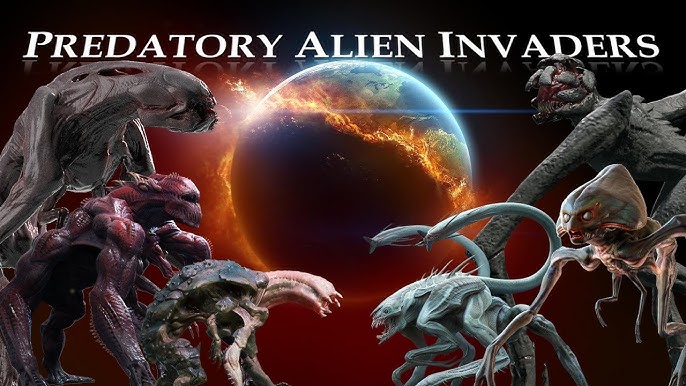
A lineup illustration often places multiple species side by side, enabling viewers to compare and appreciate the diversity of imagined life forms.
Artistic Techniques in Alien Lineups
Creating a visually compelling alien lineup involves several key techniques:
-
3D Modeling and Rendering
-
Artists use 3D software such as Blender, ZBrush, or Maya to sculpt detailed alien anatomy.
-
Lighting and shading create realistic skin textures, reflective exoskeletons, or translucent membranes.
-
-
Color and Texture
-
Unique color palettes convey ecological adaptations, like camouflage, warning signals, or mating displays.
-
Textures suggest evolutionary traits: scales, feathers, bioluminescent surfaces, or leathery hide.
-
-
Posing and Composition
-
Each alien is posed to emphasize its abilities or character traits — wings spread, limbs extended, or sensory organs alert.
-
A consistent baseline or reference object (like a human silhouette) provides scale and context.
-
-
Lighting and Effects
-
Backlighting highlights silhouettes and contours.
-
Atmospheric effects such as mist, dust, or holographic environments add realism and narrative depth.
-
These techniques combine to create a lineup that is both scientifically inspired and artistically engaging.
Science-Inspired Alien Designs
While these aliens are imaginary, many draw on scientific principles and speculation:
-
Gravity and Locomotion
-
Heavier gravity favors compact, robust bodies; low-gravity planets allow taller, elongated forms.
-
Limb number and placement evolve to optimize movement and stability.
-
-
Atmosphere and Respiration
-
Thin atmospheres might favor large lungs or gas-exchange membranes.
-
Toxic atmospheres could lead to armored exoskeletons or internalized respiratory systems.
-
-
Sensory Adaptations
-
Eyes adapted to different wavelengths: infrared, ultraviolet, or polarized light.
-
Echolocation, electromagnetic sensing, or chemical detection systems.
-
-
Environmental Camouflage and Defense
-
Skin patterns and color adaptations reflect natural habitat.
-
Defensive structures, such as spikes or chemical sprays, could indicate predator-prey dynamics.
-
Artists often integrate these plausible scientific elements into their designs, lending realism to imaginative creations.
Cultural and Storytelling Elements
Alien lineups are more than biological showcases; they hint at culture, intelligence, and society:
-
Social Hierarchy
-
Body markings or ornaments may indicate rank, age, or role within a society.
-
-
Technology and Clothing
-
Bio-suits, helmets, or armor imply interaction with environments that are hostile or unfamiliar.
-
Devices integrated into physiology, like energy emitters or communication modules, suggest advanced civilization.
-
-
Inter-Species Interaction
-
Placement within the lineup can imply alliances, conflict, or cooperative behavior.
-
Gestures, facial expressions, and posture communicate intent or personality.
-
This integration of cultural cues makes the lineup feel alive, not just a biological catalog.
Photography and Image Composition
Even though many alien lineups are digital illustrations, photography-inspired techniques play a critical role in their impact:
-
Framing: Wide-angle views capture all species while highlighting individual uniqueness.
-
Depth of Field: Blurring background or foreground elements directs attention to key features.
-
Lighting: Mimicking natural or studio light creates realism; rim lighting emphasizes silhouettes.
-
Color Grading: Cohesive palettes unify the lineup while allowing species-specific highlights.
By treating digital illustrations like photographic compositions, artists achieve a sense of tangibility and immersion.
Popular Examples and Platforms
-
ArtStation
-
Known for professional-grade concept art, ArtStation hosts hundreds of alien lineups, each with unique style and scientific grounding.
-
-
DeviantArt and Behance
-
These platforms showcase experimental and narrative-driven lineups, often combining multiple species in imaginative ecosystems.
-
-
Social Media
-
Instagram, Twitter, and Reddit communities allow for rapid sharing of alien designs, inviting discussion and fan engagement.
-
These platforms foster a global community of creators and enthusiasts, making alien lineups a cultural phenomenon as well as an artistic exploration.
Implications for Science and Education
Alien lineups, while fictional, offer educational value:
-
Astrobiology Awareness: Introduces principles of evolution, adaptation, and environmental pressures.
-
Scientific Creativity: Encourages thinking about life in different physical and chemical conditions.
-
STEM Engagement: Inspires interest in biology, physics, planetary science, and computer graphics.
By visualizing diverse possibilities, these illustrations help bridge scientific understanding and creative imagination.
The Psychology of Imagining Aliens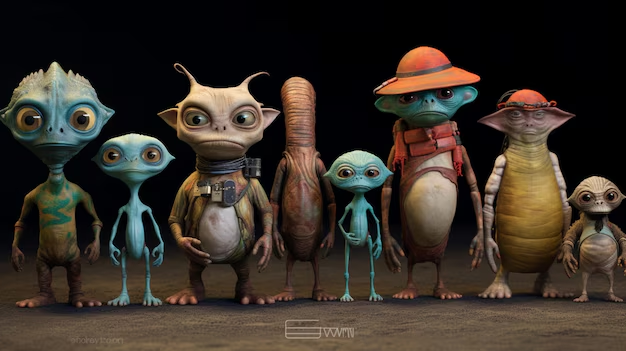
Why are humans fascinated by alien diversity? Several psychological factors are at play:
-
Curiosity About the Unknown
-
Aliens represent unexplored potential — a blank canvas for imagination and speculation.
-
-
Reflection of Humanity
-
Alien designs often mirror human fears, hopes, or ideals, acting as a lens for self-reflection.
-
-
Play of Scale and Perspective
-
Juxtaposing aliens of different sizes and forms challenges perceptions of normality and expands creative thinking.
-
This psychological engagement explains the enduring popularity of alien lineups in art and media.
Storytelling Applications
Alien lineups are frequently used in storytelling:
-
Science Fiction: Lineups suggest interstellar diplomacy, conflicts, or alliances.
-
Gaming: Video games often introduce alien species in lineups for players to encounter or recruit.
-
Film and Animation: Concept artists use lineups to design diverse cast members and visualize interplanetary societies.
By establishing clear visual identities, lineups facilitate narrative depth and audience immersion.
Challenges in Designing Alien Lineups
Creating believable and engaging alien lineups requires careful consideration:
-
Biological Plausibility
-
Avoiding impossible anatomy or physiology unless intentionally fantastical.
-
-
Visual Balance
-
Ensuring that each alien is distinct without overwhelming the composition.
-
-
Consistency with Story or Environment
-
Designs should reflect the planets or habitats they originate from, maintaining coherence with the narrative.
-
-
Avoiding Human Bias
-
While humanoid features are common for relatability, over-reliance can limit imaginative diversity.
-
Successful lineups balance scientific reasoning, artistic freedom, and narrative purpose.
Conclusion
A lineup of diverse aliens offers a window into humanity’s imagination, combining science, art, and storytelling. Each species represents an exploration of what life might look like under different planetary conditions, environmental pressures, and evolutionary paths. Through photography-inspired composition, 3D illustration, and cultural storytelling cues, artists create immersive experiences that captivate audiences and inspire curiosity about life beyond Earth.
While fictional, these lineups contribute to education, engagement with science, and philosophical reflection about our place in the cosmos. They remind us that, if intelligent life exists elsewhere, it could be infinitely varied, astonishing, and utterly alien, expanding both our understanding of biology and the boundaries of human creativity.
Read Also: Keep your face towards the sunshine and shadows will fall behind you
Watch Also: https://www.youtube.com/@TravelsofTheWorld24







Leave a Reply