
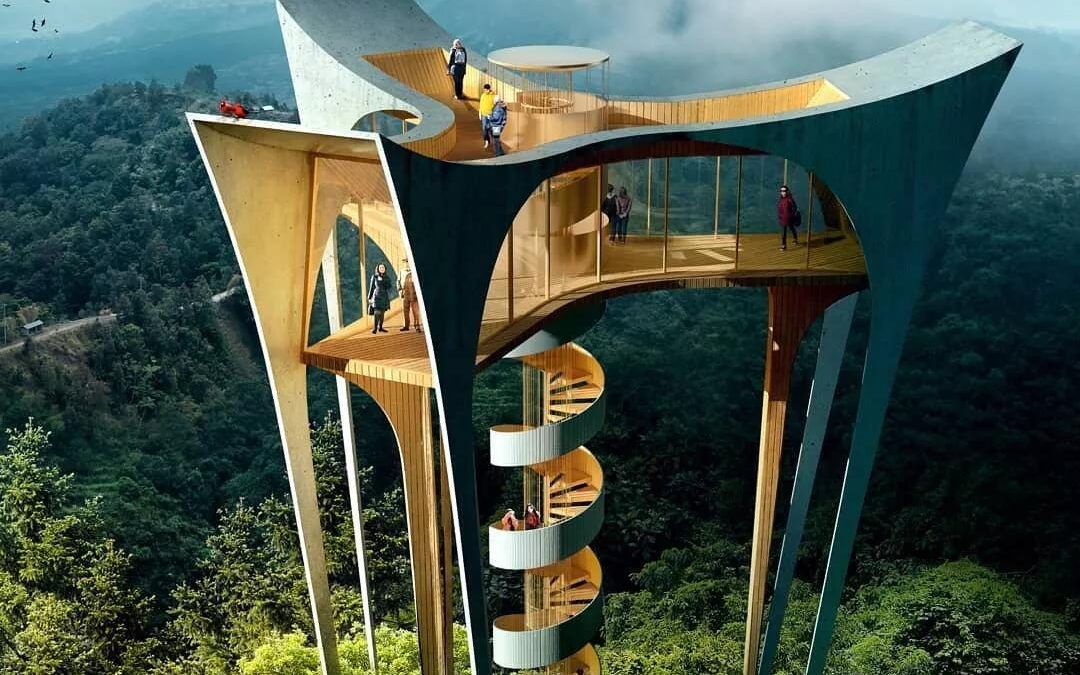
Architecture is often associated with practicality, functionality, and realism. Yet, some architects push boundaries by creating buildings that defy reality, challenge perception, and spark imagination. These anti-reality buildings combine art, innovation, and engineering to produce structures that seem almost impossible—blurring the line between architecture and fantasy.
This article explores breathtaking anti-reality buildings, their design philosophies, and why they are shaping the future of architectural creativity.
What Are Anti-Reality Buildings?
Anti-reality buildings are structures that challenge conventional architectural norms. They often incorporate:
-
Illusions and impossible geometry
-
Surreal forms and unconventional shapes
-
Bold use of materials, light, and color
-
Integration of art and architecture
-
Unexpected interactions with the environment
These buildings are not just visually striking—they provoke thought, evoke emotion, and invite viewers to question what is possible in architecture.
Key Features of Anti-Reality Architecture
-
Defiance of Gravity
Many anti-reality buildings appear to float, tilt, or defy natural laws. Cantilevered sections and dynamic overhangs create the illusion of impossible balance. -
Surreal Shapes
Organic, twisting, and irregular forms break away from traditional rectilinear designs. These shapes often mimic nature, science fiction, or abstract art. -
Innovative Materials
Glass, steel, concrete, and new composites are manipulated to create seemingly impossible structures, bending light and creating reflections that confuse perception. -
Interaction with Environment
Anti-reality buildings often play with surroundings, blending into nature, appearing suspended in air, or reflecting landscapes in ways that challenge reality. -
Immersive Experiences
Some buildings immerse visitors in altered perception, combining architecture, visual art, and digital technologies for a multi-sensory experience.
Iconic Anti-Reality Buildings Around the World
1. The Dancing House, Prague, Czech Republic
Designed by Frank Gehry and Vlado Milunić, the Dancing House resembles two dancers in motion. Its curved and leaning forms defy conventional stability, creating a sense of movement in a static building.
Highlight: The contrast between its modern, flowing forms and the surrounding Baroque architecture adds to its anti-reality appeal.
2. Casa Batlló, Barcelona, Spain
Antoni Gaudí’s masterpiece uses organic forms, mosaic tiles, and skeletal structures to create a building that seems alive. The undulating façade and irregular shapes evoke underwater fantasies, defying traditional architectural logic.
Highlight: Light and shadow play across the surfaces, making the building appear different throughout the day.
3. The Blur Building, Yverdon-les-Bains, Switzerland
Designed by Diller Scofidio + Renfro for Expo 2002, this structure is essentially a cloud of fog. Visitors walk on a platform surrounded by mist, experiencing architecture as ephemeral and almost unreal.
Highlight: The building challenges the very notion of architecture as a solid structure.
4. The Crooked House, Sopot, Poland
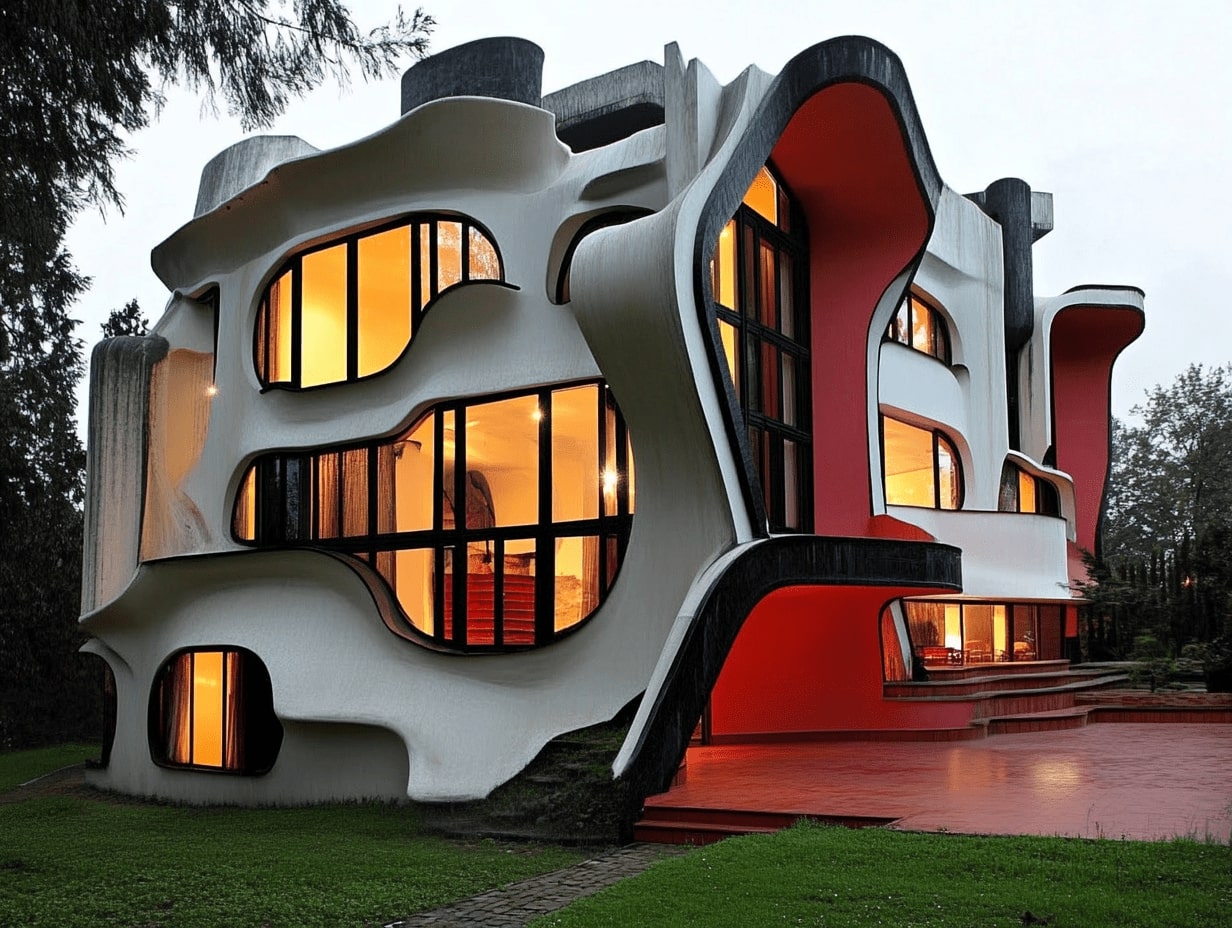
This whimsical building, inspired by fairy tale illustrations, features curved walls, wavy roofs, and warped windows. It appears as if it melted from heat or entered a surreal painting.
Highlight: It’s a playful exploration of perception and imagination in architecture.
5. CCTV Headquarters, Beijing, China
Designed by Rem Koolhaas and Ole Scheeren, this skyscraper forms a continuous loop, appearing to twist and defy gravity. The unconventional design challenges engineering norms and traditional skyscraper aesthetics.
Highlight: Its massive cantilevered sections create a sense of suspension and weightlessness.
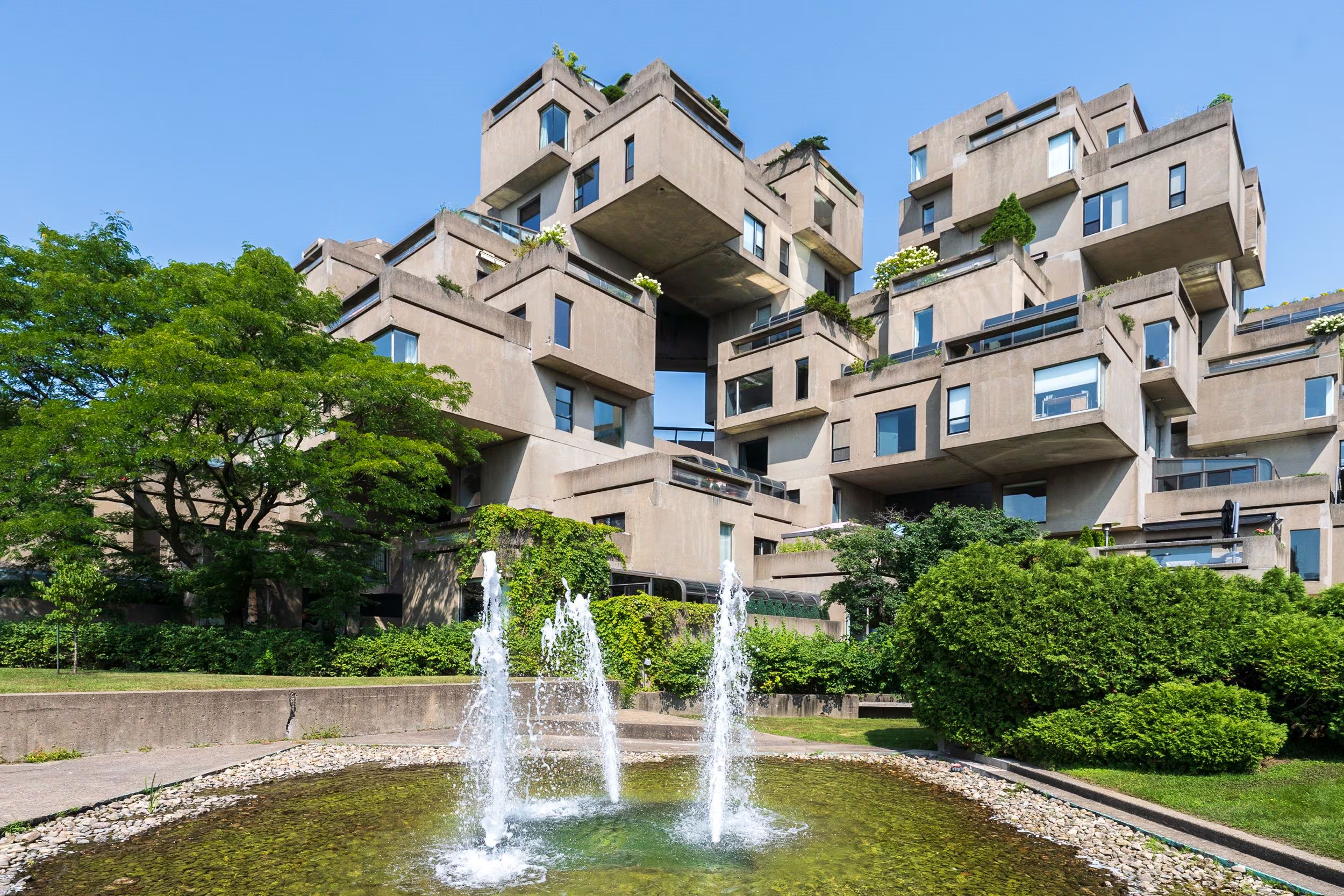
6. Habitat 67, Montreal, Canada
Moshe Safdie’s iconic modular housing complex features interlocking concrete cubes stacked in seemingly impossible arrangements. Each unit feels individual, yet part of a larger, floating structure.
Highlight: It challenges notions of urban living and traditional housing layouts.
7. Kunsthaus Graz, Austria
Nicknamed the “Friendly Alien,” this museum by Peter Cook and Colin Fournier uses organic, blob-like forms and a blue biomorphic façade. Its unusual shape contrasts sharply with the city’s historic surroundings.
Highlight: It represents an anti-reality statement in the heart of a classical European city.
8. Metropol Parasol, Seville, Spain
Jürgen Mayer H.’s wooden structure in Seville is often called the largest wooden structure in the world. Its flowing, honeycomb-like forms create a canopy that appears almost weightless.
Highlight: The structure merges public space, art, and anti-gravity aesthetics.
9. Turning Torso, Malmö, Sweden
Santiago Calatrava’s twisting skyscraper rotates as it rises, giving the illusion of movement. The design defies the typical static form of tall buildings and emphasizes organic motion.
Highlight: It combines engineering precision with sculptural elegance, making it a modern anti-reality landmark.
10. Guggenheim Museum, Bilbao, Spain
Frank Gehry’s Guggenheim features fluid, metallic surfaces that appear to melt or ripple. Its forms challenge geometry and traditional expectations of museum architecture.
Highlight: The interplay between light, water, and titanium panels enhances the sense of unreality.
Read Also: The Race to 300 mph: Will Hennessey or Koenigsegg Break the Speed Record in 2025?
Why Anti-Reality Buildings Matter 
1. Push Architectural Boundaries
They challenge conventional design rules and inspire new engineering solutions.
2. Cultural and Artistic Expression
These buildings often become symbols of creativity, culture, and identity, drawing visitors and attention worldwide.
3. Tourism and Economy
Iconic anti-reality structures attract global tourism, boosting local economies.
4. Inspiration for Future Architects
They demonstrate that architecture can be playful, bold, and imaginative while remaining functional and structurally sound.
5. Human Experience
By engaging emotions and perception, these buildings create unforgettable experiences for visitors and users alike.
Tips for Experiencing Anti-Reality Architecture
-
Visit with an Open Mind
Expect the unexpected. These buildings are designed to surprise and provoke thought.
-
Photography
Capture angles, reflections, and interactions with light to highlight surreal qualities. -
Guided Tours
Learn about the architect’s vision, engineering challenges, and artistic intent. -
Observe Details
Anti-reality buildings often hide innovative features in material use, structural systems, or spatial arrangements. -
Combine with Local Culture
Experience the city, art, and history surrounding these architectural marvels for context.
Conclusion
Breathtaking anti-reality buildings redefine the limits of architecture. They challenge perception, inspire imagination, and demonstrate the fusion of art, technology, and engineering. From Gaudí’s organic masterpieces to Gehry’s fluid forms, and from twisting skyscrapers to ephemeral fog structures, these buildings blur the line between reality and fantasy.
For architects, designers, students, and travelers, exploring anti-reality architecture is more than sightseeing—it’s an educational, inspirational, and transformative experience. These structures remind us that architecture is not just about creating functional spaces; it’s about dreaming big, defying norms, and reimagining the possibilities of the built environment.
Watch Also: https://www.youtube.com/@TravelsofTheWorld24






Leave a Reply