
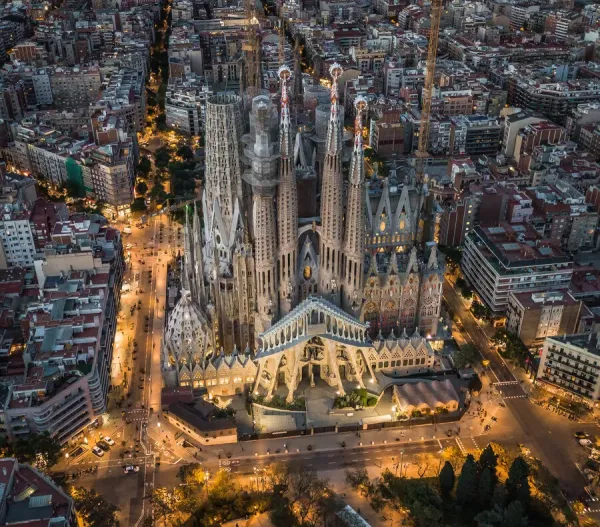
After more than a century of meticulous craftsmanship, symbolism, engineering innovations, and architectural devotion, one of the world’s most extraordinary buildings is finally nearing completion. Barcelona’s Sagrada Familia, the breathtaking basilica envisioned by the visionary architect Antoni Gaudí, is expected to be fully completed in 2026—marking 144 years since construction first began in 1882. For millions of architecture lovers, travelers, historians, and admirers of artistic genius, the news feels nothing short of monumental.
The completion coincides with the centenary of Gaudí’s death, making 2026 a symbolic year that ties together history, legacy, and destiny.
A Masterpiece Born from Vision and Faith
The Sagrada Familia is no ordinary architectural project. It is a towering fusion of Gothic inspiration, Modernisme creativity, biblical symbolism, and engineering brilliance. When Gaudí took over the project in 1883, he transformed the original neo-Gothic plan into a magnificent, otherworldly structure that pushed the limits of geometry and imagination.
Gaudí devoted the last 40 years of his life entirely to the basilica, famously stating:
“My client is not in a hurry.”
His “client,” of course, was God.
This lifelong dedication is why the Sagrada Familia feels less like a building and more like a living sculpture—one shaped by faith, nature, and human perseverance.
Why Has It Taken So Long? The 140+ Year Journey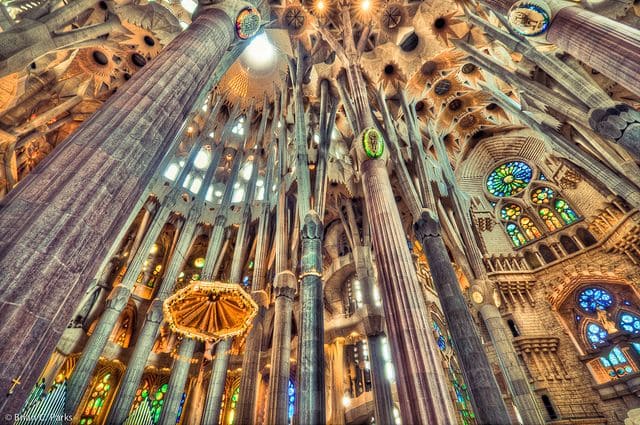
The prolonged construction has become a legend in its own right. Several key factors explain the extended timeline:
1. Gaudí’s Revolutionary Design
Gaudí designed highly complex geometries inspired by nature—hyperboloids, helicoidal columns, and catenary arches. These forms were far ahead of his time and extremely difficult to execute with 19th- and early-20th-century technology.
2. Limited Funding
Funding came largely from private donations for decades. The basilica was built slowly, stone by stone, as contributions came in.
3. The Spanish Civil War
In 1936, the basilica’s workshop was burned, destroying original models and sketches. The reconstruction of Gaudí’s plans took decades.
4. Slow, Hand-Crafted Construction Methods
Much of the early work required skilled labor and manual stone-carving. Each detail was an art form in itself.
5. Massive Scale and Symbolism
With 18 towers, intricate façades, interior forests of columns, and monumental sculptures, the basilica is almost a small city of its own.
6. Technological Leap Only in Recent Decades
The arrival of computer modeling, digital fabrication, and advanced engineering accelerated construction significantly from the 1990s onward.
What Will Be Completed in 2026?
By 2026, the final and most important structural elements will be finished:
1. The Tower of Jesus Christ
This central tower—rising 172.5 meters—will make the basilica the tallest church building in the world.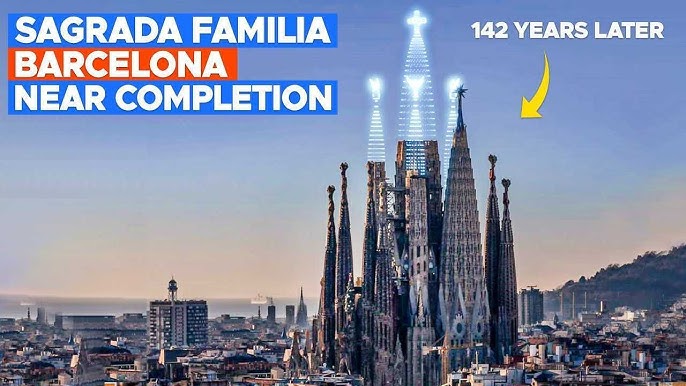
It represents Christ and features a grand cross visible across Barcelona.
2. The Last Remaining Façade Elements
The Glory Façade, the final and most symbolic entrance, will be fully completed, depicting themes of resurrection, salvation, and eternal life.
3. Decorative Sculptures and Symbolic Features
The closing years focus on ornamentation, biblical statues, mosaics, and finishes that connect the façades and towers.
4. Enhancements to the Interior and Lighting
Although the interior was consecrated by Pope Benedict XVI in 2010, the final touches will create a cohesive, fully realized spiritual atmosphere.
A Blend of Old and New: How Technology Shaped the Final Outcome
One of the most fascinating aspects of the Sagrada Familia’s completion is how classical craftsmanship intersects with digital innovation.
Advanced technologies used include:
-
3D modeling and parametric design
Enabled architects to decode Gaudí’s geometric logic. -
Robotics and CNC carving machines
Allowed faster, more precise stone shaping. -
Laser scanning
Preserved every detail and improved structural alignment. -
Modern engineering systems
Ensured stability for the towering central spires.
Gaudí himself predicted this. He once said that future technologies would finish what he could not. In a poetic way, 21st-century tools have become the hands that continued his dream.
What Makes the Sagrada Familia Architecturally Unique?
The basilica stands apart from every other building in the world due to its fusion of creativity, geometry, and storytelling.
1. Nature as a Blueprint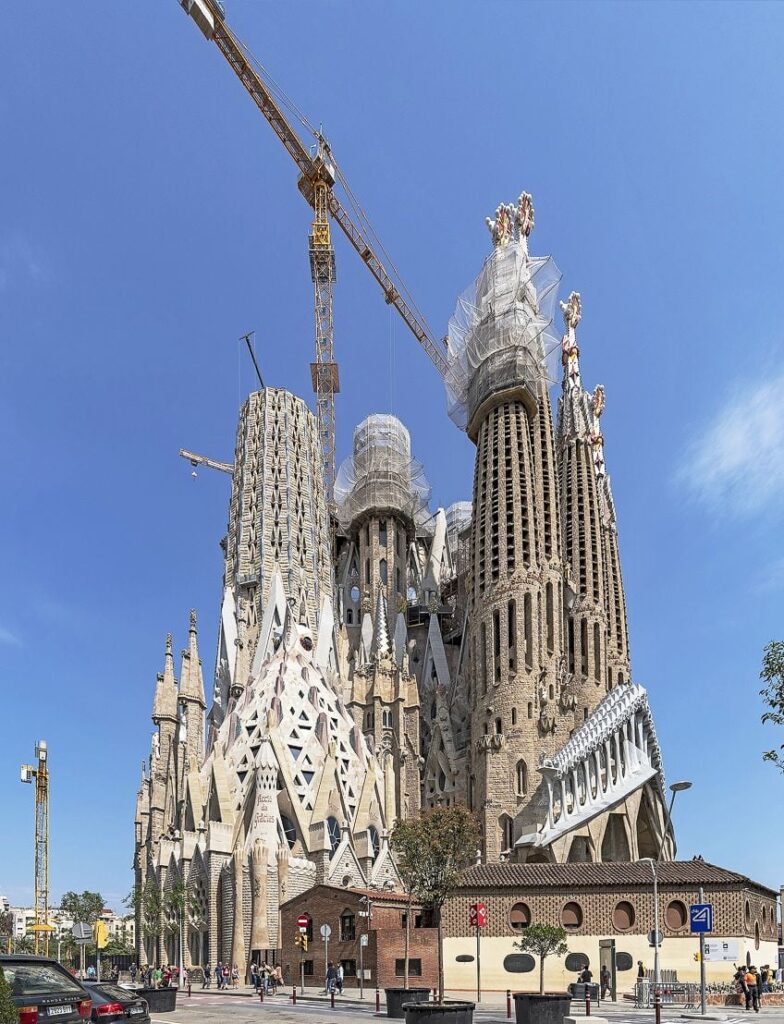
Gaudí believed nature was God’s masterpiece.
He incorporated:
-
Branching, tree-like columns
-
Spiral staircases resembling seashells
-
Light filtered through stained glass like forest canopies
2. Symbolism in Every Detail
Each tower represents a biblical figure:
-
12 Apostles
-
4 Evangelists
-
Virgin Mary
-
Jesus Christ
Each façade—Nativity, Passion, and Glory—illustrates a chapter of Christ’s life.
3. Geometry with Purpose
Gaudí used curves, angles, and shapes not only for beauty but for structural efficiency.
His innovations allowed natural light, acoustics, and strength to work together in harmony.
4. A Cathedral Built from Three Eras
-
Gaudí’s original hand-crafted era (1882–1926)
-
Post-war reconstruction era (1940s–1990s)
-
Digital era (2000s–2026)
This layering gives the basilica its unique architectural DNA.
Read Also: The Race to 300 mph: Will Hennessey or Koenigsegg Break the Speed Record in 2025?
How the Completion Will Impact Barcelona
Barcelona is already one of Europe’s most visited cities, and the Sagrada Familia is its crown jewel.
Expected impacts include:
-
Massive tourism boost as millions visit for the historic completion.
-
Global media attention highlighting the achievement.
-
Enhanced cultural identity tied to Catalan Modernisme.
-
Urban improvements around the basilica’s surrounding neighborhood.
The city has been preparing for this moment for decades, and 2026 will be a milestone not just for tourism but for Barcelona’s architectural legacy.
A Modern Miracle of Persistence
The nearly completed Sagrada Familia is not just an architectural triumph—it is a story of perseverance, creativity, and human potential. Generations of artists, engineers, craftsmen, and visionaries worked on a dream that began in the 19th century and will finally see its completion in the 21st.
Few buildings in history have embodied such passion, symbolism, and global fascination.
In 2026, when the final tower rises and the last piece of stone is set, the world will witness the culmination of Gaudí’s eternal dream—a masterpiece that redefines what architecture can be and what human dedication can accomplish.
Watch Also: https://www.youtube.com/@TravelsofTheWorld24





Leave a Reply