
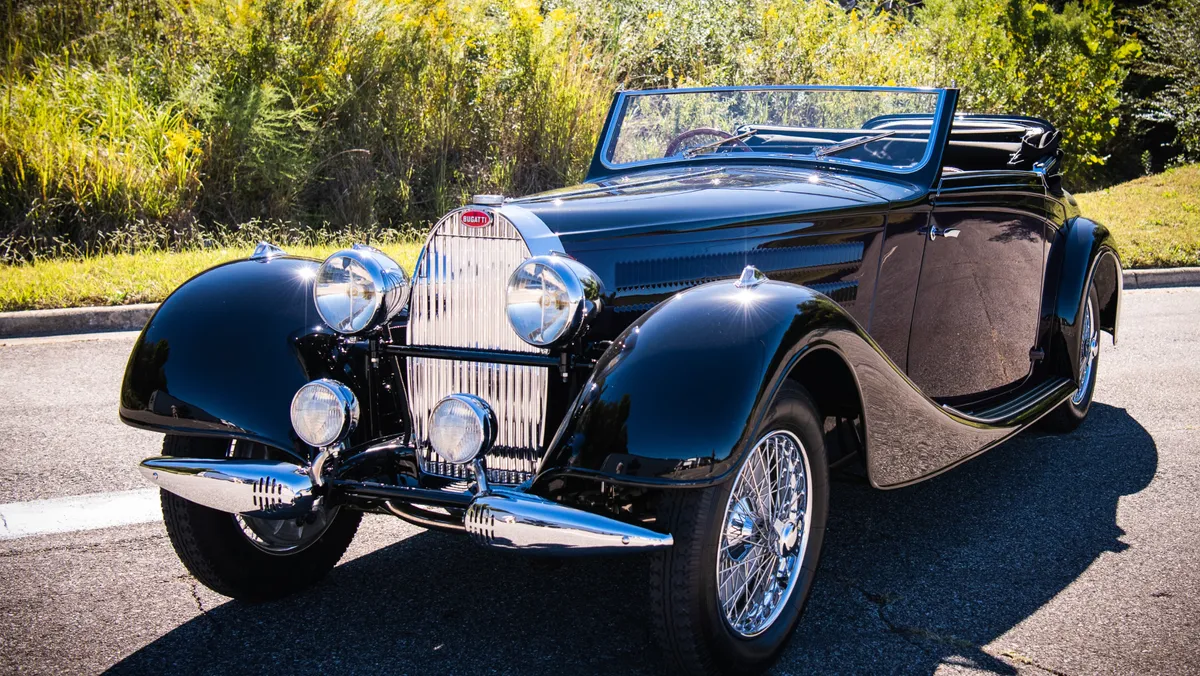
The 1937 Bugatti 57C Van Vooren Cabriolet stands as one of the most exquisite examples of automotive artistry from the pre-war era. This car is not just a mode of transportation but a rolling masterpiece that exemplifies the elegance, craftsmanship, and innovation that Bugatti is renowned for. Designed by the illustrious Belgian coachbuilder Van Vooren, this cabriolet marries the mechanical brilliance of Bugatti with the flowing, graceful lines of Art Deco design, creating a vehicle that is as much a work of art as it is an engineering marvel.
Bugatti, founded in 1909 by Ettore Bugatti, was a brand synonymous with luxury, performance, and exclusivity. By the 1930s, Bugatti had perfected the marriage of performance and style with its Type 57 series. The Type 57C was a supercharged variant of the Type 57, boasting a 3.3-liter inline-eight engine capable of producing around 160 horsepower—a significant feat for its era. This allowed the car to achieve impressive speeds while maintaining the smooth, refined ride expected from a luxury automobile.
The Van Vooren Cabriolet bodywork elevates the Type 57C to a rare level of elegance. Van Vooren, based in Brussels, was celebrated for its custom coachbuilding that often emphasized long, flowing lines, chrome accents, and luxurious interiors. The 1937 Cabriolet features a long, sloping hood, sweeping fenders, and a gracefully curved rear—typical of the Art Deco movement, which sought to merge function with striking aesthetic appeal. Chrome detailing along the grille and headlights, combined with polished wood accents in the cabin, exemplifies the attention to detail that made these cars collectible treasures.
Inside, the interior of the Bugatti 57C Van Vooren Cabriolet is a sanctuary of luxury. Plush leather seats, hand-stitched to perfection, provide both comfort and style. The dashboard, meticulously crafted, features polished wood and chrome switches that reflect the era’s dedication to combining beauty with functionality. Every element of the interior was designed to complement the flowing exterior lines, ensuring that the car is a cohesive work of art from every angle.
The rarity of this model adds to its allure. Very few Type 57C Van Vooren Cabriolets were produced, making surviving examples extremely valuable to collectors. Each car was often customized to the buyer’s specifications, meaning no two cars are ever exactly alike. This one-of-a-kind nature, combined with Bugatti’s legendary engineering, ensures that the 1937 Type 57C remains one of the most desirable collector cars in the world today.
From a historical perspective, the 1937 Bugatti 57C Van Vooren Cabriolet represents the height of pre-war automotive luxury. It showcases how carmakers of the era were able to integrate performance, innovation, and artistry into a single vehicle. Today, these cars are celebrated at prestigious concours events such as Pebble Beach Concours d’Elegance and the Amelia Island Concours, where they often achieve record-breaking auction prices.
Collectors and enthusiasts value this model not only for its rarity but for its representation of a bygone era of automotive design. The combination of Bugatti’s engineering prowess and Van Vooren’s elegant coachwork creates a timeless vehicle that transcends generations. Owning a 1937 Type 57C Cabriolet is akin to possessing a piece of history, a symbol of sophistication, and a testament to the enduring appeal of classic automotive design.
In conclusion, the 1937 Bugatti 57C Van Vooren Cabriolet is more than a car—it is a statement of elegance, a triumph of design, and a relic of automotive history. From its powerful supercharged engine to its flowing Art Deco lines, it encapsulates an era when cars were crafted with both precision and passion. For collectors and enthusiasts, it remains an icon of rarity, luxury, and timeless beauty.
Read Also: Keep your face towards the sunshine and shadows will fall behind you
Watch Also: https://www.youtube.com/@TravelsofTheWorld24










Leave a Reply