
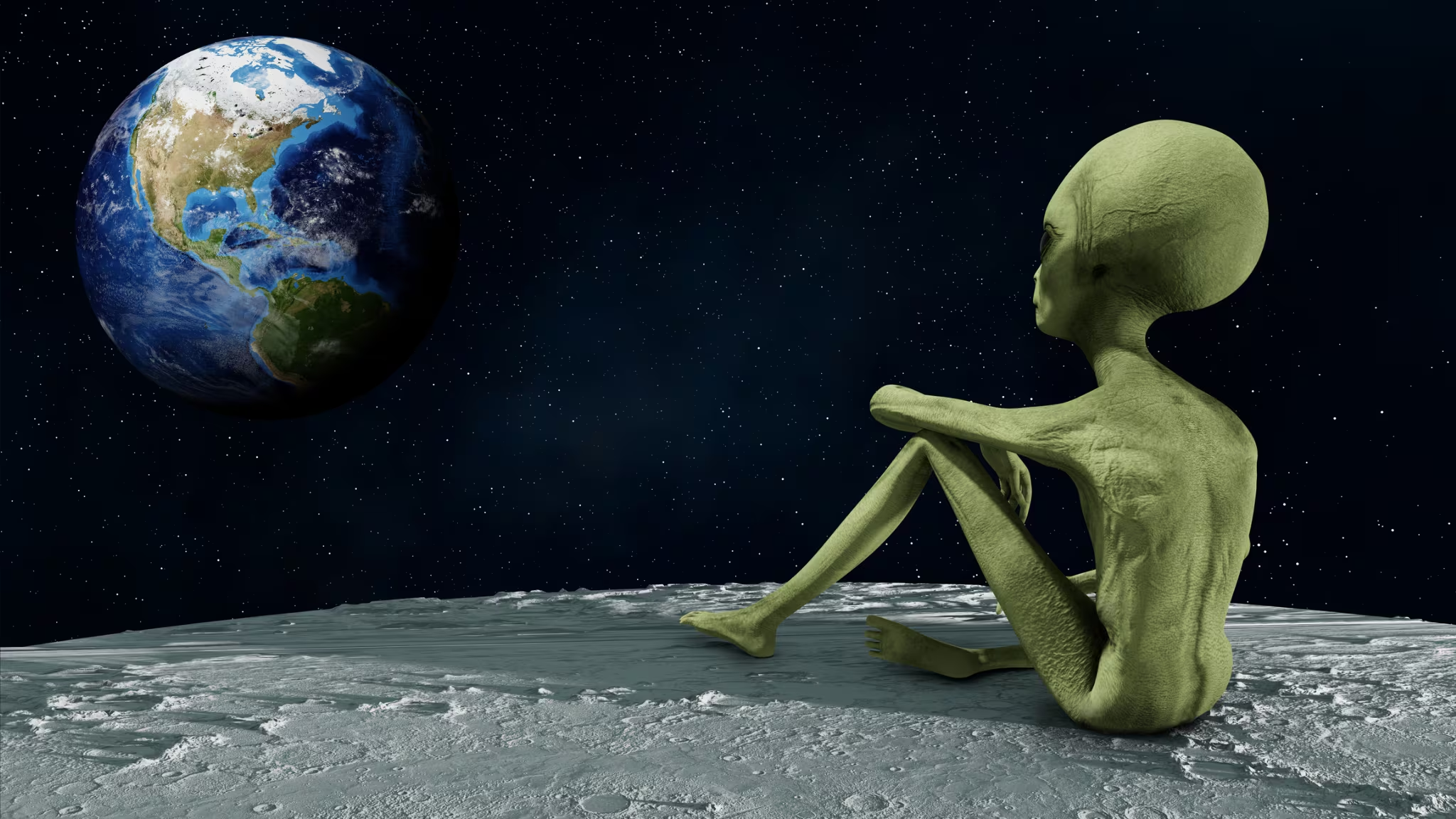
For decades, the idea of unidentified flying objects—now formally referred to as unidentified anomalous phenomena (UAP)—has captivated the world. From grainy videos and eyewitness reports to conspiracy theories and viral social media clips, the belief that extraterrestrials might be visiting Earth has become a global fascination. However, despite the surge in public interest, a top Pentagon official recently stated that there is “no credible evidence” to suggest that alien life or alien technology is behind these sightings.
This statement comes at a time when public curiosity, congressional questions, and media discussions around UFOs are at an all-time high. Yet according to the Department of Defense, the truth remains much more grounded than many would hope. In this article, we’ll explore what the Pentagon’s position means, why these claims were made, and what this could mean for the future of UFO research and transparency.
A Clear Position: No Proof of Extraterrestrial Activity
The Pentagon’s stance is direct: although UAP sightings continue to be documented, none of the analyzed evidence indicates extraterrestrial origin.
This does not mean that UAPs don’t exist. They do. The military has repeatedly acknowledged that certain aerial events remain unexplained. But the key point is this: unexplained does not automatically mean extraterrestrial.
The Pentagon’s assessment, according to officials involved in analyzing UAP data, is based on:
-
Military sensor recordings
-
Pilot testimonies
-
Radar data
-
Satellite imagery
-
Intelligence from global monitoring systems
Across these sources, nothing has yet met the scientific threshold of “credible evidence” that would suggest alien life or alien technology.
Why the Pentagon Keeps Repeating This Message
The Pentagon’s statement isn’t new. For years, officials have maintained a consistent position: many UAP sightings can be explained by misidentified aircraft, atmospheric conditions, drones, balloons, or sensor errors.
However, the surge in public interest—fueled by viral videos and congressional hearings—has led to renewed pressure for clarity. This latest statement seems designed to address growing speculation that the U.S. government is hiding alien technology.
By emphasizing that no verifiable proof exists, officials aim to re-center the conversation on proven, earthly explanations.
The Growing Pressure for Transparency
Public scrutiny of UAP investigations grew significantly after several military-captured videos were released in recent years. These clips, showing fast-moving or oddly behaving objects, fueled theories suggesting that something extraordinary was happening in the skies.
Congress began taking notice as well, leading to:
-
Public hearings
-
Lawmakers demanding more data
-
Proposed legislation to increase transparency
-
Calls to declassify more UAP material
The Pentagon’s statement serves partly as a response to this pressure, clarifying that although investigations continue, nothing discovered so far confirms alien involvement.
Understanding Why UAPs Still Fascinate the World
Even with the Pentagon’s denial of alien evidence, the public remains fascinated by UAPs. This is due to several reasons:
1. Human Curiosity
The idea that life exists beyond Earth is both scientifically plausible and emotionally compelling. People want answers to one of humanity’s oldest questions: Are we alone?
2. Ambiguous Footage
Videos released by military pilots show objects moving in ways that challenge conventional understanding. Even if these are ultimately explainable, the mystery captures attention.
3. Government Secrecy
When governments classify information—especially about aerial phenomena—people naturally suspect that something is being hidden.
4. Cultural Influence
Movies, TV shows, books, and online content reinforce the idea of extraterrestrial visitors, making the concept familiar and exciting.
What “No Credible Evidence” Really Means
The Pentagon’s statement relies on the word credible. This is crucial.
It does not mean:
-
Aliens do not exist
-
UFO sightings aren’t real
-
The military isn’t investigating
-
Extraterrestrial life is impossible
It does mean:
-
No verified, scientifically consistent data proves alien involvement
-
No technology beyond human capability has been documented
-
No recovered materials have been confirmed as extraterrestrial
In short, the evidence simply does not meet scientific standards required to support extraordinary claims.
Why Many UAPs Can Be Explained
Most UAP incidents, once fully analyzed, fall into one of several categories:
1. Foreign surveillance systems
Advanced drones, especially those used by rival nations, often behave in unusual ways on radar.
2. Commercial or private drones
As drone technology becomes widespread, misidentifications become more common.
3. Weather events
Atmospheric conditions, reflections, and rare natural phenomena can confuse sensors.
4. Pilot perception errors
Even highly trained pilots can misinterpret fast-moving or distant objects.
5. Sensor anomalies
Cameras, radars, and tracking systems aren’t perfect. Malfunctions or distortions happen.
Given these explanations, the Pentagon argues that alien theories should not be the default conclusion.
So Why Investigate at All?
If there’s no evidence of aliens, why does the military continue studying UAPs?
Because UAPs pose potential national security risks, regardless of origin.
Possible concerns include:
-
Unauthorized drones near military bases
-
Surveillance aircraft from rival nations
-
Novel technologies not yet understood
-
Airspace safety risks for pilots
Therefore, the Pentagon is obligated to investigate every UAP report, not because they suspect extraterrestrials, but because unidentified aerial activity could represent real-world threats.
Scientific Community’s View
Scientists generally agree with the Pentagon’s position. Many emphasize that:
-
The universe is vast, making alien life possible
-
But extraordinary claims require extraordinary proof
-
Anecdotal evidence and unclear videos are not enough
-
Rigorous scientific analysis is essential
Some scientists advocate for more open data to allow independent research. Others call for improved military sensors to better capture UAP details.
While the scientific community remains open to the possibility of extraterrestrial life, it aligns with the Pentagon’s conclusion that no current evidence directly points to alien visitation.
Could Future Evidence Change Everything?
Absolutely.
The Pentagon has acknowledged that investigations are ongoing. If credible proof of extraterrestrial technology or intelligence ever emerges, officials say it would require extensive verification before public disclosure.
Future breakthroughs could come from:
-
New satellite systems
-
Better detection technologies
-
Deep-space exploration missions
-
Independent scientific research
-
Accidental discoveries
For now, though, Earth remains without confirmed visitors.
Final Thoughts
The Pentagon’s statement that there is “no credible evidence” of alien UFO activity is a clear reminder to separate excitement from confirmed facts. UAPs are real, intriguing, and worth studying—but attributing them to extraterrestrial beings requires proof that humanity simply doesn’t have yet.
While the world’s imagination continues to soar, the official message remains grounded: the skies are filled with mysteries, but none of those mysteries currently point to alien intelligence.
Still, the search continues.
And as technology improves, the truth—whatever it may be—will become harder to hide.
Read Also: Keep your face towards the sunshine and shadows will fall behind you
Watch Also: https://www.youtube.com/@TravelsofTheWorld24















Leave a Reply