
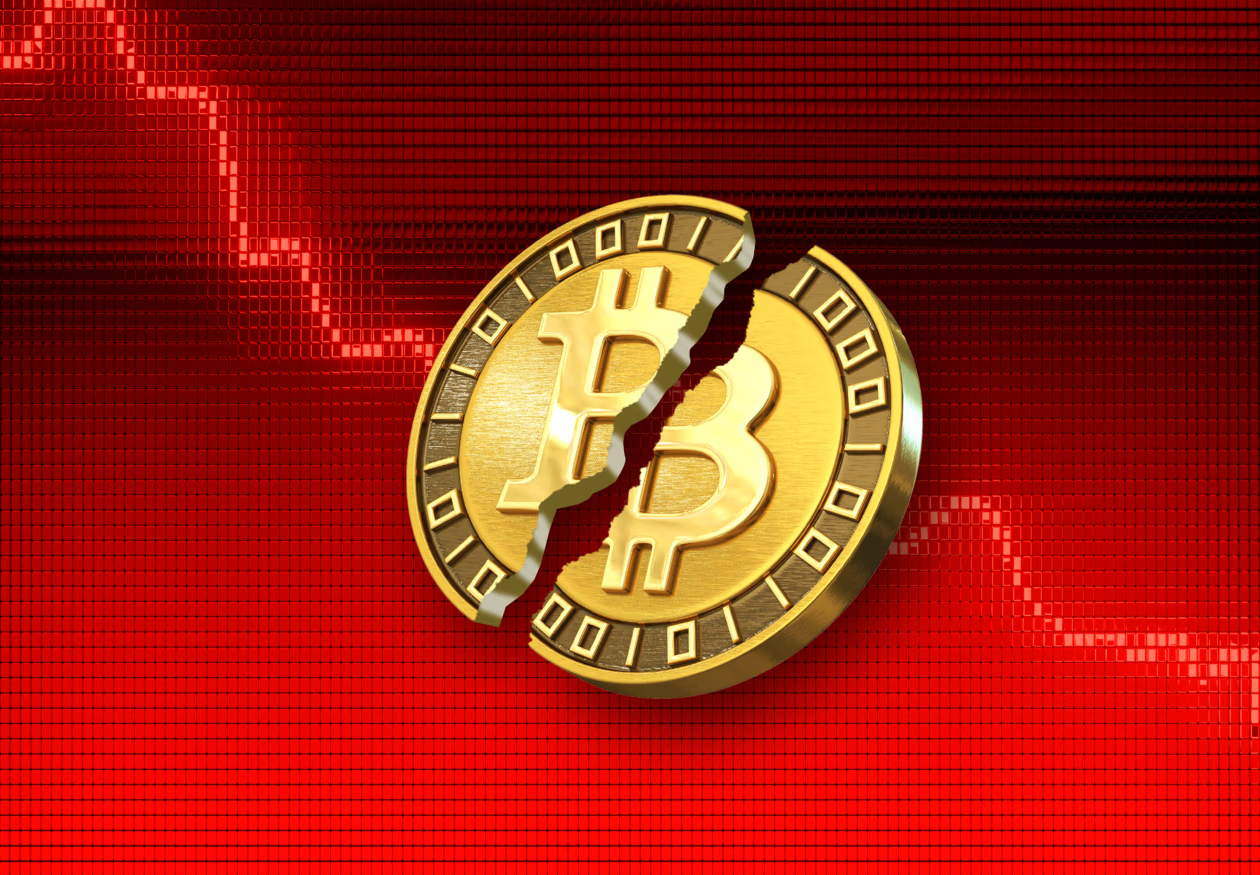
Bitcoin, the world’s most well-known cryptocurrency, recently experienced a dramatic decline following a record high in October. This drop has not only caught the attention of individual investors but also financial analysts and institutional players who view bitcoin as a potential barometer for broader market sentiment. Understanding why this decline is significant requires a look into bitcoin’s market dynamics, investor behavior, and its increasing role as an indicator of financial trends beyond the cryptocurrency sphere.
Bitcoin’s October Record High
In October, bitcoin reached unprecedented levels, driven by a combination of institutional investment, retail enthusiasm, and favorable macroeconomic conditions. Many investors interpreted the surge as a sign of mainstream acceptance, with large firms and hedge funds increasingly viewing bitcoin as a hedge against inflation and a potential store of value akin to digital gold.
The excitement was fueled further by high-profile endorsements and growing adoption by payment platforms and companies integrating blockchain technology. Sentiment across social media, financial news outlets, and investor forums contributed to the narrative that bitcoin’s ascent was indicative of a new era for cryptocurrency markets.
The Brutal Drop
However, following the October peak, bitcoin’s price experienced a sharp and sudden decline. Analysts attribute the drop to a combination of profit-taking, regulatory concerns, and shifts in broader financial conditions, such as rising interest rates and changing liquidity in traditional markets.
Investors who entered the market during the highs were confronted with volatility that highlights one of bitcoin’s defining characteristics: extreme price swings. Unlike traditional assets, cryptocurrency prices can change dramatically in short periods, influenced by market sentiment, regulatory developments, and macroeconomic factors.
Why Bitcoin Serves as a Barometer
Bitcoin’s volatility and its growing integration into mainstream financial markets have elevated its role as a barometer for investor sentiment. Historically, when bitcoin experiences significant drops, it can reflect broader risk-off behavior, where investors retreat from high-risk assets. Conversely, when bitcoin surges, it often signals increased appetite for speculative or growth-oriented investments.
Financial analysts note that bitcoin’s behavior increasingly correlates with technology stocks, growth equities, and other risk-sensitive assets. While it was once considered an isolated market largely independent of traditional financial systems, bitcoin’s growing institutional adoption means that its price movements can signal shifts in risk sentiment across broader markets.
Regulatory Impacts
One of the key drivers behind bitcoin’s post-October drop is regulatory uncertainty. Governments around the world are actively exploring frameworks to regulate cryptocurrencies, focusing on investor protection, taxation, and anti-money-laundering measures. Announcements of potential regulatory crackdowns, especially from major economies, often trigger market sell-offs.
The uncertainty over how governments will regulate cryptocurrency markets makes investors cautious. Even rumors of stricter rules can cause dramatic swings in bitcoin’s price. As such, regulatory developments are closely monitored by traders and financial institutions alike, making bitcoin a sensitive gauge of global policy sentiment.
Market Psychology
Investor psychology plays a central role in bitcoin’s volatility. The October record high created a sense of FOMO—fear of missing out—which drove more retail and institutional investors into the market. Following the sudden drop, the mood shifted to risk aversion, prompting widespread sell-offs.
This cycle of euphoria and fear is not unique to bitcoin but is amplified by its relatively low liquidity compared to traditional assets. Large trades can have outsized impacts on price, and social media narratives can influence mass behavior almost instantly. By observing bitcoin’s swings, analysts can gain insights into broader market psychology, particularly in sectors with high-risk exposure.
Correlation with Broader Markets
Recent studies indicate that bitcoin is increasingly correlated with major equity indices, including the Nasdaq and S&P 500. While it does not perfectly mirror stock market movements, trends in bitcoin often align with investor sentiment in tech-heavy, high-growth sectors.
For example, a sudden sell-off in bitcoin may coincide with declines in growth stocks, signaling a risk-off shift in the market. Conversely, a rebound in bitcoin prices often parallels renewed interest in speculative investments, indicating higher risk tolerance. This interconnection makes bitcoin a valuable tool for gauging investor behavior beyond the cryptocurrency market.
Implications for Investors
For individual and institutional investors, bitcoin’s decline from its October highs serves as both a warning and a learning opportunity. On one hand, it underscores the importance of risk management and diversification. On the other, it highlights how bitcoin can act as an early indicator of broader market trends.
Investors now monitor bitcoin not only for potential gains but also for signals of changing sentiment. A sustained drop in bitcoin might suggest caution in other high-risk markets, while stabilization or recovery could indicate renewed confidence. The cryptocurrency’s high visibility and liquidity make it a real-time barometer of investor psychology and market health.
The Role of Institutional Investors
Institutional adoption has significantly amplified bitcoin’s impact as a market indicator. Hedge funds, asset managers, and corporate treasuries now hold bitcoin as part of diversified portfolios. Their trading activity can move markets and influence sentiment in other asset classes.
These institutional players often make strategic decisions based on macroeconomic trends, regulatory news, and risk management principles. When they adjust bitcoin positions, the ripple effect can extend to equities, bonds, and other financial instruments. This interconnectedness reinforces the notion that bitcoin’s price movements are increasingly relevant for broader market analysis.
Long-Term Outlook
Despite its volatility, bitcoin remains a critical tool for understanding financial markets. Analysts suggest that short-term swings, while dramatic, provide valuable insights into risk appetite, liquidity conditions, and investor confidence. Long-term trends in bitcoin can help identify shifts in economic sentiment, technological adoption, and regulatory attitudes.
The post-October decline is a reminder that bitcoin is not immune to global financial pressures. Interest rate changes, inflation concerns, and geopolitical uncertainty all affect market behavior, and bitcoin often reacts faster than traditional assets. By tracking these movements, investors can gain early signals about potential shifts in broader financial conditions.
Conclusion
Bitcoin’s brutal drop from its October record high is more than just a cryptocurrency headline—it is a crucial indicator for the broader market. Its volatility, increasing institutional adoption, and correlation with high-risk assets make it a real-time barometer of investor sentiment and market dynamics.
For investors, analysts, and policymakers, understanding bitcoin’s movements provides insights into broader financial trends, from risk appetite to regulatory impact. While the cryptocurrency remains inherently volatile, its price swings offer valuable lessons in market psychology, liquidity management, and strategic investment planning.
As bitcoin continues to integrate into mainstream finance, its significance as a market barometer will likely grow. Observing its highs and lows offers a lens through which investors can assess broader market conditions, anticipate potential risks, and make informed decisions in an increasingly interconnected financial landscape.
Bitcoin’s post-October decline serves as a reminder that even the most celebrated digital assets are subject to market realities. Yet, within that volatility lies valuable information—an early warning system for trends that could shape the future of both cryptocurrency and traditional financial markets.
Read Also: Keep your face towards the sunshine and shadows will fall behind you
Watch Also: https://www.youtube.com/@TravelsofTheWorld24















Leave a Reply