
In his article “Bitcoin Isn’t Money,” economist Scott Sumner argues that Bitcoin fundamentally fails to meet one of the most important criteria for something to be considered “money”: being a medium of account. Sumner’s core claim is that, despite the hype around Bitcoin, its success poses no serious challenge to standard monetary theory.
Key Points from Sumner’s Argument
-
Bitcoin Is Not a Medium of Account
-
Sumner stresses that for an asset to be truly “money,” prices need to be quoted in it — for example, candies, labour, or financial assets should be denominated in that currency.
-
With Bitcoin, this simply doesn’t happen in any significant way. Most goods and services are not priced in BTC, and financial contracts are not settled in Bitcoin. Instead, Bitcoin’s price is almost always referenced in terms of USD or other fiat currencies.
-
Because of this, Sumner argues, Bitcoin lacks a core function of money: it’s not the standard measure in which economic value is expressed.
-
-
Bitcoin as “Digital Gold”
-
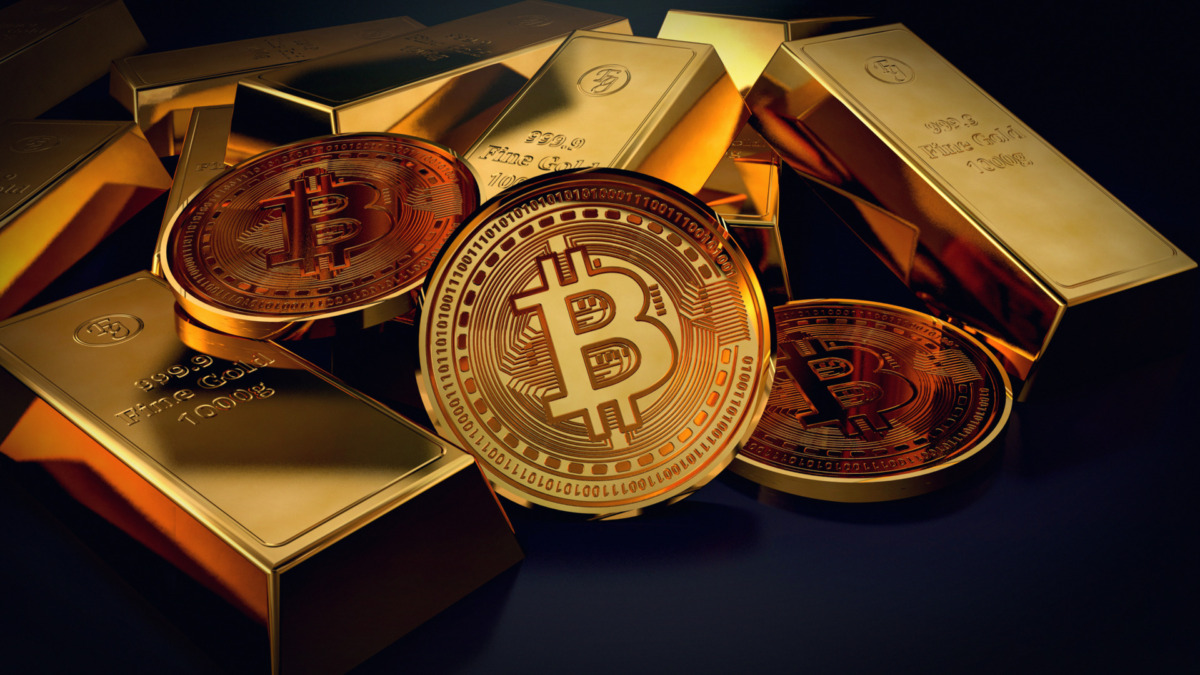
Rather than seeing Bitcoin as a true currency, Sumner likens it to electronic gold.
-
Gold historically has been used primarily as a store of value, not as the primary means by which we denominate prices or do day-to-day accounting. Sumner says Bitcoin behaves similarly: most of its value comes from the expectation that others will value it in the future.
-
He argues that people hold Bitcoin not because they use it to buy things, but because they believe in its future value or potential.
-
-
Limited Transactional Use
-
While Bitcoin is technically used for some transactions, Sumner emphasizes that this usage is superficial or limited.
-
He notes that even when merchants “accept” Bitcoin, they often peg their prices to fiat currency (like USD) and simply display an equivalent in BTC for show.
-
Real pricing in Bitcoin — where a seller permanently sets a price in satoshis (or whole BTC) — rarely happens. Sumner argues that without widespread contracts, wages, and costs denominated in Bitcoin, it’s not serving as a real transactional currency in the traditional sense.
-
-
Illusion of Legitimacy
-
Sumner references remarks by Eugene Fama, who has predicted that Bitcoin’s price could go to “close to one” (i.e., near zero) if demand evaporates.
-
According to Fama (as cited by Sumner), Bitcoin has “no intrinsic value.”
-
Sumner argues that the “mainstream adoption” of Bitcoin gives it only a surface-level legitimacy. If demand falls, there’s no fundamental backing (like cash flows in a business) to support its value.
-
-
No Threat to Monetary Theory
-
Sumner’s conclusion: Bitcoin does not require us to “start all over” with monetary theory.
-
Because Bitcoin is not functioning as a medium of account, he says it’s wrong to claim that it undermines the standard frameworks economists use to understand money, inflation, and monetary policy.
-
In his view, Bitcoin is simply another speculative asset (or store of value), not a currency that competes directly with fiat money in the core economic functions that matter most.
-
Implications of Sumner’s View
-
Policy and Regulation
-
If Bitcoin is not really “money,” regulators and policymakers might treat it differently than they treat fiat or “money-like” systems.
-
It could be regulated more like a commodity or speculative asset rather than a currency.
-
-
Investor Perspective
-
For investors, Sumner’s framing supports the idea that Bitcoin is more like “digital gold” than a transactional currency.
-
This might justify holding BTC for long-term value appreciation rather than expecting it to become a widely used transactional medium.
-
-
Economic Theory
-
By rejecting the claim that Bitcoin breaks monetary theory, Sumner is defending the relevance of traditional monetary economics — inflation, demand for money, supply of money — as still very applicable.
-
He implies that economists don’t need to overhaul their models just because Bitcoin exists.
-
-
Adoption Challenges
-
Even if Bitcoin adoption continues to rise, Sumner’s argument suggests that real economic adoption (i.e., being used in contracts, salaries, and long-term pricing) is unlikely unless something fundamental changes.
-
Its volatility and lack of use as a unit of account make it a less practical medium of exchange for many real-world applications.
-
Counterpoints & Criticisms
While Sumner’s argument is strong from a traditional monetary economics perspective, there are important counterarguments and limitations worth considering:
-
Subjective Value & Intrinsic Value
-
Critics argue that Bitcoin, like many forms of money (even fiat), doesn’t need “intrinsic value” to be useful. Its value derives from trust and collective belief. Econlib itself notes in a related article that nothing really has “intrinsic value”.
-
Just because Bitcoin’s value comes from speculation or belief in future demand doesn’t necessarily disqualify it from playing a monetary role.
-
-
Evolving Use Cases
-
Over time, Bitcoin (or other cryptocurrencies) could become more integrated into economic systems, potentially being used more for contracts or settlement.
-
More infrastructure might make it easier to price goods and services in Bitcoin in the future, though there are big barriers.
-
-
Alternative Definitions of Money
-
Some economists define “money” more loosely: as anything widely accepted and used for exchange, even if not a unit of account. By this definition, Bitcoin does serve as “money” in some contexts.
-
Also, different jurisdictions or communities might evolve so that Bitcoin is denominated more formally in transactions — if enough people and companies adopt it.
-
-
Monetary Innovation
-
Bitcoin represents a new kind of monetary technology: decentralized, limited supply, and not controlled by a central bank. Even if it’s not “money” in the traditional sense yet, it could push innovation in how we think about money, value, and trust.
-
Broader Context: Other Econlib & Economic Views
-
In “Crypto, Investment, and Intrinsic Value,” Econlib’s David Henderson argues that Bitcoin (and other crypto) has no “intrinsic value” — but he also points out that neither does paper money.
-
Robert P. Murphy, in another Econlib article “The Economics of Bitcoin,” highlights how Bitcoin’s fixed supply and decentralized structure are quite novel and potentially powerful, but also notes why it might struggle to become a fully mainstream currency.
-
Meanwhile, the New York Fed has argued in its own analysis that Bitcoin may not be a “new type of money” in the sense of replacing traditional money; rather, Bitcoin is a new kind of exchange mechanism.
My Analysis & Reflection
-
Sumner’s argument is very persuasive if you define money in the classical economic sense: a unit of account, a store of value, and a medium of exchange. Under that lens, Bitcoin currently fails to be a “true” money because it’s not used to denominate prices broadly.
-
However, money evolves. What we accept today as money (fiat, digital payments, etc.) was not always defined the way it is now. Bitcoin could still carve out a niche role — especially as a speculative store of value, or a “digital gold” — without ever becoming a mainstream transactional currency.
-
For investors, Sumner’s view supports a store-of-value thesis more than a “currency replacement” thesis.
-
For policymakers, this perspective might encourage stricter regulation of Bitcoin as an asset, rather than letting it function as a parallel currency system.
Conclusion
Scott Sumner’s “Bitcoin Isn’t Money” is a thought-provoking piece that challenges many of the more utopian narratives around Bitcoin. By arguing that Bitcoin is not a medium of account, he maintains that Bitcoin does not threaten established monetary theory. Instead, he frames it as a speculative store of value — akin to “digital gold.”
Read Also: Keep your face towards the sunshine and shadows will fall behind you
Watch Also: https://www.youtube.com/@TravelsofTheWorld24












Leave a Reply