

The enigmatic beings known as the Greys — ubiquitous in UFO lore and alien abduction reports — are often described with strikingly uniform biological traits: short stature, smooth grey skin, large hairless heads, oversized black eyes, a lack of visible genitalia, and a subdued emotional presence. Taken together, these traits seem eerily consistent across decades of reports, suggesting either biological adaptation to a specific set of environmental conditions or a designed morphology — possibly the result of advanced bioengineering for specialized tasks such as interstellar travel or human observation.
Assuming the Greys are real and not entirely fictive projections of the human unconscious, two plausible hypotheses emerge to explain their form and function: (1) they evolved on a low-light, low-gravity world, potentially living in subterranean cave networks, or (2) they are bioengineered beings precisely adapted to long-term survival in spacecraft. These explanations are not mutually exclusive — one might even imagine that Greys evolved naturally in such an environment but were later modified or standardized for specific off-world roles.
The Evolutionary Path: Low-Light, Low-Gravity, Subterranean Origin
Biologically speaking, the large black eyes of the Greys — often described as almond-shaped and entirely dark — immediately suggest adaptation to very low-light environments. This is a well-documented evolutionary pattern on Earth: nocturnal and subterranean animals, such as owls, tarsiers, or cave-dwelling fish, often evolve enlarged ocular structures to maximize photon capture. The lack of visible sclera (the white of the human eye) and extreme dark pigmentation or lens-like coverings on Grey eyes may serve to reduce glare, enhance light absorption, or filter radiation, all of which would be essential in dimly lit environments.
Their grey, pigmentless skin further supports this hypothesis. In the absence of ultraviolet light — such as in caves or beneath a dense, clouded atmosphere — there is little evolutionary incentive to maintain melanin or colorful skin pigmentation. Depigmentation and hairlessness often emerge in such stable, non-variable ecosystems. Indeed, the Greys resemble a biological convergence between naked mole rats, deep-sea creatures, and fetal humans. These parallels indicate a species that may have evolved in cave networks or underground tunnels — perhaps on a tidally locked planet, where the surface is divided into permanent day and night hemispheres, with life flourishing only along the narrow twilight zone. In such a world, caves might be the only thermally stable zones, safe from radiation on the day side and freezing temperatures on the night side.
Moreover, the Greys’ small body size and spindly limbs suggest adaptation to low gravity. On a planet with weaker gravitational pull — perhaps a smaller rocky world or a large moon — the energy costs of supporting a heavy frame would be unnecessary. Natural selection would favor light, efficient, minimal structures. Combined with a subterranean lifestyle, this would also explain their seemingly underdeveloped musculature, narrow torsos, and lack of visible digestive or reproductive systems — an efficient biological form for conserving energy in a stable but resource-scarce ecosystem.
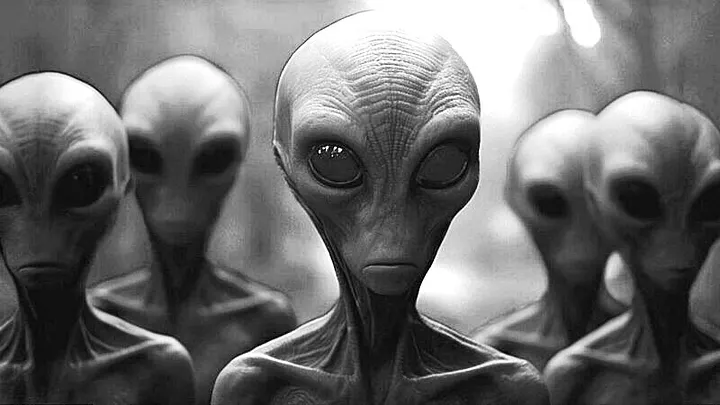
This evolutionary hypothesis is supported by the apparent neotenous features of the Greys — large craniums, smooth skin, and asexual appearance — which suggest a species that retains juvenile traits into adulthood. This phenomenon, known as neoteny, is common in species where intelligence, adaptability, and social complexity are favored over raw physical strength. Humans themselves are neotenous apes; the Greys might simply represent a more extreme version, possibly even a million years further along the same trajectory.
The Bioengineered Hypothesis: Optimization for Interstellar Travel
Equally compelling is the possibility that Greys are not naturally evolved organisms, but bioengineered entities — either fully artificial or heavily modified biological constructs designed for long-duration spaceflight. Under this hypothesis, the traits described above are not adaptations to planetary conditions but deliberate design features, selected for efficiency, endurance, and adaptability in spacecraft environments.
Space presents a unique set of challenges: low gravity, confined spaces, limited resources, and high radiation exposure. The Grey morphology addresses each of these issues:
Hairlessness reduces the need for grooming, prevents contamination, and is hygienic in sealed environments.
Small stature minimizes spatial requirements and energy consumption.
Grey or pale skin could be synthetic, possibly with radiation-resistant properties, or optimized for heat regulation in stable ambient temperatures.
Large eyes may function as multispectral optical sensors, allowing them to perceive a range of wavelengths for tasks such as diagnostics, communication, or remote sensing within dark ship interiors or deep space.
Lack of external genitals or sexual dimorphism suggests that reproduction — if needed — is artificial or handled through cloning, genetic replication, or asexual methods.
Emotionless, telepathic communication reported by abductees may reflect neural networking or direct interface with ship systems, bypassing the need for speech in vacuum or sterile environments.
Indeed, the consistency of Grey descriptions across thousands of abductee reports — including their behavior, gestures, and appearance — supports the idea of manufactured uniformity. They are not diverse individuals, but standardized models — perhaps like drone workers, scouts, or researchers, built for a specific range of functions. The similarity to insect castes (e.g., ant workers or bee drones) is striking.
Reports of spacecraft interiors bolster this view. Abductees often describe sterile, rounded rooms with no visible seams, indirect lighting, and integrated technology — surfaces that blend biological and mechanical qualities. The absence of clutter, screens, or buttons suggests an interface paradigm based on neural or gestural control — something a bioengineered organism could use effortlessly. The ship’s architecture mirrors the Greys’ own form: minimal, functional, and adaptive.
Read Also: Keep your face towards the sunshine and shadows will fall behind you
Watch Also: https://www.youtube.com/@TravelsofTheWorld24






Leave a Reply