
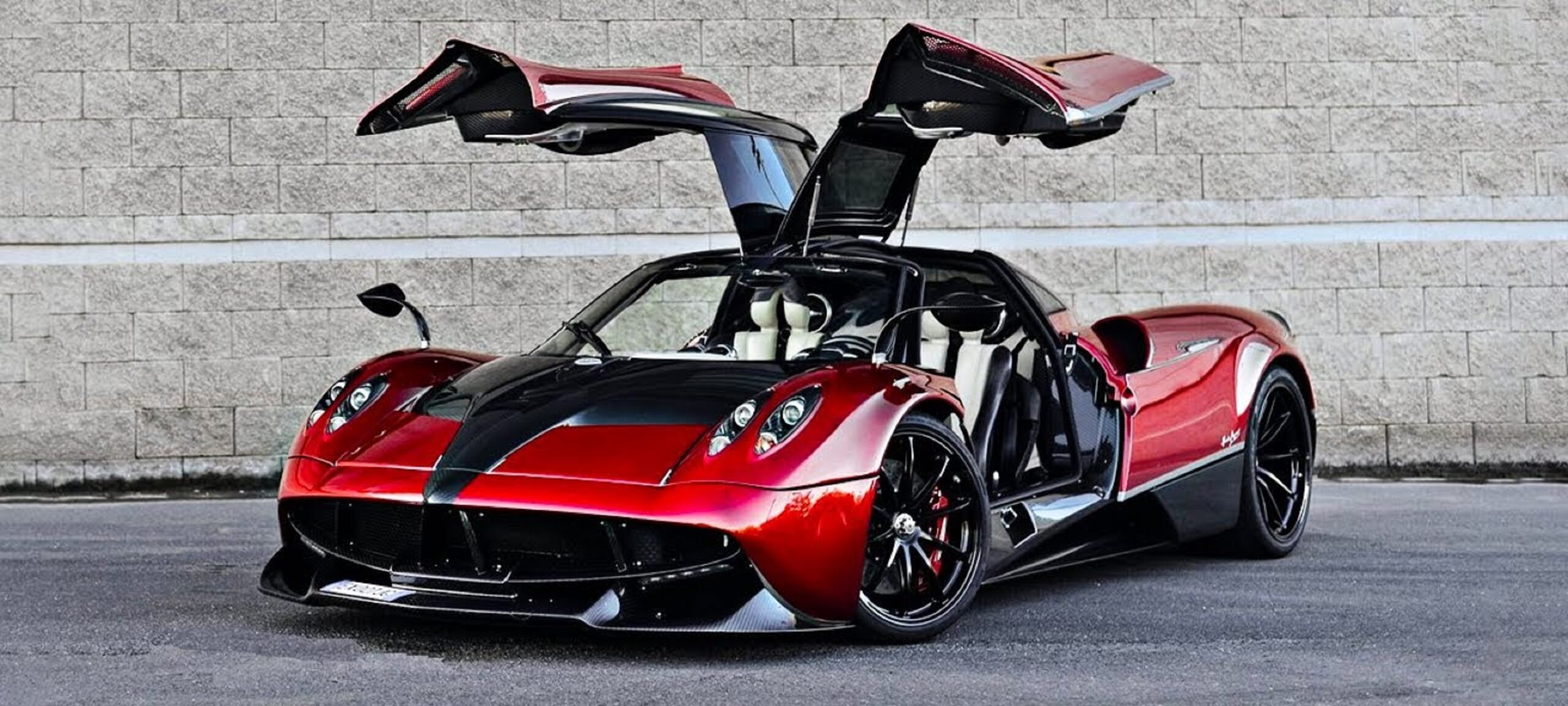
The Pagani Huayra is not just a supercar — it’s a statement. Born from the atelier of Pagani Automobili in San Cesario sul Panaro, Italy, the Huayra is the spiritual successor to the legendary Pagani Zonda, combining extreme performance, bespoke craftsmanship, and exotic materials.
With a steep price tag — often hovering around the $2–3 million range depending on variant, customisation and taxes — the Huayra is aimed at those who treat cars as works of art, engineering masterpieces, and investment pieces. The car’s exclusivity, performance, and beauty converge to make it one of the hypercars most admired by collectors, enthusiasts, and automotive connoisseurs worldwide.
In this essay, we’ll explore what makes the Huayra so special: its technical brilliance, design philosophy, variants, cultural significance, and why it is more than the sum of its parts.
Technical Heart & Engineering Excellence
Engine, Performance & Dynamics
At the heart of the Huayra lies a 6.0‑litre twin‑turbocharged V12 engine — developed by Mercedes‑AMG specifically for Pagani. For the standard Huayra coupe, this powerplant pumps out around 740 PS (metric horsepower), delivering ferocious acceleration and exhilarating performance.
The result is blistering performance: the Huayra can accelerate from 0 to high speeds (hundreds of km/h) in just a few seconds, and has a top speed that approaches 238 mph (≈384 km/h) under optimal conditions.
Its handling and dynamics are aided by advanced engineering choices: dry‑sump lubrication (to keep oil flow stable under high lateral acceleration), a low centre-of-gravity setup, and carbon‑titanium and carbon‑composite materials to minimize weight while maximizing structural rigidity.
Active Aerodynamics & Design Intelligence
One of the standout features of the Pagani Huayra is its active aerodynamic system. The car is equipped with multiple flaps — front and rear — which adjust in real time based on speed, steering angle, throttle, yaw rate, and other inputs. The system balances between minimal drag (for high-speed runs) and maximum downforce (for cornering stability).
This ability to adapt aerodynamics dynamically turns the Huayra into an intelligent machine — one that responds to road or track conditions, optimizing performance, stability, and safety, rather than simply relying on fixed wings or spoilers.
Details like carbon‑ceramic brakes (with large ventilated discs and multi‑piston calipers), lightweight forged wheels, high-performance tyres, and a finely tuned chassis further underline that this car is designed not just for straight‑line speed, but for precision, control, and real-world performance.
Materials & Craftsmanship — Beauty in the Details
What sets the Huayra apart from many other hypercars is that it is crafted almost like a machined sculpture. The bodywork uses advanced composite materials — a mix of carbon fiber and specially developed alloys — that deliver strength, lightness, and aesthetic finish. This isn’t mass‑production; it’s artisanal engineering.
Inside and out, attention to detail defines the car: everything from the exhaust system to the mounting bolts is fine‑tuned. In fact, one striking detail often cited by enthusiasts is that the Huayra uses over 1,400 specially designed titanium bolts, each laser‑etched, extremely light and corrosion-resistant — a small, almost obsessive detail that contributes to both the car’s structural integrity and its craftsmanship prestige.
Variants & Evolution — More Than One Huayra
The Huayra family is not a single car, but a lineage of variants — each pushing different aspects of performance, exclusivity, or design philosophy.
-
Standard Huayra: the original coupe, with its twin‑turbo V12 and signature active aerodynamics. Combines exotic performance with everyday usability (in supercar terms).
-
Huayra Roadster / Roadster BC: an open‑top variant offering the thrill of wind-in-your-hair driving, with similar power but different bodywork. According to past press coverage, the roadster variant once had a price tag around $2.4 million.
-
Track / Special Variants: On the more extreme end, there are track‑focused builds like Pagani Huayra R — a model with a naturally aspirated V12 (no turbos), a stripped‑down chassis, racing‑spec materials, and no compromises on performance for on‑track thrill. The R variant has 850 hp and a dry weight of just ~1,050 kg, yielding an extreme power‑to‑weight ratio, and is aimed exclusively at track use.
-
Limited Editions & Custom Builds: Over the years, Pagani has offered bespoke builds, customer‑specific configurations, and limited‑run special versions — contributing to rarity, exclusivity, and collector appeal.
This diversity shows that the Huayra isn’t just one expression of hypercar ambition — it’s a family of interpretations: everyday exotic, open‑top romance, track‑focused beast, and highly bespoke automotive art.
Why $2.5 Million (or More)? The Cost of Rarity, Performance & Artistry
Rarity & Exclusivity
Pagani builds the Huayra in extremely limited numbers. According to official records, the production figures for the original Huayra coupe were limited; subsequent variants are often even more exclusive.
This scarcity — combined with the car’s performance reputation, design pedigree, and brand mystique — drives demand among collectors and enthusiasts. In the world of supercars, rarity often matters as much as specs.
Craftsmanship & Customization
The Huayra isn’t mass‑produced like regular cars. Each unit receives extensive hand‑crafted work, high‑end materials, and custom finishes. From carbon‑titanium bodywork to laser‑etched titanium bolts, from bespoke interiors to hand‑assembled engines, every Huayra is built with a level of detail akin to fine watchmaking or haute couture.
Such craftsmanship — plus the time, labor, and specialized materials — justifies much of the cost. Owners get not just a car but a handcrafted masterpiece.
Engineering & Performance at the Brink
Delivering 700+ horsepower, 200+ mph top speeds, active aero, advanced materials, and race‑inspired engineering doesn’t come cheap. The Huayra’s powertrain, suspension, brakes, aerodynamics, materials — all are at the cutting edge of automotive engineering. The cost reflects not just what the car is, but what it achieves: near‑supercar or full hypercar benchmarks without sacrificing beauty.
Moreover — especially in track‑focused variants — the engineering goes beyond road‑legal requirements: safety, performance, structural integrity, and racing-level reliability. That pushes over‑engineering and bespoke components — again adding to the cost.
Brand, Status & Collectability
Owning a Pagani Huayra isn’t simply owning a car — it’s owning a piece of automotive history and prestige. For many buyers, the Huayra represents exclusivity, taste, connoisseurship, and long-term value: a collectible that may appreciate or at least remain rare.
Because of this status, demand often exceeds supply — which, in markets, tends to inflate prices; and the cost of maintaining, storing, and preserving such a hypercar becomes part of the ownership equation.
The Experience — What It’s Like to Drive or Own a Huayra
Driving the Huayra is often described as a near‑spiritual or cinematic experience. From the roar of the AMG‑built V12, the immediate response of the turbos, the downforce from active aerodynamics, to the feel of high‑performance brakes and finely tuned suspension: it’s performance, engineering, and sensory overload — in the best possible way.
For those who opt for variants like the Roadster, there’s the added dimension of open‑air driving — wind, sound, visceral connection to speed and road. For track‑oriented variants, there’s precision, adrenaline, and pure performance.
From an ownership point of view, a Huayra is both a status symbol and a maintenance commitment: these cars demand careful upkeep, ideal conditions, and expertise. They’re as close to automotive art pieces as road machines can get.
Importantly — because each Huayra is so bespoke — ownership also means participation in a narrow, elite club of owners; often there’s direct interaction with Pagani, possibility of custom orders, unique configurations, and a connection to the brand’s heritage and exclusivity.
Significance & Legacy — Why the Pagani Huayra Matters
Redefining What a Hypercar Can Be
With the Huayra, Pagani challenged what people expect from hypercars: not just raw power or speed, but elegance, craftsmanship, engineering sophistication, and artistic sensibility. It showed that a hypercar can be a functional work of art — not just a performance machine, but a statement of design, ambition, and aesthetic philosophy.
Inspiration for Automotive and Design Communities
Because of its blend of performance and artistry, the Huayra has become a reference point — not just for supercar makers, but for designers, engineers, and enthusiasts who value form and function. It inspires admiration for what human craftsmanship can achieve, even under constraints of performance demands.
Cultural Icon & Collectible — Bridging Cars and Art
For collectors, automotive historians, and luxury markets, the Huayra sits at the intersection of automobile, investment, art, and heritage. Its rarity, bespoke nature, and engineering pedigree make it more than a car — a collector’s asset, a museum‑worthy piece, a conversation starter, and often a legacy for future generations.
A Statement on Values — Beauty, Detail, and Intentional Design
At a time when many cars are mass‑produced and homogenized, the Huayra stands for intentional design, careful craftsmanship, and personal vision. It reminds us that machines — especially those meant to thrill — don’t have to sacrifice soul for speed. They can be engineered with care, built with artistry, and admired as more than transport.
Criticisms & Trade‑offs — Not All Glamour
Of course, such a car also comes with trade‑offs. High maintenance costs, limited practicality, sensitivity to conditions, expensive spare parts, and the need for specialized care make ownership challenging. For everyday driving, a Huayra is less a convenience and more a passion.
Additionally, because of its exclusivity and price, it is only accessible to a small, elite group. Its purpose — performance, status, collectability — doesn’t always align with broader concerns like sustainability, cost‑effective mobility, or environmental impact.
But perhaps that is part of the point: the Huayra is not meant to be ordinary. It is meant to be exceptional — for those who accept the trade‑offs in exchange for beauty, performance, identity, and legacy.
Conclusion — Pagani Huayra: A Hypercar as Art, Engineering, Legacy
The Pagani Huayra remains one of the most extraordinary hypercars ever built. From its AMG‑built V12 engine to its carbon‑titanium skeleton; from active aerodynamic systems to the hand‑crafted details; from blistering acceleration to uncanny exclusivity — it embodies what a supercar can be when engineering, art, and human ambition converge.
Labelled a “$2.5 million supercar” by many, the Huayra is far more than its price tag. It is a statement — about design, taste, performance, and the value of craftsmanship. It demands not just money, but respect for its complexity, beauty, and heritage.
For enthusiasts, collectors, and dreamers alike, the Pagani Huayra stands as a testament: that even in a world of mass production and instant gratification, there is still space for the exquisite, the bespoke, the exceptional — a world where cars are not just machines, but moving masterpieces.
Read Also: Keep your face towards the sunshine and shadows will fall behind you
Watch Also: https://www.youtube.com/@TravelsofTheWorld24






Leave a Reply