
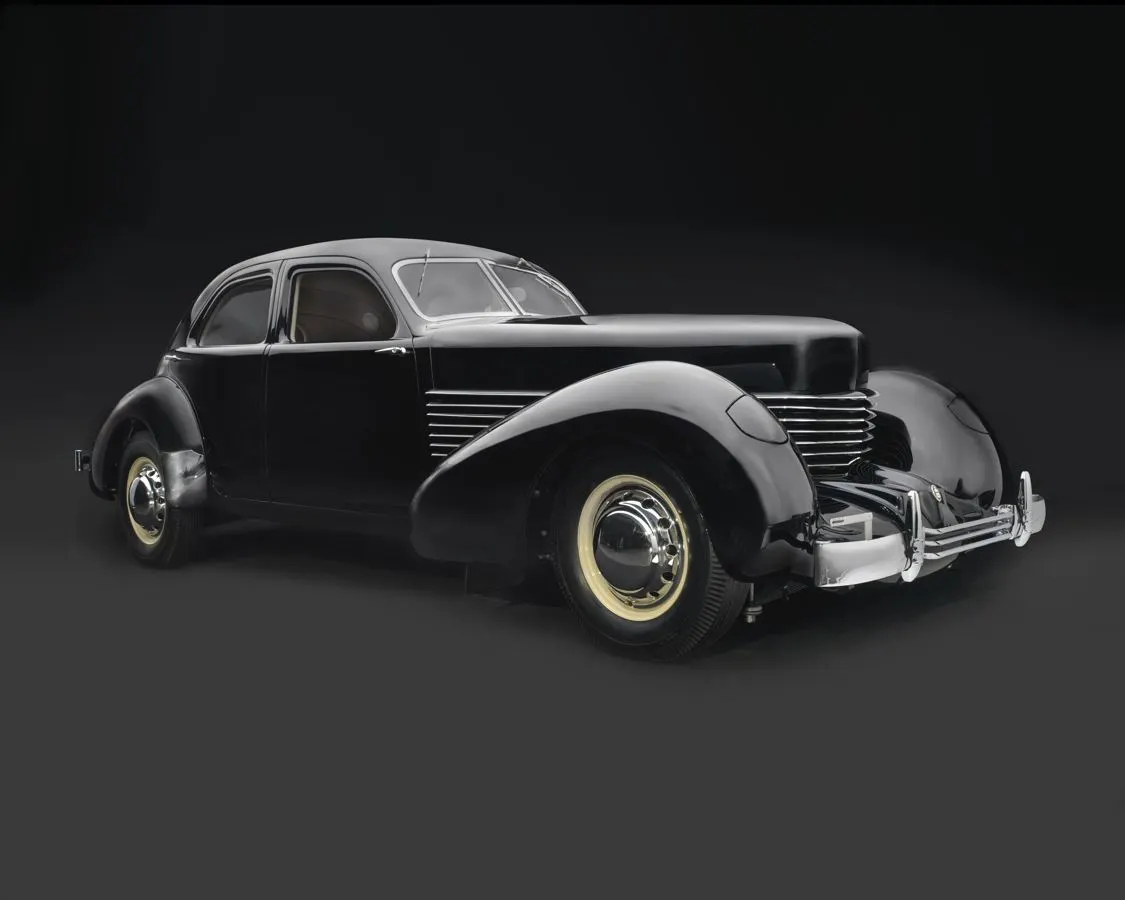
The 1936 Cord 810 “Armchair” Beverly Sedan is one of the most extraordinary and influential automobiles of the pre-war era. Recognized for its innovative design, luxurious features, and engineering breakthroughs, the 810 model represents a pivotal moment in American automotive history. This particular example, part of the Richard and Debbie Fass collection, embodies the perfect combination of craftsmanship, style, and technological ambition that defined Cord automobiles during the 1930s.
The Cord 810: A Revolutionary Design
Introduced in 1936, the Cord 810 was a bold departure from traditional automotive design. Under the vision of Errett Lobban Cord, the company sought to create vehicles that were not only technologically advanced but also visually striking. The 810 was the first American production car to feature:
-
Front-wheel drive, enhancing traction and lowering the chassis for a sleeker profile
-
Hidden headlights, which retracted into the fenders—a feature decades ahead of its time
-
Suicide doors for rear passengers, adding both elegance and practicality
These innovations gave the Cord 810 a futuristic appearance, often described as looking more like a streamlined sculpture than a conventional automobile. Its body was designed by Gordon Buehrig, whose artistic vision combined Art Deco sensibilities with aerodynamic functionality.
Exterior Styling: Art Deco Elegance
The “Armchair” Beverly Sedan variant stands out for its distinct bodywork and luxury appointments. The term “Armchair” reflects the spacious and comfortable seating arrangement designed for maximum passenger comfort, a notable focus for a luxury sedan of its era.
Key Exterior Features
-
Streamlined body: The Cord 810 has smooth, flowing lines that emphasize speed and modernity.
-
Hidden headlamps: This first-in-class design element created a clean front profile and later became a hallmark of high-end sports cars.
-
Chromed accents: Subtle chrome highlights around the grille, bumpers, and window surrounds accentuate elegance without excess.
-
Distinctive grille: A wide, horizontal grille gives the car a bold, commanding presence.
-
Rear suicide doors: Hinged at the rear for easy access and dramatic styling.
The overall design exudes sophistication, balancing aggressive automotive engineering with a refined, artistic sensibility.
Engineering Brilliance
The Cord 810 was not just a visual marvel—it was a technical tour de force. Its engineering innovations were designed to enhance both performance and driving experience.
Front-Wheel Drive
The 810’s front-wheel-drive layout was revolutionary in the 1930s. By positioning the drivetrain at the front, engineers were able to lower the engine and overall chassis height, reducing the car’s center of gravity. This layout provided better handling, improved stability, and a sleeker aesthetic.
Lycoming V8 Engine
Powering the 810 was a 4.7-liter Lycoming V8 engine, capable of producing around 125 horsepower. While modest by today’s standards, it was sufficient to propel the low-weight vehicle with impressive agility. Paired with front-wheel drive, it offered a smooth, balanced driving experience.
Advanced Suspension
The car utilized independent front suspension, enhancing ride comfort and handling precision. For its time, this provided a smoother, more controlled driving experience compared to many contemporaries with rigid axle designs.
Interior: Luxury and Comfort
The “Armchair” Beverly Sedan name highlights the interior’s primary focus—passenger comfort. Cord placed equal emphasis on aesthetics and functionality, making the cabin a luxurious retreat.
Interior Highlights
-
Spacious seating: Deep, well-padded seats designed to feel like “armchairs” for every occupant.
-
High-quality materials: Fine leather upholstery, polished wood trim, and brushed metal detailing.
-
Elegant dashboard: Instruments were neatly arranged, blending functionality with Art Deco style.
-
Attention to detail: Chrome switches, sculpted handles, and custom carpets reflected the artisan craftsmanship of the period.
-
Passenger convenience: Rear suicide doors allowed effortless entry and exit, emphasizing the sedan’s luxurious intent.
The interior demonstrated that luxury automobiles of the 1930s were not merely about performance—they were about creating an immersive, stylish, and comfortable environment for passengers.
The Cultural and Historical Context
The Cord 810 was introduced during a period of both innovation and economic challenge. Despite the lingering effects of the Great Depression, luxury carmakers like Cord sought to demonstrate that elegance, engineering, and creativity could thrive. The 810’s combination of technology, comfort, and forward-looking design captured the optimism and ambition of the era.
The Cord brand itself represented a new wave in American automotive history. By integrating European-influenced styling with advanced engineering, Cord vehicles set trends that influenced designers and manufacturers worldwide. The 810, in particular, became a benchmark for innovation and taste, influencing future luxury vehicles.
The Richard and Debbie Fass Collection
The Fass Collection is renowned for its meticulous curation of rare and historically significant automobiles. Their Cord 810 “Armchair” Beverly Sedan is an exemplar of the type of vehicle they seek to preserve—cars that reflect design excellence, technological innovation, and historical importance.
Owning such a rare and significant car allows enthusiasts and the public to appreciate the artistry, engineering, and cultural significance of pre-war American automobiles. The car is maintained to exacting standards, ensuring that its original features, paintwork, and mechanical systems are preserved for future generations.
Legacy of the Cord 810
The 1936 Cord 810’s influence continues to resonate in automotive design. Key legacies include:
-
Hidden headlamps, which became a design staple in the 1960s and 1970s.
-
Streamlined styling, which influenced both European and American luxury and sports cars.
-
Focus on passenger comfort, paving the way for luxury sedans that emphasized interior experience.
-
Front-wheel-drive adoption, which has become standard in modern vehicles for improved handling and efficiency.
The Cord 810 represents a rare convergence of innovation, aesthetics, and practicality—qualities that are celebrated in automotive museums and private collections alike.
Conclusion
The 1936 Cord 810 “Armchair” Beverly Sedan is a remarkable symbol of pre-war American automotive ingenuity. Its combination of streamlined design, innovative engineering, luxurious interior, and historical significance makes it a true masterpiece. Preserved in the Richard and Debbie Fass collection, this car continues to inspire enthusiasts, designers, and historians. The 810 remains an enduring testament to a period when automobiles were more than transportation—they were expressions of art, luxury, and technological daring.











Leave a Reply