
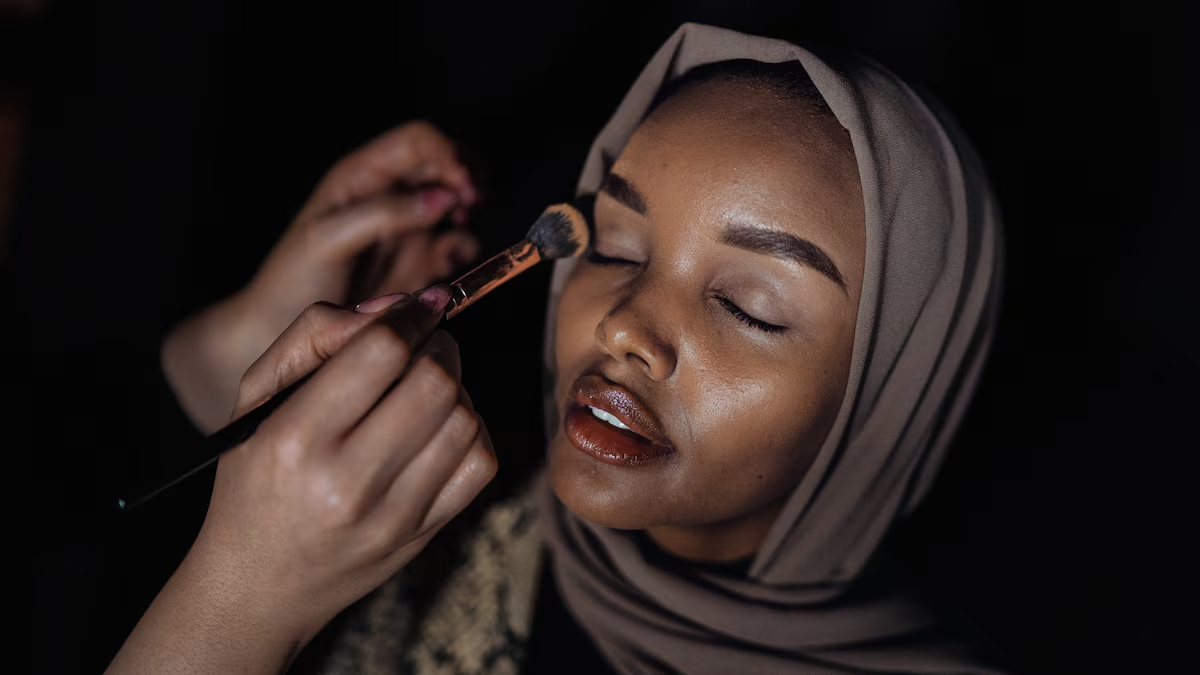
Beauty has never been a fixed concept. Across centuries, cultures, and societies, standards of beauty have constantly evolved, reflecting changing values, technology, social structures, and artistic ideals. What was celebrated as beautiful in one era or culture may have been ignored—or even rejected—in another. Today, the conversation around beauty is undergoing one of its most significant transformations: it has become more inclusive, diverse, and representative than ever before. This evolution challenges traditional norms and broadens our understanding of what it means to be beautiful in the modern world.
1. A Historical Perspective on Beauty
Throughout history, beauty has been defined by social, economic, and cultural factors:
-
Ancient Civilizations: In Ancient Egypt, almond-shaped eyes, long necks, and golden skin were considered ideal. Meanwhile, in Ancient Greece, symmetry and proportion were key, with statues and art emphasizing balanced, harmonious human forms.
-
Renaissance and Beyond: During the European Renaissance, fuller figures were celebrated as a sign of wealth and health, while pale skin symbolized nobility and leisure.
-
19th and 20th Century Shifts: Industrialization, media, and global exchange influenced ideals of beauty, promoting slimmer bodies, specific facial features, and fairer skin tones in some societies, while other traits were valued differently elsewhere.
Historical beauty standards demonstrate that beauty is rarely universal. Instead, it reflects societal ideals, power dynamics, and available technology. Clothing, cosmetics, and art have all played roles in shaping perceptions of beauty, from corsets and powder to photography and film.
2. The Role of Media and Technology
The 20th century brought mass media, which profoundly shaped beauty ideals:
-
Photography and Film: Celebrities and models became aspirational figures, influencing what people saw as beautiful.
-
Advertising: Companies created beauty standards to sell products, often promoting a narrow, homogeneous ideal.
-
Digital Media: Today, social media platforms expose people to diverse beauty norms from across the globe. Influencers of varying ethnicities, body types, and styles showcase beauty beyond traditional standards.
While media has historically perpetuated restrictive ideals, technology now enables broader representation. Platforms like Instagram, TikTok, and YouTube allow diverse individuals to share their unique aesthetics, challenging narrow definitions and inspiring inclusivity.
3. Expanding Inclusivity in Beauty Today
The modern beauty industry is embracing diversity in unprecedented ways:
-
Body Positivity: Campaigns celebrate all body types, sizes, and shapes, encouraging self-love and acceptance.
-
Skin Tone Representation: Brands are offering foundations, concealers, and cosmetic products that cater to a wide spectrum of skin tones.
-
Gender Inclusivity: Beauty is no longer confined to women; men, non-binary, and gender-fluid individuals are included in campaigns, collections, and discussions.
-
Cultural Diversity: Traditional and ethnic beauty practices, styles, and features are increasingly represented in mainstream media.
Inclusivity in beauty isn’t just about marketing—it’s about recognizing and celebrating human diversity, challenging rigid norms, and empowering individuals to express themselves authentically.
4. Beauty Beyond Appearance
Modern concepts of beauty increasingly emphasize inner qualities as much as physical attributes:
-
Confidence and Authenticity: People are drawn to individuals who embrace their unique selves, rather than conforming to societal pressures.
-
Talent and Creativity: Artistic expression, intelligence, humor, and skill are increasingly seen as beautiful traits.
-
Kindness and Compassion: Emotional and ethical qualities contribute to a person’s perceived beauty, reflecting the holistic nature of modern ideals.
This broader definition aligns with a cultural shift toward celebrating authenticity over perfection. Beauty is no longer only external—it encompasses the person as a whole.
5. Challenges to Traditional Beauty Norms
Despite progress, society still grapples with long-standing beauty ideals:
-
Unrealistic Standards: Filters, photo editing, and cosmetic procedures can perpetuate unattainable ideals.
-
Cultural Pressures: Globalized media may inadvertently promote certain standards over local or traditional expressions of beauty.
-
Discrimination and Bias: Beauty-based prejudice—whether related to skin tone, body size, age, or ability—remains a barrier for many.
However, movements promoting self-love, inclusivity, and representation continue to challenge these pressures, demonstrating a cultural shift toward broader acceptance.
6. Global Perspectives on Beauty
Beauty standards vary across cultures, highlighting the importance of cultural context:
-
Africa: Certain regions celebrate fuller body types, intricate hairstyles, and traditional adornments.
-
Asia: Preferences for fair skin, specific facial features, and slender figures have historically influenced local standards, though these are evolving.
-
Europe and the Americas: Beauty ideals have shifted over time, embracing diversity in ethnicity, body types, and personal style.
-
Middle East: Traditional attire and grooming practices are integral to local concepts of beauty, now complemented by modern trends.
Globalization and cross-cultural exchange are expanding perspectives, making beauty a more inclusive, multifaceted concept.
7. Beauty in the Digital Age
Technology has democratized beauty, allowing new voices and identities to be seen and celebrated:
-
Social Media: Creators from diverse backgrounds showcase fashion, makeup, and personal style.
-
Representation in Gaming and Virtual Worlds: Avatars, filters, and digital characters allow individuals to express identity creatively.
-
Inclusivity in E-Commerce: Online retailers offer products catering to wide ranges of skin tones, hair types, and body shapes.
Digital platforms also facilitate conversations about mental health, body image, and self-expression, reinforcing the link between well-being and perceived beauty.
8. Redefining Beauty for Future Generations
The inclusive beauty movement encourages the next generation to:
-
Value Diversity: Recognize beauty in all races, body types, ages, and abilities.
-
Embrace Authenticity: Celebrate individuality rather than conforming to narrow standards.
-
Promote Confidence: Support peers in cultivating self-esteem and self-expression.
-
Challenge Bias: Question stereotypes and cultural expectations that limit personal expression.
By emphasizing these principles, schools, media, and communities can nurture a society where beauty is plural, dynamic, and empowering.
9. Conclusion
The idea of beauty is always shifting, reflecting societal values, cultural norms, and technological influences. From historical ideals rooted in art, status, or symmetry to the modern era of inclusivity, beauty has evolved to become more diverse, representative, and holistic. Today, beauty celebrates not only appearance but also authenticity, confidence, creativity, and character.
This transformation challenges rigid standards, encourages self-expression, and inspires individuals to embrace their uniqueness. By expanding our understanding of beauty to include diverse bodies, genders, cultures, and inner qualities, society fosters a more inclusive and empathetic world.
In the end, beauty is not a singular definition imposed by media, culture, or tradition. It is personal, dynamic, and evolving, shaped by the values of acceptance, inclusivity, and self-love. For future generations, beauty will continue to reflect a broader vision—one that celebrates diversity, individuality, and the endless ways humans can express themselves.
Read Also: Keep your face towards the sunshine and shadows will fall behind you
Watch Also: https://www.youtube.com/@TravelsofTheWorld24





Leave a Reply