
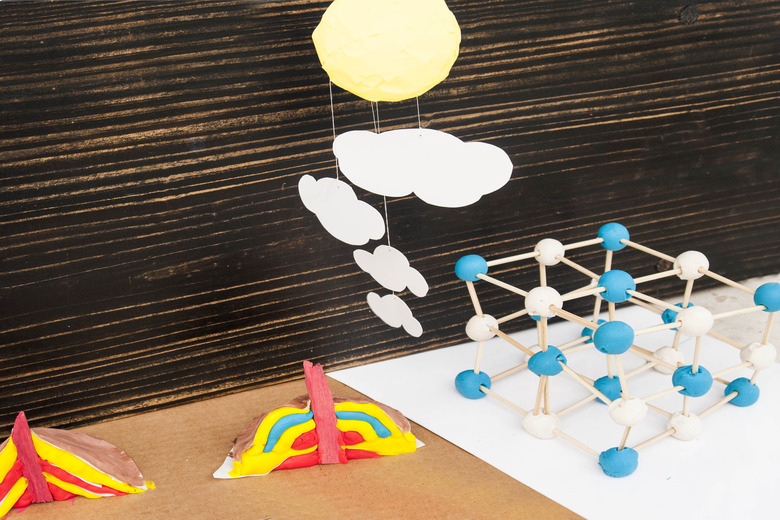
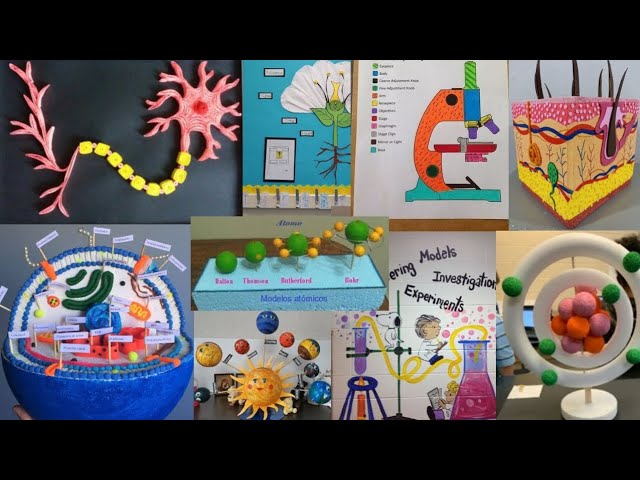
Science models are an essential part of school education, helping students visualize and understand complex concepts. A well-crafted model allows learners to connect theory with practice, making abstract ideas tangible. Whether it is a physical model for a class presentation, a project for a science fair, or a classroom activity, science models encourage creativity, critical thinking, and a deeper understanding of scientific principles.
This article explores various ideas for school science models, covering different scientific disciplines such as physics, chemistry, biology, and environmental science. These projects are suitable for a wide range of grade levels and are designed to be both educational and fun.
1. Solar System Model
A solar system model helps students understand the arrangement, size, and orbit of planets around the sun. It is an ideal project for astronomy and space science topics.
Materials:
-
Styrofoam balls or clay for planets
-
Paints and brushes
-
String or wire
-
Cardboard base
Procedure:
-
Paint each ball to represent different planets, including the sun.
-
Arrange the planets at appropriate distances from the sun on a cardboard base or suspend them with strings to create a hanging model.
-
Label each planet with its name and notable features.
Learning Outcome:
Students learn about planetary order, relative sizes, and orbital patterns, enhancing their understanding of the solar system.
2. Water Cycle Model
The water cycle is fundamental in understanding Earth’s environmental processes. A model can illustrate evaporation, condensation, precipitation, and collection.
Materials:
-
Plastic container or box
-
Cotton for clouds
-
Blue colored water
-
Small fan or heat lamp (optional)
Procedure:
-
Pour water into the container to represent oceans or lakes.
-
Use cotton to form clouds above the water.
-
Simulate evaporation with a heat lamp or fan, and show precipitation by dripping water from the cotton clouds.
Learning Outcome:
Students grasp how water moves through the environment and understand the importance of the water cycle in sustaining life.
3. Human Heart Model
The human heart is a fascinating organ that can be demonstrated using a 3D model to explain blood flow and heart functions.
Materials:
-
Red and blue clay or playdough
-
Cardboard for support
-
Labels for arteries, veins, and chambers
Procedure:
-
Shape the clay to form the heart’s four chambers.
-
Use red clay for oxygenated blood and blue for deoxygenated blood.
-
Label all parts, including the atria, ventricles, arteries, and veins.
Learning Outcome:
Students understand the structure of the heart, blood circulation, and the difference between oxygenated and deoxygenated blood.
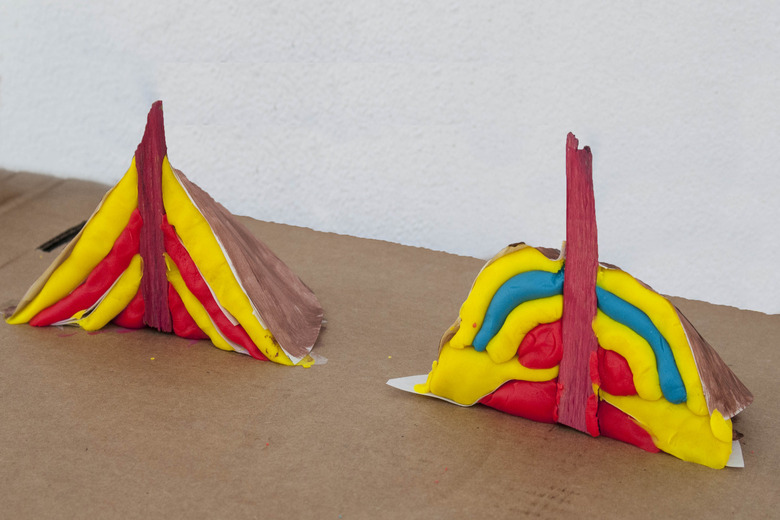
4. Volcano Model
The classic volcano model demonstrates geological processes, particularly volcanic eruptions and lava flow.
Materials:
-
Clay, papier-mâché, or cardboard
-
Baking soda and vinegar for eruption
-
Red food coloring for lava
Procedure:
-
Shape the volcano structure with a crater at the top.
-
Fill the crater with baking soda.
-
Pour vinegar mixed with food coloring to simulate an eruption.
Learning Outcome:
Students learn about chemical reactions, gas formation, and volcanic activity.
5. Plant Cell Model
Creating a 3D plant cell model helps students visualize organelles and understand cell functions.
Materials:
-
Clear container or box
-
Colored clay or playdough
-
Labels for cell parts
Procedure:
-
Form cell organelles such as the nucleus, chloroplasts, mitochondria, and cell wall using colored clay.
-
Arrange them inside the container to represent the cell’s structure.
-
Label each part and describe its function.
Learning Outcome:
Students gain a clear understanding of cell structure, organelles, and their respective roles in plant life.
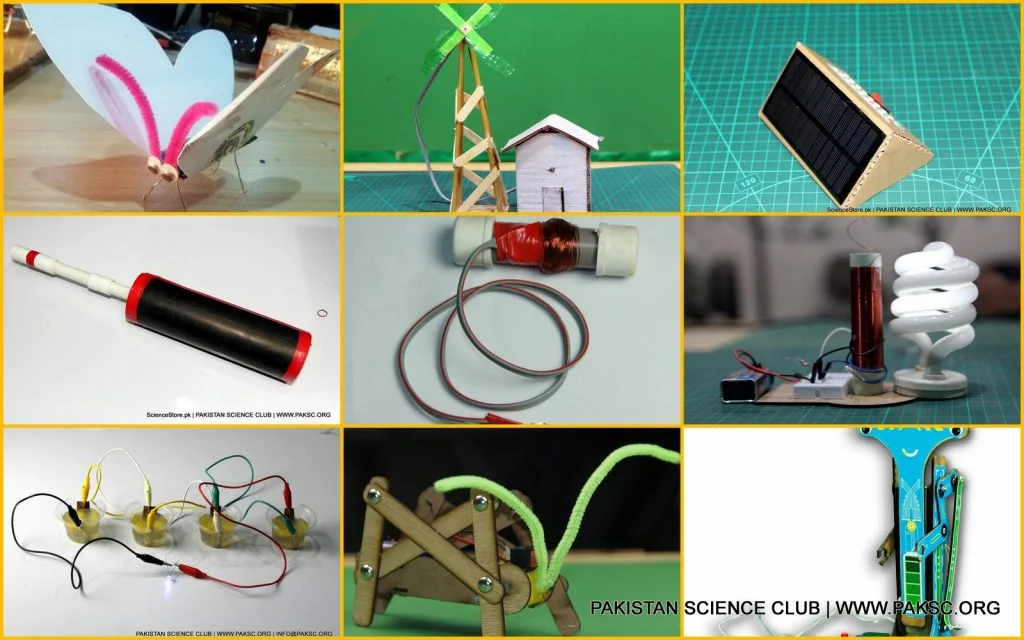
6. Wind Turbine Model
A wind turbine model introduces students to renewable energy and mechanical principles.
Materials:
-
Cardboard or plastic for blades
-
Small motor or LED light
-
Stand for support
-
Tape or glue
Procedure:
-
Construct the turbine blades and attach them to a central hub connected to a small motor.
-
Place the model in front of a fan to generate movement.
-
Demonstrate how wind energy can produce electricity by lighting up the LED.
Learning Outcome:
Students learn about wind energy, electricity generation, and renewable energy concepts.
 7. Human Digestive System Model
This model demonstrates how food moves through the digestive system and the role of each organ in breaking down nutrients.
Materials:
-
Clay, cardboard, or recycled materials
-
Labels for organs
-
Tubes or straws to represent intestines
Procedure:
-
Construct major digestive organs: mouth, esophagus, stomach, small intestine, and large intestine.
-
Connect them in the correct order.
-
Label and describe each organ’s function.
Learning Outcome:
Students learn about digestion, nutrient absorption, and the digestive system’s overall function.
8. Earthquake Simulation Model
This project teaches about tectonic activity, fault lines, and the impact of earthquakes on structures.
Materials:
-
Wooden or cardboard base
-
Small building models (toys or cardboard)
-
Rubber bands and blocks to simulate seismic movement
Procedure:
-
Construct small buildings on the base.
-
Use rubber bands and blocks to simulate ground shaking.
-
Observe how structures respond to the simulated earthquake.
Learning Outcome:
Students understand seismic waves, building stability, and the importance of earthquake-resistant structures.
 9. Magnetic Levitation Model
This model demonstrates the principles of magnetism and magnetic levitation.
Materials:
-
Magnets
-
Lightweight platform or toy car
-
Track or guide for levitation
Procedure:
-
Place magnets on the platform and track with opposite poles facing each other.
-
Observe how the platform or car floats above the track due to magnetic repulsion.
Learning Outcome:
Students learn about magnetic forces, repulsion, and the potential applications of maglev technology.
10. Simple Hydraulic Arm
A hydraulic arm model demonstrates mechanical principles, fluid pressure, and robotics.
Materials:
-
Cardboard for arm structure
-
Syringes and plastic tubing
-
Water for hydraulic movement
Procedure:
-
Build a simple arm with movable joints using cardboard.
-
Connect syringes with tubing to act as hydraulic pistons.
-
Fill the syringes with water and use them to move the arm.
Learning Outcome:
Students learn about hydraulics, force transmission, and mechanical engineering principles.
Tips for Creating Effective Science Models
-
Plan Carefully: Decide on the concept, gather materials, and sketch the design before starting.
-
Use Recyclable Materials: Many models can be made with cardboard, plastic bottles, and clay.
-
Focus on Accuracy: Ensure that the model represents the scientific concept correctly.
-
Label Clearly: Include names and explanations of each part for easy understanding.
-
Encourage Creativity: Experiment with colors, materials, and designs to make the model visually appealing.
-
Test and Demonstrate: Where possible, show how the model works or simulate the process it represents.
Conclusion
Science models are an invaluable educational tool for students of all ages. They provide a tangible way to explore complex scientific concepts, encouraging curiosity, creativity, and critical thinking. From the solar system and water cycle to magnetic levitation and hydraulic arms, school science models cover a wide range of topics across physics, chemistry, biology, and environmental science.
Creating and presenting science models helps students understand the world around them, develop problem-solving skills, and gain confidence in scientific inquiry. By engaging with hands-on projects, students not only learn theoretical concepts but also cultivate a passion for exploration and discovery. Whether for a classroom project, science fair, or personal learning, science models are an exciting way to make education interactive, memorable, and fun.
With these ideas, students can turn summer or classroom time into an inspiring scientific adventure, laying the foundation for a lifelong interest in science and innovation.
Read Also: Keep your face towards the sunshine and shadows will fall behind you
Watch Also: https://www.youtube.com/@TravelsofTheWorld24







Leave a Reply