
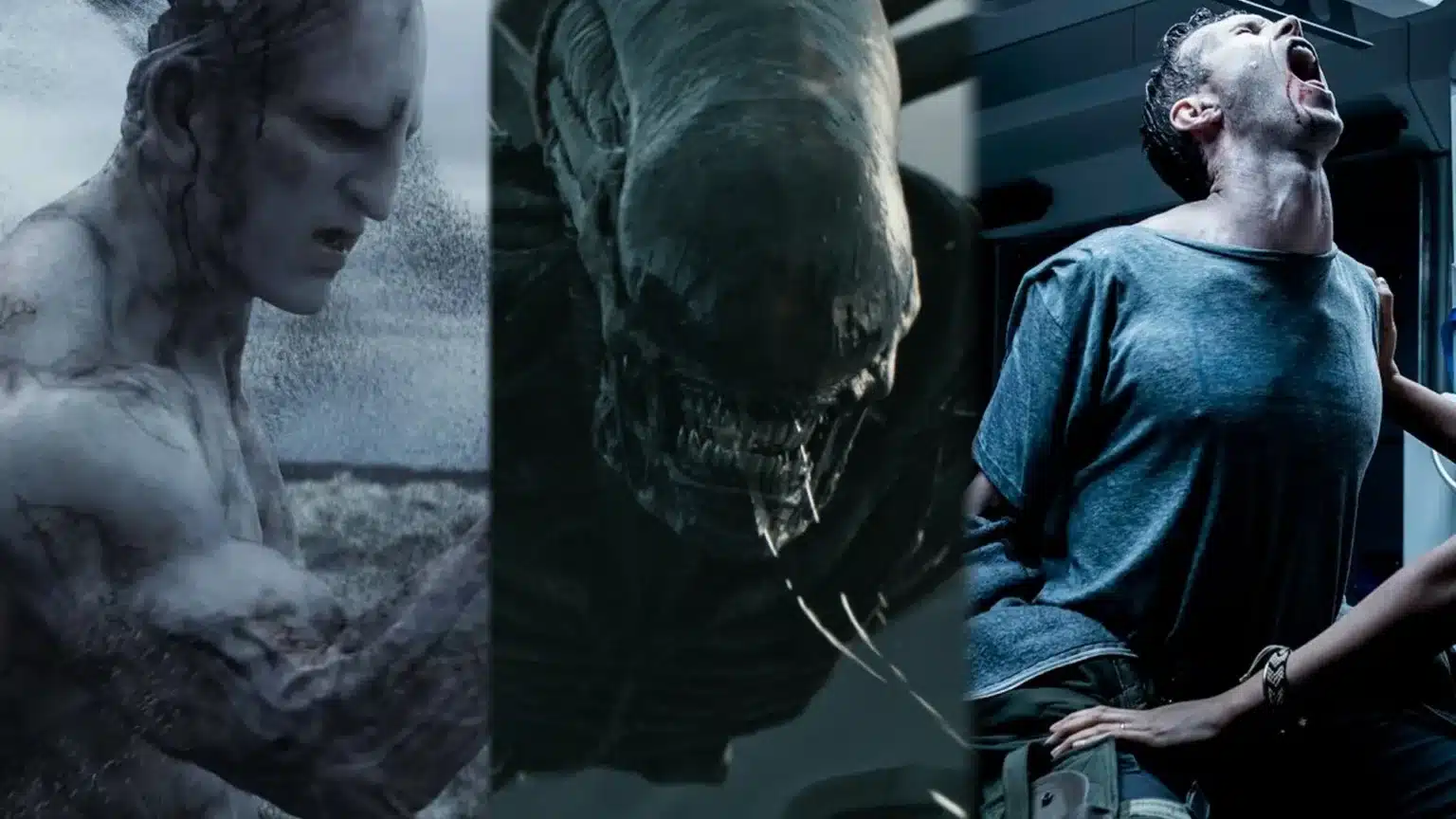
Part of the beauty and appeal of Alien as a movie series is that, like the titular alien, these stories can take on all different forms. After 1979’s Alien set the bar high for sci-fi horror, it was followed by the more action-focused 1986’s Aliens. That malleability has been baked into Alien, from the headier prequel films like Prometheus and Alien: Covenant to the more ridiculous Alien vs. Predator series, and the nostalgia-focused Alien: Romulus in 2024. This world has so many possibilities and ideas to explore; they’re really only limited by the imagination of the writers and directors. Yet as Noah Hawley successfully proves with Alien: Earth, this universe works best when all of its possibilities are rolled into one captivating, thrilling, and heady experience.
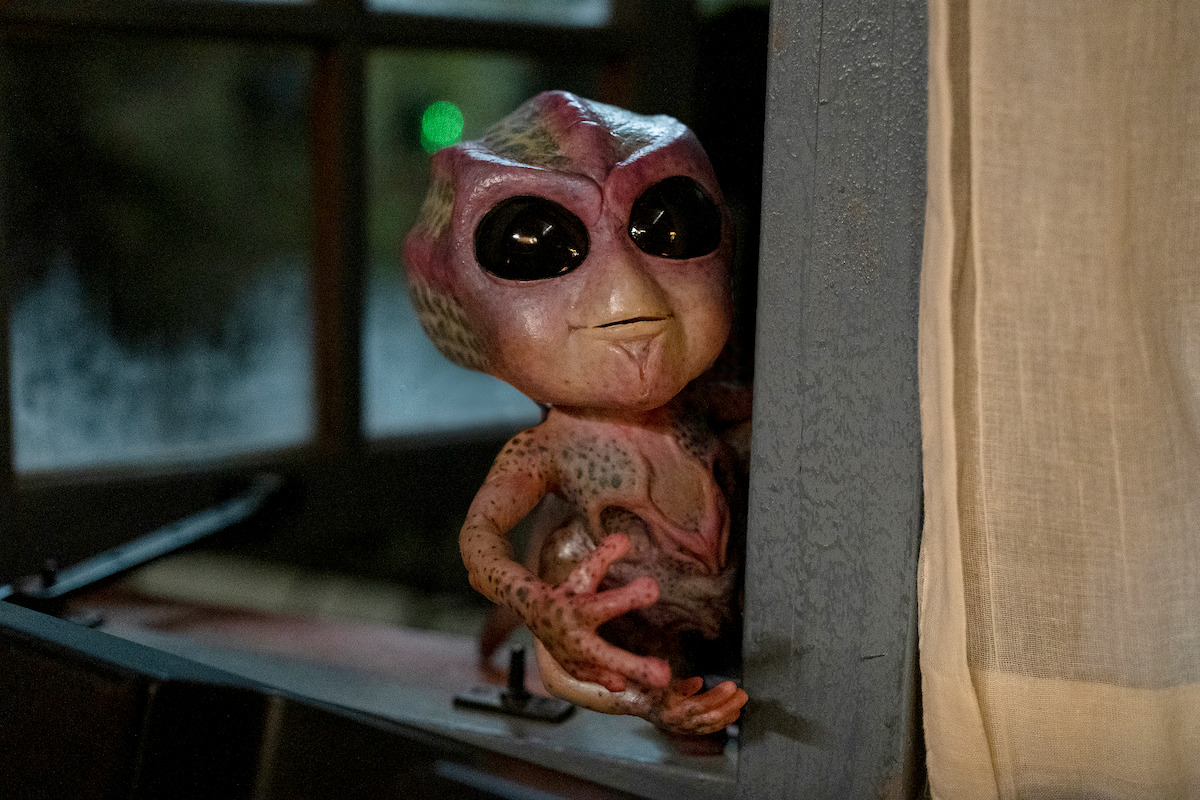
Alien: Earth gives said universe the space and time to expand on its ideas and concepts in a way that a movie simply can’t. Within just eight episodes, Hawley’s series gives us the horror of Alien, the deeper ideas of Prometheus and Alien: Covenant, the dissection of corporate greed in Aliens and Alien: Romulus, and even some of the more fun ridiculousness of this series’ most absurd moments. Hawley has captured everything that has made Alien “Alien” over the years, and proves that almost 50 years into this franchise, it’s just as essential as ever.
What Is ‘Alien: Earth’ About?
Alien: Earth begins much like the original Alien, as we meet the crew of the Weyland-Yutani ship USCSS Maginot right before things are about to go very bad. Set in the year 2120 (two years before the events of Alien), Maginot is nearing the end of its 65-year mission, which finds its ship full of alien specimens, whom the company has made explicitly clear are more important than the workers themselves. As we’ve seen time and time again, of course, the alien onboard gets the better of those on the ship, leaving the Maginot on a crash course for Earth, with only the ship’s cyborg security officer, Morrow (Babou Ceesay), left alive with a cargo hold full of killer specimens.
Meanwhile, on Earth, corporations now rule and have split up the globe into five different segments. One of these companies, Prodigy, is run by (who else) a young genius named Boy Kavalier (Samuel Blenkin), who has recently become the first person to transfer a human’s consciousness into a synthetic being’s body. Known as hybrids, this groundbreaking first takes the form of a girl who now inhabits an adult body and dubs herself Wendy (Sydney Chandler). Boy Kavalier’s obsession with Peter Pan has led him to create an entire group of hybrids called “The Lost Boys,” each named after a different character from the children’s story, on his research island known as “Neverland.”
Wendy and this group of synthetics have had to throw away their old lives and avoid those they love to undergo this procedure, as these kids were sick and would surely have died without this experiment. They have to deal with now being kids in adult bodies that aren’t exactly human, but what they’re truly capable of is unknown to them or Boy Kavalier. When the Maginot crashes on Earth, Wendy discovers that her brother from her previous self’s life, Hermit (Alex Lawther), has been sent to investigate the wreckage. To save her brother and reunite with him, Wendy and the Lost Boys, led by Kirsh (Timothy Olyphant), Prodigy’s synthetic scientist, go to the crash site to find Hermit, but also discover the horrific creatures that Weyland-Yutani are keeping aboard.
‘Alien: Earth’ Expands the Franchise in a Way That Can’t Be Done in the Movies
While the Alien films have largely centered around a group attempting to survive the attack of a xenomorph, Hawley’s series has much larger ambitions. Usually, as the murders are happening, often on a ship of some form, we see brief glimpses of these larger ideas peeking around the corner. It’s rarely the focus of an Alien story, despite it always being compelling to learn more about what’s going on in this universe. Yet Alien: Earth has the opportunity to take these larger details of its futuristic world and make them the focal point.
The idea that corporations have taken over the world when democracy failed is inherently interesting and makes the commodification of people for profit, which has been central to this franchise since the beginning, start to make even more sense. In the opening moments of Alien: Earth, we’re also told that the world is torn between three different technologies: cyborgs (cybernetically enhanced humans), synths (artificially intelligent beings), and the new invention of hybrids. Whichever technology becomes prevalent will determine which of these five corporations rules the world. Right from the beginning, we see the larger-scale stakes at hand within this franchise that we’ve only glimpsed hints of in the occasional film.
Hawley, who writes or co-writes every installment and also directs two, beautifully melds all the different forms of the Alien franchise into one cohesive narrative. The aforementioned rescue mission to save Hermit provides the large-scale action that the movies have done well, but with haunting moments of horror and terror, as well as absurdity and humor that all combine into a fascinating amalgamation. Yet Hawley and this team of writers and directors can also narrow into one aspect of this world and do it justice. One episode feels like Hawley’s own take on Alien, building tension the way that the sci-fi classic does, but other episodes spend plenty of time discussing the corporate battle between Weyland-Yutani and Prodigy, or the ethics of what this technology means for our world. Much in the way that Hawley expanded his Fargo series away from just that singular film to make it a love letter to the work of Joel and Ethan Coen, his take on Alien: Earth is an excellent appreciation for everything this franchise has been over the decades.
‘Alien: Earth’ Beautifully Captures the Spirit of the Alien Universe
Alien: Earth also manages to nail the vibe of this world with perfection, from the chilling score by composer Jeff Russo, to the stunning cinematography and direction in each episode that nail the scope and nightmarish nature of this story, to the impeccable set design that showcases the grimy, workmanlike nature of this near-future. By expanding this story, Alien: Earth becomes far more than just a story of lowly workers facing off against an intergalactic threat. The xenomorph is just one of the many creatures out there in the world, but its existence on Earth is still nonetheless frightening, despite it not really being the primary focus of Hawley’s story. Death isn’t just a potential (and likely) byproduct of toeing the company line; it’s also a necessary step to feed the greed of corporations. The fact that employees are commodities and not people is key to this story, a world where people are easily disposable and synthetic beings are merchandise. Hawley brilliantly makes Alien: Earth a fascinating world to investigate, where the bottom line can be even more frightening than a monster that can burst out of your chest.
 As is always the case with the Alien franchise, these stories are only as compelling and riveting as the characters in them, and Hawley’s series is anchored by an impressive cast to explore these ideas with. In many cases, we don’t even discover these characters’ true nature and allegiances until the very last episode, and it’s enthralling to follow their respective journeys. Chandler’s Wendy is particularly exciting as she tries to figure out her new body and what she’s capable of. She’s a mystery that she’s unlocking herself, and we’re witnesses to this self-discovery. Similarly curious is Olyphant’s Kirsh, a corporate synth who is clearly trying to find his own place in this world. Olyphant is restrained and in control throughout, and it’s a delightfully entertaining performance from him. Babou Cessay is also a standout as Morrow, the cyborg trying to do what the company tells him; he absolutely brings the energy of Yaphet Kotto’s Parker from Alien, but if he were more of a badass and doing anything he could for the company. But the entire cast from top to bottom is spectacular, and again, it’s gripping just to see what direction these characters will head next.
Especially in the first episodes, Alien: Earth can feel like you’re being fed a ton of information all at once, and can be a bit overwhelming in terms of everything it’s trying to do. Yet it’s all integral to the story that’s being told, and these rough edges smooth out rather quickly. For those familiar with Hawley’s Legion, this feeling of being overwhelmed by details being thrown at you probably won’t even make you flinch. And for those wanting this to be little more than a horror story of humans versus xenomorphs, you’re likely going to be disappointed. But what you will find is a rich narrative that only makes this world and the previous stories told in it even better in hindsight.
Much like how Dan Trachtenberg was able to zoom out on the Predator franchise and make it into something far greater and more exciting than it had been in years, Hawley does the same thing with Alien. Much like how he turned Fargo into a celebration of everything that makes the Coen brothers great, he’s tapped into every facet of what has made Alien a tremendous and always surprising series of films, and expanded on those details in a clever and fun way. Alien: Earth is the kind of project where you can feel the love for the franchise seeping into every frame, and Hawley has finally had the opportunity to dig into this world the way he sees fit — and he does so spectacularly. Not bad for a human.
Alien: Earth premieres August 12 on FX and Hulu with its first two episodes. New episodes air every Tuesday.
Read Also: Keep your face towards the sunshine and shadows will fall behind you
Watch Also: https://www.youtube.com/@TravelsofTheWorld24








Leave a Reply